
 Español
  عربى
عربى 



Industry News
Home / News / Industry News / How to Heat Treat Stainless Steel: Processes, Temperatures & Furnace Tips
How to Heat Treat Stainless Steel: Processes, Temperatures & Furnace Tips
Date:Sep 14, 2026
A plant engineer once sent a batch of 304 stainless brackets through the same hardening cycle used for 420 stainless blades. The brackets came out unchanged in hardness, covered in heavy scale, and with chromium-carbide precipitates that destroyed their corrosion resistance. The furnace did exactly what it was told. The real error happened before loading: the alloy family was wrong for the recipe.
Core conclusion: heat treating stainless steel is not a single process. Only martensitic and precipitation-hardening grades respond to quench hardening. Austenitic, ferritic, and duplex grades are heat treated for annealing, solution annealing, or stress relief — and running them through a hardening cycle adds cost without adding hardness.
This guide covers which alloys can be hardened, the heat treatment processes and temperature ranges used in practice, less obvious parameters that decide quality, and what to look for in furnace equipment for stainless steel heat treatment.
Content
Match the Process to the Alloy Family
Stainless steel contains at least about 10.5% chromium, but the alloy family determines how the material responds to temperature. Hardenability depends on whether the microstructure transforms to martensite during cooling. The five families behave very differently:
Martensitic (410, 420, 440C)
Hardenable. Austenitize at 980-1065 °C, quench in oil or air, then temper at 150-650 °C. Used for cutlery, surgical instruments, shafts, and valve parts.
Precipitation-hardening (17-4 PH, 15-5 PH)
Solution anneal near 1040 °C, then age at 480-620 °C. Combines high strength with good corrosion resistance; common in aerospace hardware.
Austenitic (304, 316)
Not hardenable by heat. Solution anneal at 1010-1120 °C with rapid cooling restores corrosion resistance; stress relief at 425-925 °C reduces residual stress.
Ferritic (430, 446)
Largely non-hardenable. Anneal at 780-950 °C for softness and ductility. Strengthening comes mainly from cold work, not heat.
Duplex (2205, 2507)
Solution anneal at 1020-1100 °C followed by water quenching. Avoid long times in the 650-950 °C range, where sigma phase embrittlement occurs.
A quick check of the mill certificate or a positive material identification (PMI) reading prevents most mistakes. One misidentified coil can produce an entire batch of parts that fails hardness or corrosion tests.
Heat Treatment Processes and Working Ranges
Six cycles cover nearly every routine stainless steel heat treatment job. The ranges below are starting points; always confirm against the alloy supplier specification.
Table: typical working ranges for common stainless steel heat treatment cycles. Always confirm against the alloy supplier specification.
Where Heat-Treated Stainless Steel Is Used
Heat treated stainless components tend to be safety-critical or wear-critical. A reasonable estimate of end-use distribution looks like this:
Aerospace — 28%
Automotive — 22%
Medical & surgical — 18%
Tooling & cutlery — 17%
Energy & chemical — 15%
Aerospace drives demand for precipitation-hardened grades to cut weight while keeping strength. Automotive uses martensitic parts in shafts, fuel systems, and transmission components. Medical and cutlery applications depend on high hardness and edge retention. Energy and chemical processing relies on solution-annealed austenitic and duplex grades for corrosion resistance. This spread also explains the equipment requirements: good temperature uniformity, atmosphere control, documented process cycles, and traceability.
Hidden Parameters That Decide Success
Good recipes are necessary but not sufficient. The difference between a reliable and an unreliable cycle is usually in details that are easy to miss:
- Soak time: reaching setpoint is not the same as being at temperature. A common rule is 30 minutes of soak per 25 mm of cross-section after the load thermocouple reaches the target, with extra time for dense loads.
- Atmosphere control: in air, high-carbon martensitic grades lose surface carbon (decarburization), producing a soft, low-fatigue surface. For final hardening of 440C, vacuum or inert gas is preferred.
- Quench transfer speed: move parts from furnace to quench in seconds. Thin blades are often plate-quenched between aluminum plates to avoid distortion.
- Temper promptly: temper martensitic grades immediately after quenching to prevent cracking, and use a double temper to stabilize the structure.
- Retained austenite: a subzero treatment between quench and temper converts retained austenite and typically adds 1-2 HRC on high-carbon grades.
The tempering curve below shows why the tempering step is also a design decision. These are typical values for a high-carbon martensitic grade (440C); every alloy behaves slightly differently.
As-quenched · 60 HRC
200 °C · 58 HRC
300 °C · 55 HRC
450 °C · 57 HRC
550 °C · 50 HRC
650 °C · 42 HRC
Typical tempering response of 440C stainless steel (illustrative values). Secondary hardening appears around 450 °C.
Note that tempering in the 425-550 °C range can reduce corrosion resistance in some martensitic grades. Select the tempering range with the service environment in mind, not just the hardness target.
A Practical Heat Treatment Workflow
For a martensitic or precipitation-hardening part, the sequence below produces repeatable results.
1
Identify the grade and target properties
Confirm the alloy family and decide whether you need maximum hardness, toughness, or corrosion resistance. This single decision determines every later parameter.
2
Clean the load
Degrease and remove scale and marking ink. Residual oil or organic residue causes uneven carbon pickup and local decarburization.
3
Austenitize
Preheat if the grade requires it, then bring the load to the austenitizing temperature. Soak according to cross-section, using a load thermocouple rather than the controller reading.
4
Quench
Transfer fast and use the specified medium (oil, air, polymer, or plates). Keep quench oil in its working temperature window to avoid soft or cracked parts.
5
Temper
Temper immediately after quenching, run one or two cycles, and cool to room temperature between cycles. Record soak time and actual part temperature.
6
Verify
Run Rockwell C hardness tests, check for scale or decarburization, and use microstructure examination when required. Document every load for traceability.
Choosing Furnace Equipment and Estimating ROI
The right furnace for stainless steel heat treatment must reach at least 1100 °C for most martensitic and PH austenitizing, hold uniformity across the working zone, and control the atmosphere. A high-temperature furnace series covering 1000-1300 °C is the backbone of such a shop.
For austenitizing and annealing of small-to-medium batches, a box-type resistance furnace with multi-sided heating provides good uniformity without a complex gas system:
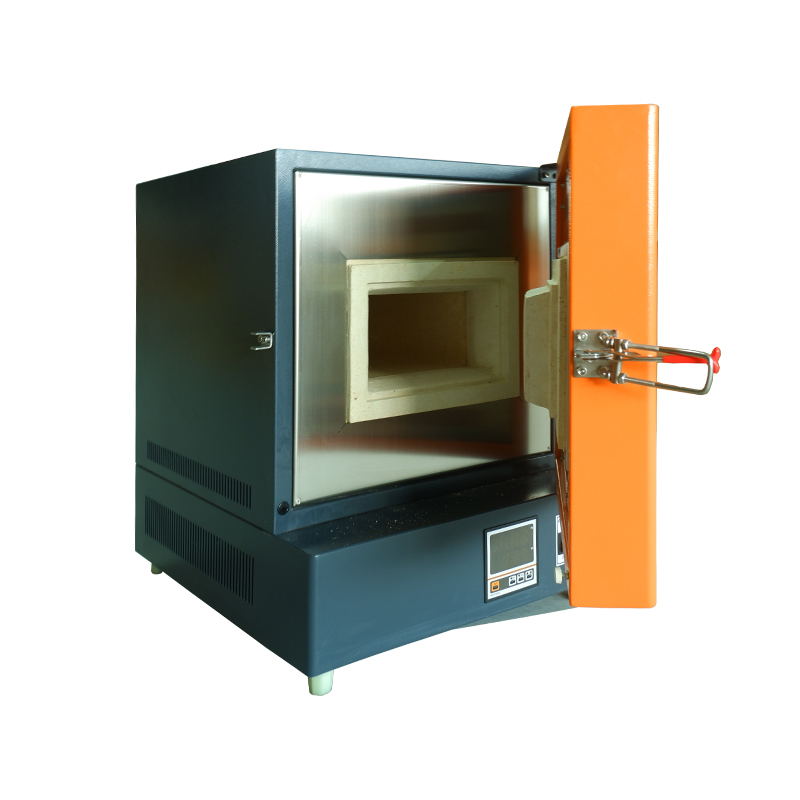 Stable box-type resistance furnace for small-to-medium batch heat treatmentThis box-type resistance furnace offers uniform multi-sided heating, making it well suited for austenitizing and annealing small-to-medium batches in labs and R&D without complex gas systems.View Product →
When bright surfaces are required — for example, hardening surgical instruments or knife blades — a vacuum atmosphere furnace avoids scale and decarburization and removes much of the need for post-process grinding:
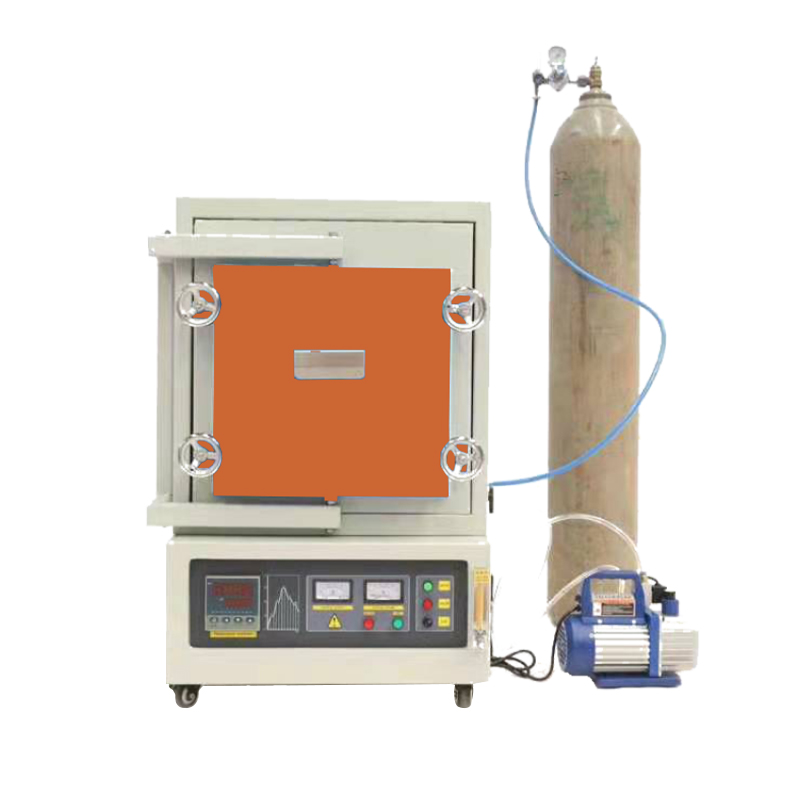 Vacuum atmosphere furnace with timer for bright surface hardeningSuitable for hardening surgical instruments or knife blades, this vacuum atmosphere furnace prevents scale and decarburization, reducing the need for post-process grinding while enabling controlled atmosphere processing.View Product →
For R&D labs that process small lots of different grades, a tube furnace with inert gas inputs allows rapid atmosphere changes and simple recipe testing:
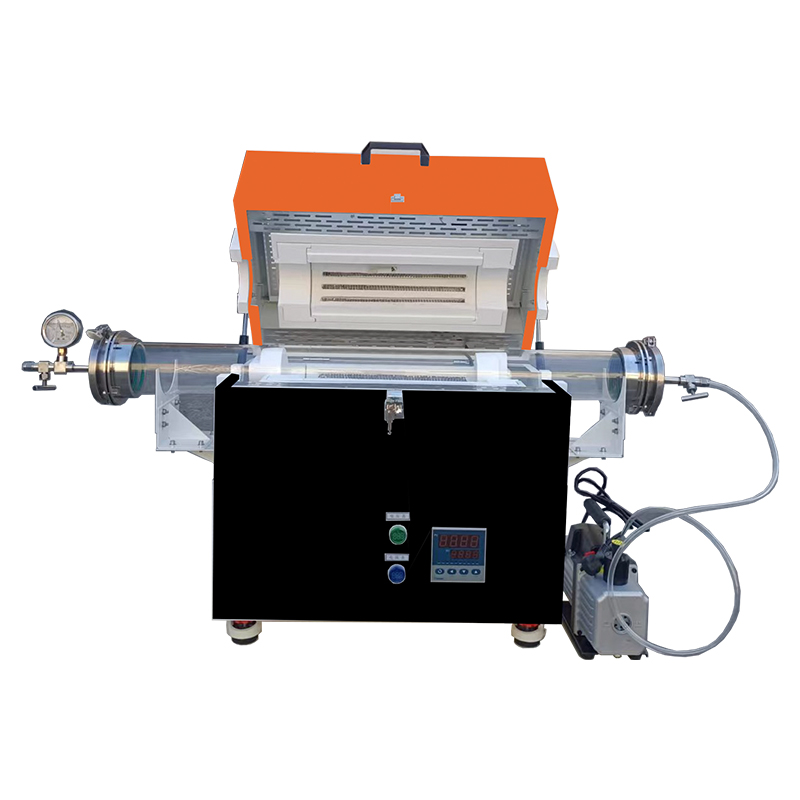 Antioxidant vacuum tube furnace with multiple temperature optionsAs the lowest upfront cost option, this air-atmosphere tube furnace provides moderate uniformity and works for simple annealing and low-carbon martensitic parts, ideal for budget-conscious labs.View Product →
Muffle furnace
Lowest upfront cost. Air atmosphere, moderate uniformity. Works for simple annealing and low-carbon martensitic parts.
Box-type resistance furnace
Balanced cost and control. Good uniformity up to 1300 °C with multi-sided heating. A solid choice for hardening and annealing.
Vacuum tube furnace
Moderate cost, small capacity. Inert gas and vacuum options; suited to R&D and small precision loads.
Vacuum atmosphere furnace
Higher capital cost, excellent surface finish, no decarburization, full process control. The premium is often recovered through lower scrap and less grinding.
ROI comparisons should include energy consumption, argon or nitrogen usage, maintenance, calibration, and the cost of rejected parts. A vacuum furnace costs more upfront, but for high-carbon grades it eliminates decarburized layers, reduces post machining, and opens jobs that an air furnace cannot quote. When volume justifies it, the premium usually pays back quickly.
Maintenance and Compliance
Heat treatment is a qualified process, not a set-and-forget operation. Routine maintenance and documentation keep hardness and corrosion performance within specification.
- Calibrate thermocouples and instruments: for aerospace or medical work, follow AMS 2750 pyrometry requirements. Even outside regulated industries, annual calibration of load thermocouples and controllers prevents temperature drift.
- Check elements and insulation: heating elements degrade at hot spots, and cracked refractory fiber changes heating behavior. Inspect at planned intervals and replace parts in matched sets.
- Monitor atmosphere purity: nitrogen or argon purges and vacuum systems need leak checks and dew point or oxygen monitoring. A leaking seal turns a bright hardening cycle into a decarburizing one.
- Document every load: record alloy, heat number, furnace, thermocouple position, soak time, quench medium, and hardness results. Traceability is the foundation of ISO 9001 and customer acceptance.
Heat treating stainless steel becomes predictable when it is treated as alloy-specific engineering rather than a generic heating job. Identify the grade, choose the correct cycle, control the atmosphere, and verify each load. A furnace with real temperature uniformity and documented control — supported by a manufacturer with applied heat treatment R&D, such as Shanghai Dengsheng's industry-academia research collaborations — turns a written recipe into a repeatable production process.
Send Message
Recommended Products
Products provided by famous enterprises are deeply trusted by users.

- CONTACT
-
- No. 119, Qingliang Avenue, Yaozhuang Town, Zhejiang, China.
- [email protected] ( Email )
- +86-13671719019 ( Phone )
- +86-021-57440136 ( Tel )
- PRODUCT
-
- Drying Oven Series
- Vacuum Box Series
- Explosion-proof Series
- High-temperature Furnace Series
- Incubator Series
- Test Chamber Series
- Other Series
- Forced Air Drying Oven
- Resistance Furnace
- Vacuum Tube Furnace
- Mold Incubator
- Vacuum Atmosphere Furnace
- Biochemical Incubator
- Carbon Dioxide Incubator
- Explosion-Proof Vacuum Drying Oven
- High and Low Temperature Test Chamber
- MOBILE
Copyright ©
Shanghai Dengsheng Instrument Manufacturing Co., Ltd.
All Rights Reserved. Laboratory Equipment Manufacturers

 Back to Top
