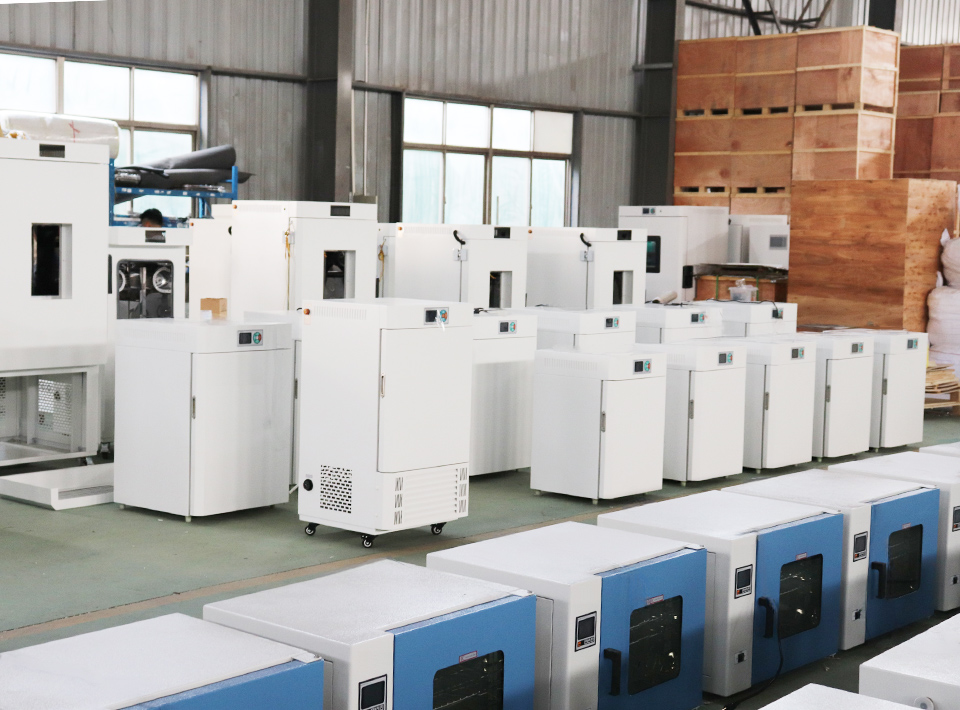
Shanghai Dengsheng Instrument Manufacturing Co., Ltd. builds the Drying Oven Series manufacturer range at our own production base in China — electric-heated forced-air ovens, nitrogen-filled ovens, far-infrared ovens, Class 100 clean ovens and anoxic models. Sheet metal forming, welding, painting and electrical assembly are carried out in-house, so chamber geometry, airflow design and control behaviour stay under one roof instead of being split across subcontractors.
The range serves procurement and project teams who need repeatable heating, dehydration, curing, annealing and heat-treatment cycles rather than a general-purpose warm chamber. Setpoints run from 200 °C forced-air models through 300 °C nitrogen-filled units, with high-temperature configurations extending to 600 °C for annealing and advanced material work.
Our Drying Oven Range
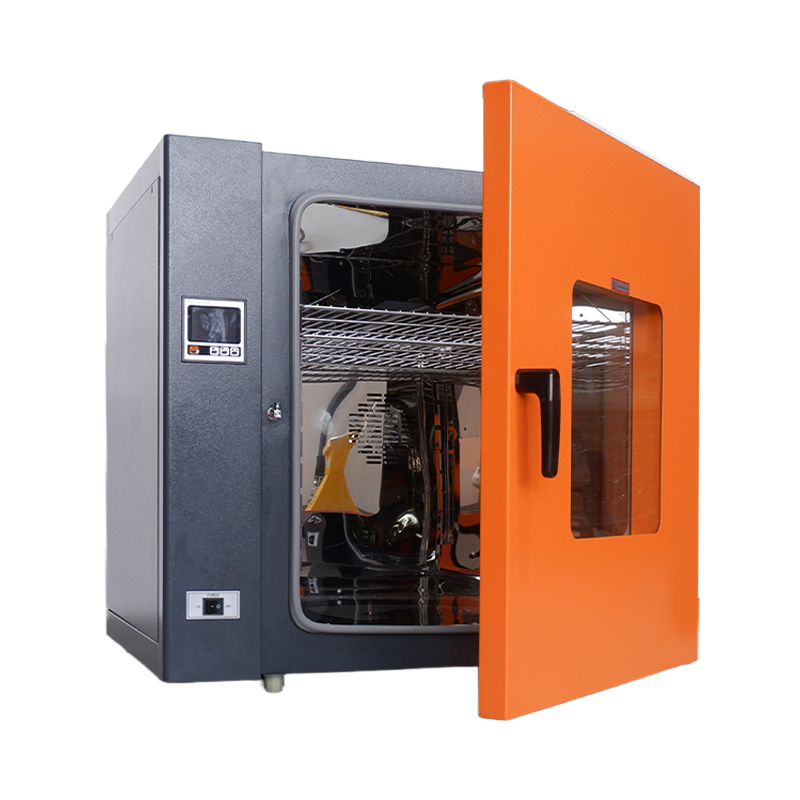
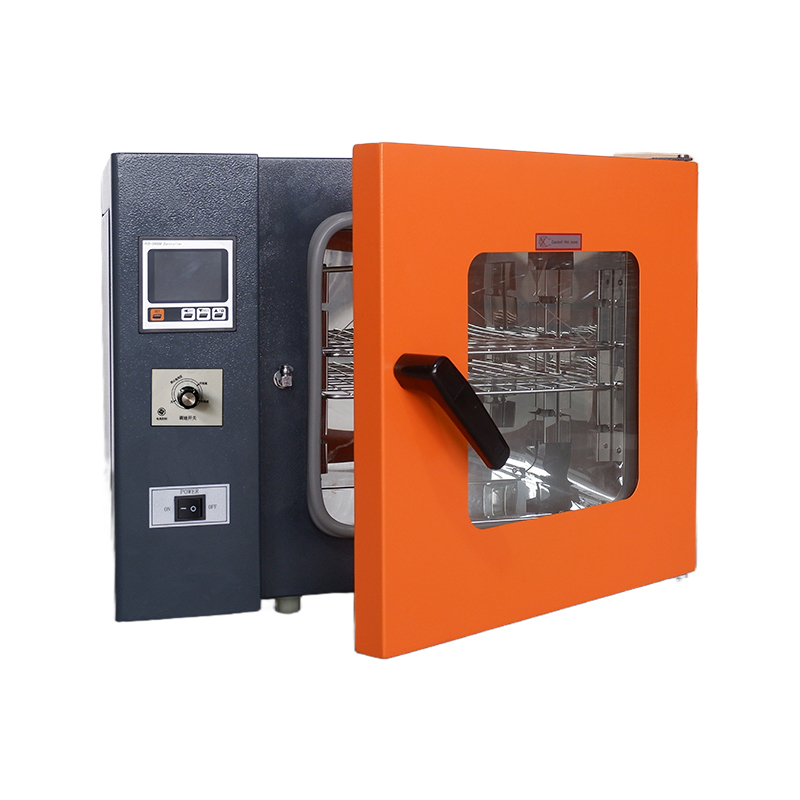
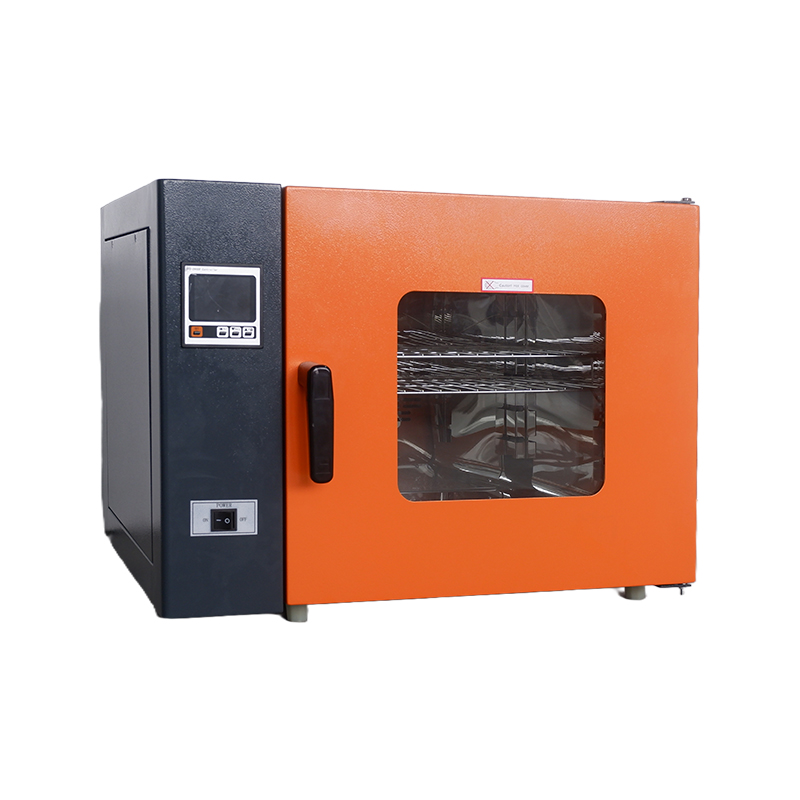
Seven core models cover the majority of laboratory and production drying duties. Each one uses the same forced-convection principle — precision resistance or far-infrared elements generating heat, and a turbine fan driving a controlled turbulent airflow across the load — but they differ in atmosphere, construction grade and temperature ceiling.
| Model |
Heat source and atmosphere |
Nominal working temperature |
Process fit |
| Forced Air Drying Oven (250 °C) |
Electric heating tubes, forced air circulation |
250 °C |
General baking, curing, dehydration, electronic component drying |
| 300 °C nitrogen-filled drying oven |
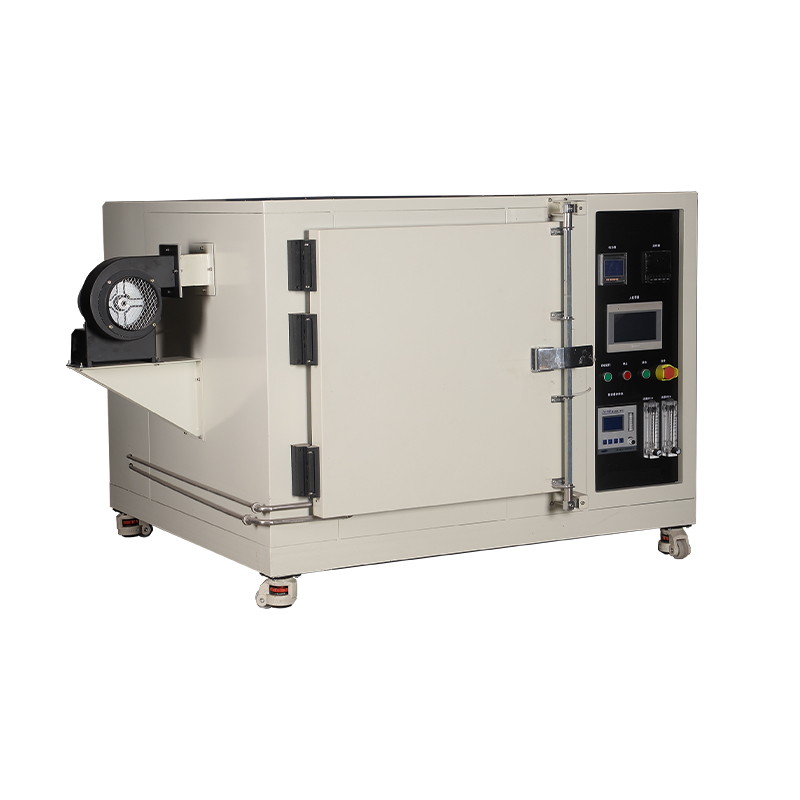
Electric heating, nitrogen purge/fill, forced circulation |
300 °C |
Oxidation-sensitive metal powders, specialty polymers, electronic pastes |
| far-infrared drying oven |
Far-infrared heating tubes, adjustable internal layout |
Model dependent |
Fast, energy-saving drying of powders and low-density materials |
| 200 °C high-reliability high-precision drying oven |
Electric heating, forced circulation |
200 °C |
Routine laboratory drying where repeated cycles matter |
| Easy-to-move quiet-operation high-temperature drying oven |
Electric heating, silent universal wheels on large models |
High-temperature class |
Multi-station laboratories and workshops needing repositionable ovens |
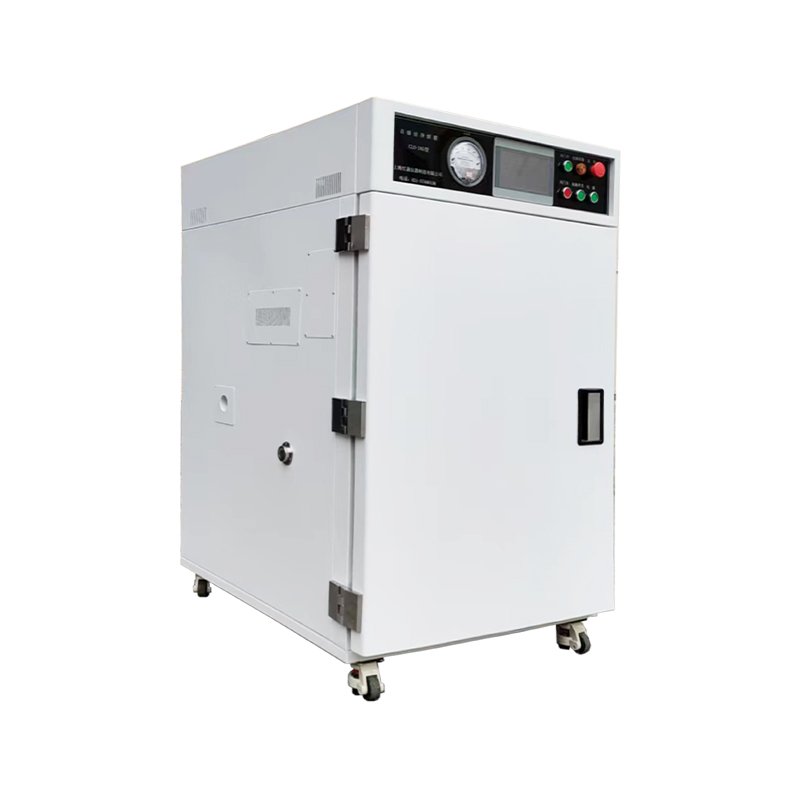
| 250 °C Class 100 clean drying oven |
Electric heating, clean-class internal construction |
250 °C |
Semiconductor, PCB and precision-component dust-free baking |
| Corrosion-resistance Class 100 anoxic drying oven |
Electric heating, low-oxygen atmosphere, corrosion-resistant liner |
Process dependent |
Oxidation-prone or chemically aggressive loads |
Application Fit Across Industries
The oven family is used where heat must be applied evenly and the outcome must be repeatable batch after batch. Our equipment supports electronics and semiconductor production, pharmaceutical and biomedical processing, aerospace composites, automotive and marine components, petrochemical analysis, new material synthesis and food-component testing.
- Electronics and semiconductors: PCB pre-bake, component dust-free baking, paste drying and early-failure screening.
- Pharmaceutical and biomedical: API drying, sterilization support and humidity-sensitive sample processing with easy-clean chambers.
- Aerospace and new materials: composite curing and post-curing, annealing and synthesis where ramp control and uniformity drive results.
- Chemistry and petrochemicals: precision chemical synthesis, catalyst preparation and moisture determination.
- Agriculture and public health: seed science, tissue culture and microbiological work in controlled thermal conditions.
Chamber Construction and Airflow Engineering
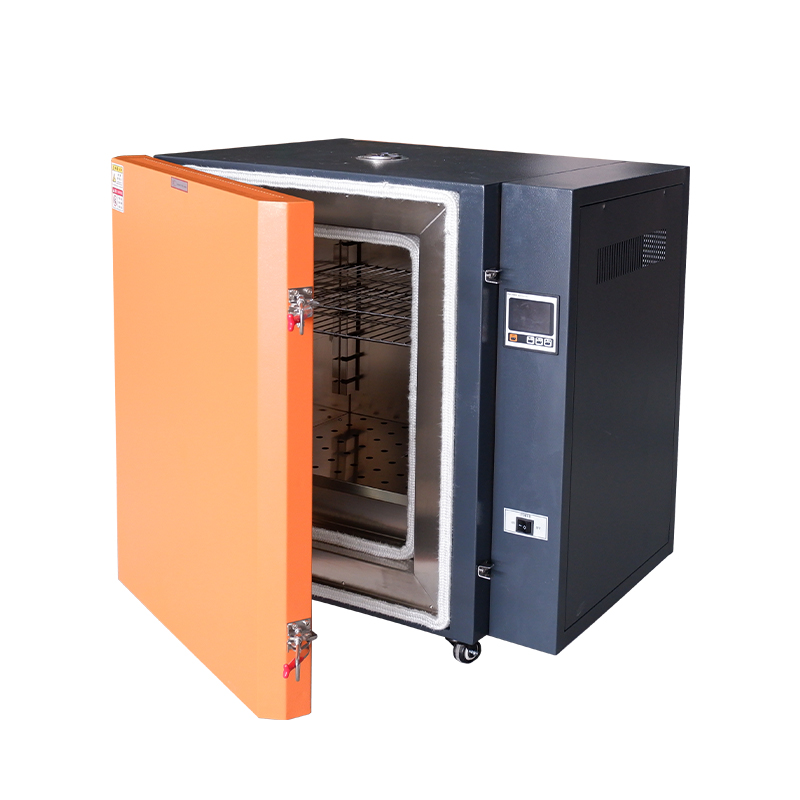
Thermal performance starts with the structure. The interior is thickened stainless steel with a smooth, cleanable surface; the far-infrared model uses a SUS304 mirror liner with radiused corners and removable partitions. Between the working chamber and the shell we fit 75 mm of high-purity alumina ceramic fibre, which limits shell heat loss and holds the working volume stable.
- Outer shell in cold-rolled Q235 steel, CNC formed, phosphated and finished with anti-static powder coating.
- Heating elements in stainless steel and high-resistance alloy wire, with thermal efficiency above 95 %.
- Turbine fan and ducted return path for uniform hot-air circulation and suppressed local overheating.
- Silicone rubber door gasket rated from −60 °C to 250 °C with long-term thermal-oxidative ageing resistance.
- Intelligent fresh-air system with 2–8 intake and exhaust ports sized to chamber volume, discharging water vapour automatically.
- Self-tightening door lock for one-step closing and consistent sealing.
Control, Automation and Atmosphere Integration
Every oven runs on a microcomputer PID temperature control system with dynamic parameter adjustment, presented on a colour LCD touchscreen that shows set temperature, operating temperature, constant-temperature time and fault messages on one screen. Fixed-value and timing modes can be switched freely, with forward and countdown timing options for staged processes.
- Sensor self-diagnosis, over-temperature protection, overload protection and leakage protection as standard safety functions.
- Power-off memory retains the running program after an interruption.
- Independent fan switch, letting operators stop circulation when drying powders or low-density loads so material is not scattered.
- Nitrogen purging through an external inlet with a manual ball valve, creating a low-oxygen, high-cleanliness inert atmosphere for oxidation-sensitive loads.
- Control interfaces, alarm contacts and data handling are agreed against the surrounding line or bench setup during configuration.
Configuration Options We Build Into a Proposal
| Parameter |
Options we configure |
Input we need from the project |
| Working temperature |
200 °C / 250 °C / 300 °C classes, high-temperature build |
Peak process temperature and normal dwell temperature |
| Atmosphere |
Ambient air, nitrogen purge/fill, low-oxygen anoxic operation |
Material sensitivity, permissible oxygen level, nitrogen supply |
| Chamber volume and loading |
Standard and large-capacity chambers, adjustable shelf positions |
Batch volume, container size, load mass per shelf |
| Shelving |
Chrome-plated mesh as standard; stainless steel, alloy or Teflon alternatives |
Chemistry of the load, cleaning regime, tray type |
| Movement and siting |
Silent universal wheels on large-capacity models |
Floor route, door width, final installation position |
| Power supply |
Voltage and plug arrangement matched to the destination market |
Site voltage, frequency, available circuit capacity |
Quality Control and Acceptance
Shanghai Dengsheng Instrument Manufacturing Co., Ltd. has held ISO 9001 quality management system certification since 2019 and applies it from design through to final inspection. Twenty-three national patents cover heating structures, energy-efficient construction and control features, and a seven-engineer R&D team works on thermal behaviour, fluid dynamics and control algorithms.
Inspection follows a four-stage protocol: incoming material check, in-process inspection, ageing test and final pre-shipment check. Precision instruments are used to verify key performance figures such as temperature uniformity and fluctuation rather than relying on visual assessment alone. Where a project needs documented acceptance, we agree the test points and the record format before production starts.
Installation, Maintenance and Serviceability
- Ovens are delivered ready for connection to the site power supply and, where fitted, a nitrogen line; bench or floor siting is confirmed against the chamber size.
- Exhaust and fresh-air port arrangements are set for the room ventilation available at the installation point.
- Removable mesh shelves and radiused liners simplify cleaning between batches.
- Heating elements, door gaskets and shelves are the routine service parts, and we supply replacements against the equipment model and serial number.
- English documentation, online operation training and remote troubleshooting support accompany export orders.
Information We Use to Configure Your Solution
A configuration and quotation are prepared from the process, not from a catalogue page. The details below let our engineers match heating capacity, airflow architecture, atmosphere control and controls to the application.
- Peak and dwell temperature, plus the full ramp and soak profile if the cycle is staged.
- Load description: material, mass, container type, stacking arrangement and moisture to be removed.
- Required chamber volume and shelf count, with any part dimensions that must fit inside.
- Atmosphere requirement — ambient air, nitrogen purge, low-oxygen operation — and the purity available on site.
- Cleanliness class, corrosion exposure or dust-generation risk from the load.
- Site voltage, frequency and available circuit capacity.
- Control and interface expectations, including alarm signals, documentation language and acceptance records.
Frequently Asked Questions
Which drying oven should be used for oxidation-sensitive materials?
For metal powders, specialty polymers, precision electronic pastes and humidity-sensitive biological samples, the nitrogen-filled configuration is the direct fit. High-purity nitrogen replaces reactive gas in the chamber, producing a low-oxygen, clean and uniformly heated inert atmosphere that limits oxidation, hydrolysis and denaturation during the heating cycle.
How is temperature uniformity maintained across the chamber?
Heat is generated by precision resistance or far-infrared elements and distributed by a turbine fan through a ducted circulation path. Fresh-air intake and exhaust ports sized to the chamber volume remove water vapour continuously, and the 75 mm ceramic fibre insulation layer keeps the working volume from being disturbed by shell losses. Temperature uniformity and fluctuation are measured with precision instruments during the ageing and pre-shipment inspection stages.
Do you produce non-standard chambers and special sizes?
Yes. As a manufacturer we build from customer drawings, samples or defined working conditions, covering chamber dimensions, temperature class, liner material, shelf construction, atmosphere control and power supply. Non-standard work is quoted against the process scope, and the delivery date is written into the contract.
What is the difference between a drying oven and a vacuum chamber?
A drying oven works at normal pressure using heating and forced air circulation, which suits most high-temperature-resistant samples. A vacuum chamber works under negative pressure, lowering the boiling point of liquids for rapid low-temperature drying of heat-sensitive or easily oxidised materials. We supply both families, so the choice follows the material rather than a product preference.
What is the delivery and support arrangement for export orders?
Standard models are normally arranged for shipment within 5–7 business days after payment is received; customised units follow the agreed schedule. Export orders include English technical documentation and power supply arrangements suited to the destination market. Support covers operation manuals, online training, lifetime telephone and remote technical guidance, a one-year machine warranty and extended coverage on core heating elements.


 Español
  عربى
عربى 


 2026/10/13