
 Español
  عربى
عربى 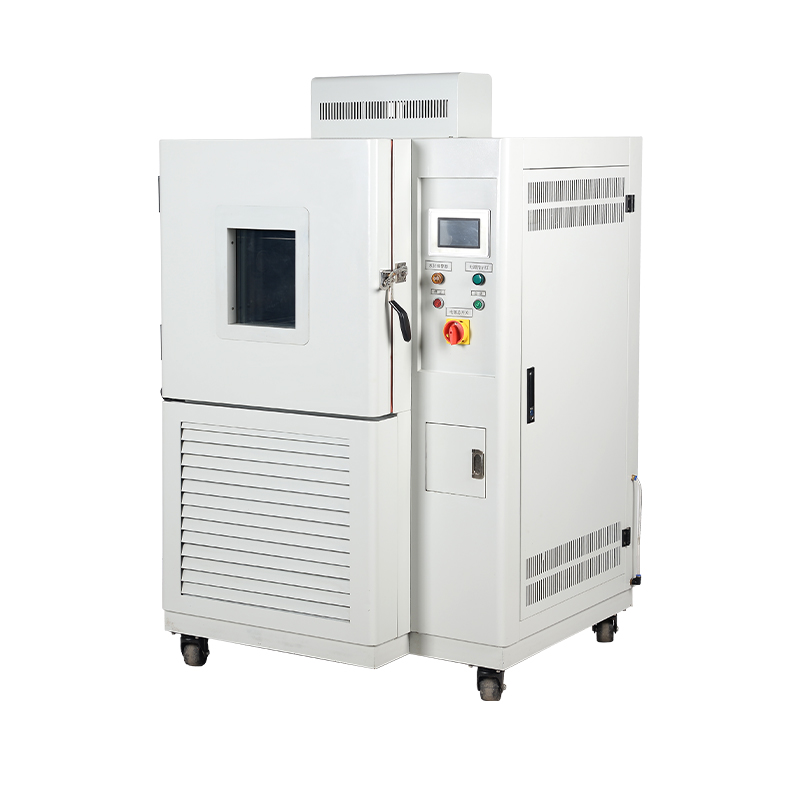



Industry News
Home / News / Industry News / What Is a Muffle Furnace? Working Principle, Temperature Ranges, and Selection
What Is a Muffle Furnace? Working Principle, Temperature Ranges, and Selection
Date:Oct 13, 2026
Short answer: a muffle furnace is an electrically heated chamber furnace in which the heating elements sit outside a refractory-lined inner chamber, so the sample is heated mainly by radiation from hot walls rather than by flame, combustion gas or direct element contact. That single design decision is what makes it the standard tool for ash content, loss-on-ignition, sintering and annealing between roughly 1000 °C and 1800 °C.
A food laboratory technician weighing 2 g of sample into a porcelain crucible has one job before ignition: make sure nothing except heat reaches the sample. If a flame, a glowing coil or a combustion by-product touches the crucible, the ash result stops being traceable to the material being tested. A muffle furnace exists to remove that risk.
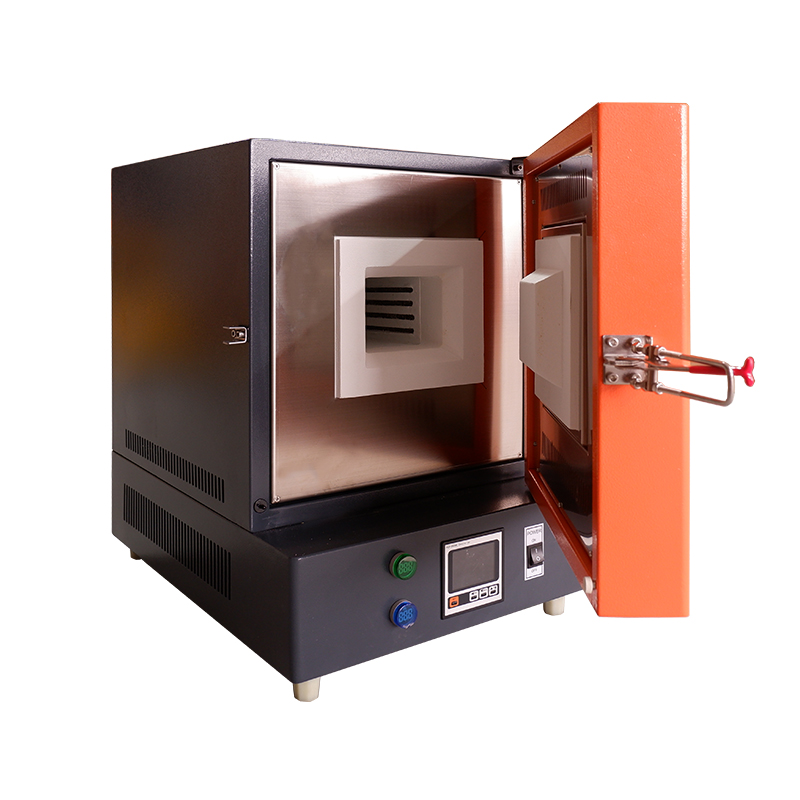
The word "muffle" is old furnace vocabulary. It means the shield or enclosure that separates the workload from the heat source. In a modern electric muffle furnace, that shield is a ceramic-fibre or refractory-brick chamber. Iron-chromium-aluminium resistance wire, silicon carbide rods or molybdenum disilicide rods are mounted in the insulation outside the working volume, and a PID controller drives them from a type K, N or S thermocouple.
Two things it is not: it is not a drying oven (those top out near 300 °C and blow air across the load), and it is not a tube furnace (which offers better atmosphere control but restricts sample geometry). Knowing where a muffle furnace sits between those two instruments solves most selection problems before you look at a catalogue.
Content
- 1 How a Muffle Furnace Actually Heats a Sample
- 2 Muffle Furnace, Drying Oven or Tube Furnace: The Practical Differences
- 3 The Numbers Buyers Rarely See: Where Temperature Deviation Comes From
- 4 Where Muffle Furnaces Are Used Across Industries
- 5 Selection and Cost of Ownership: Five Steps Before You Order
- 6 Maintenance and Compliance: What Keeps Results Defensible
How a Muffle Furnace Actually Heats a Sample
Where the elements sit
Heating elements are embedded in the side walls, floor or ceiling of the insulated chamber, never inside the working volume. Heat crosses the wall by conduction, then leaves the inner surface as infrared radiation. Above about 600 °C radiation does nearly all the work, which is why high set-points hold more evenly than low ones on the same unit. Below that threshold, natural convection and the hearth material carry a larger share, and stability figures quoted at 1000 °C should not be assumed at 300 °C.
Element material sets the ceiling
The heating element, not the controller, is the hard limit on temperature:
- Up to 1200 °C: FeCrAl resistance wire on ceramic supports. Inexpensive, mechanically tough, easy to replace in-house.
- 1200 to 1600 °C: silicon carbide rod elements. Higher surface loading, but resistance climbs as the rods age, so the controller must tolerate a shifting load and the rods must be replaced as a matched set.
- 1700 to 1800 °C: molybdenum disilicide elements. Fast to reach temperature, but brittle below roughly 400 °C and never to be touched while cold.
Why uniformity beats heating speed
A furnace that reaches 1000 °C in twelve minutes but varies 25 °C across the chamber will ruin a sintering run. A furnace that takes forty minutes and holds within ±3 °C will not. For ashing and loss-on-ignition work, a deviation of 20 °C at 550 °C changes the residual carbon result enough to fail a round-robin comparison. Ask for a uniformity figure measured empty at a defined set-point, not a single peak-temperature claim.
Isolated work zone
No flame, no element contact, no flue gas. This is what makes the result defensible in an audited laboratory.
Radiant-dominated transfer
Slower ramps, but the sample is surrounded by walls at one temperature instead of sitting in a hot air stream.
Ceramic fibre insulation
Low thermal mass keeps the outer shell cool and shortens cool-down, which matters when operators load the chamber by hand.
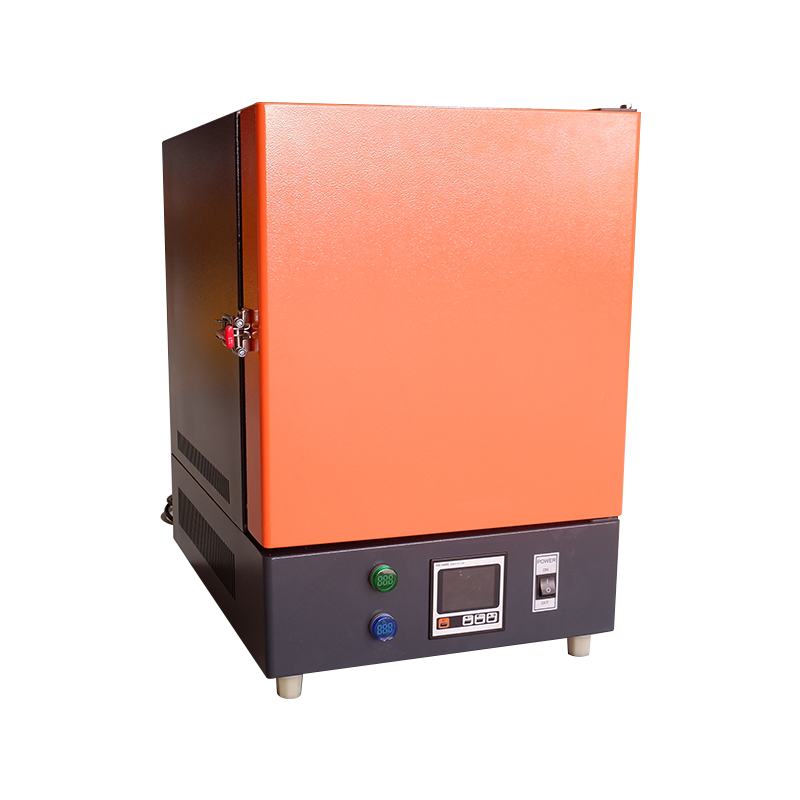 Multi-Temperature Ceramic Fiber Muffle FurnaceMulti-temperature muffle furnace with ceramic fiber insulation and alumina chamber; suitable for lab heat treatment, R&D, and processes needing low thermal mass and rapid cycling.View Product →
Ceramic fibre chambers are the common choice from 1000 °C to 1300 °C because they tolerate rapid cycling and resist thermal shock far better than dense firebrick. Dense brick still wins where the furnace runs continuously at temperature and mechanical abuse from tongs and trays is routine.
Muffle Furnace, Drying Oven or Tube Furnace: The Practical Differences
These three instruments are often quoted against each other in tenders. The comparison below reflects typical benchtop and small industrial units rather than extreme custom builds.
Parameter
Muffle furnace
Drying oven
Tube furnace
Heating method
Elements outside a sealed chamber; radiant wall heating
Elements plus fan circulate hot air across the load
Elements around a cylindrical tube; radiant heating with gas flow
Working range
1000 to 1800 °C
40 to 300 °C
1100 to 1700 °C
Atmosphere
Air as standard; inert gas or vacuum with a sealed retort
Air; some models accept a nitrogen purge
Strong; gas passes directly through the tube
Contamination risk
Very low; no element or combustion contact
Low, though air and fan carry particles
Low
Sample geometry
Crucibles, trays, bulk parts
Trays, glassware, loose components
Powders and small coupons inside a tube
Typical duty
Ashing, sintering, annealing, loss on ignition
Drying, curing, sterilising
Calcination, controlled-atmosphere sintering
Relative capital cost
Medium
Low
Medium to high
Table note: values describe typical benchtop and small industrial units; exact limits depend on element material, insulation thickness and controller tuning.
If a process needs both a defined atmosphere and a large or irregular part, neither a standard muffle nor a tube furnace fits. That gap is where a sealed retort or a vacuum atmosphere chamber earns its cost, since it keeps the radiant heating principle while removing oxygen from the equation.
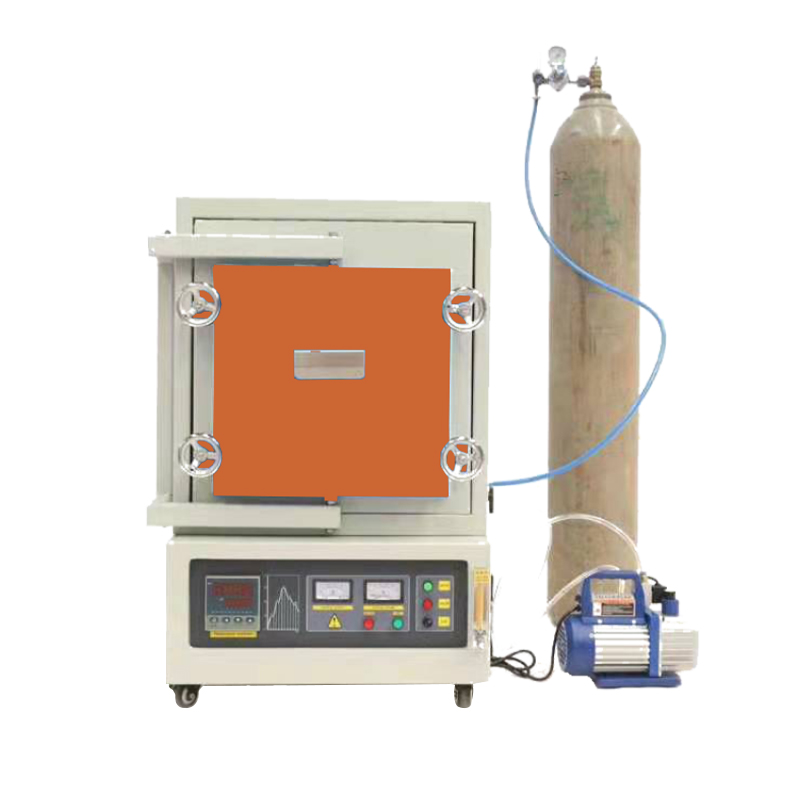 Vacuum Atmosphere Furnace for Controlled Heat TreatmentVacuum and controlled-atmosphere furnace for sintering, annealing, and materials research; sealed chamber supports inert or reducing gases when standard muffle or tube furnaces fall short.View Product →
The Numbers Buyers Rarely See: Where Temperature Deviation Comes From
Uniformity claims are usually quoted for an empty chamber. Once a real load is inside, four factors dominate the deviation you will measure with an external thermocouple. The shares below reflect the pattern seen in a 12 litre chamber held at an 800 °C set-point with a moderate crucible load.
Door and edge losses
42%
42%
Thermocouple position
26%
26%
Element ageing
19%
19%
Loading density
13%
13%
The practical reading: a well-sealed door and a correctly positioned control thermocouple solve more than half of the problem before any electronics are upgraded. Element ageing is the slow-moving factor, and it shows up as longer ramps rather than an obvious fault, which is why resistance checks every few hundred hours beat waiting for a run to fail.
Where Muffle Furnaces Are Used Across Industries
Demand splits along a fairly stable pattern. Ceramics and refractories dominate because sintering and binder burnout are continuous production steps rather than occasional tests.
- Ceramics and refractories: 32%
- Metals and heat treatment: 24%
- Chemical and environmental analysis, ashing and loss on ignition: 18%
- Glass and optical materials: 12%
- Electronics and semiconductors: 9%
- Other laboratory work: 5%
The analytical share is small in volume but demanding in specification, because those furnaces sit inside accredited methods where calibration records and documented uniformity are part of the audit trail. Production users care more about uptime and the cost of a burnt-out element set.
Selection and Cost of Ownership: Five Steps Before You Order
1. Add headroom to your working temperature
Running a 1200 °C furnace at 1200 °C shortens element life sharply. Specify a unit rated at least 50 to 100 °C above the continuous set-point, and confirm whether the rating is continuous or intermittent.
2. Size the chamber around the load, not the bench
An oversized chamber wastes energy and holds temperature less evenly when nearly empty. Keep the load between roughly 20% and 60% of chamber volume.
3. Match the element to the temperature tier
FeCrAl wire above 1200 °C is a false economy; MoSi2 below 1400 °C is money spent for nothing.
4. Insist on a measured uniformity figure
Ask for the set-point, the chamber state and the number of survey points. A single number without those conditions cannot be verified on receipt.
5. Compare ten-year cost, not purchase price
A 1200 °C furnace may need a new element set every 18 to 24 months of heavy use, and the parts are inexpensive. A 1700 °C unit consumes MoSi2 elements that carry a multiple of that cost and degrade faster under rapid cycling.
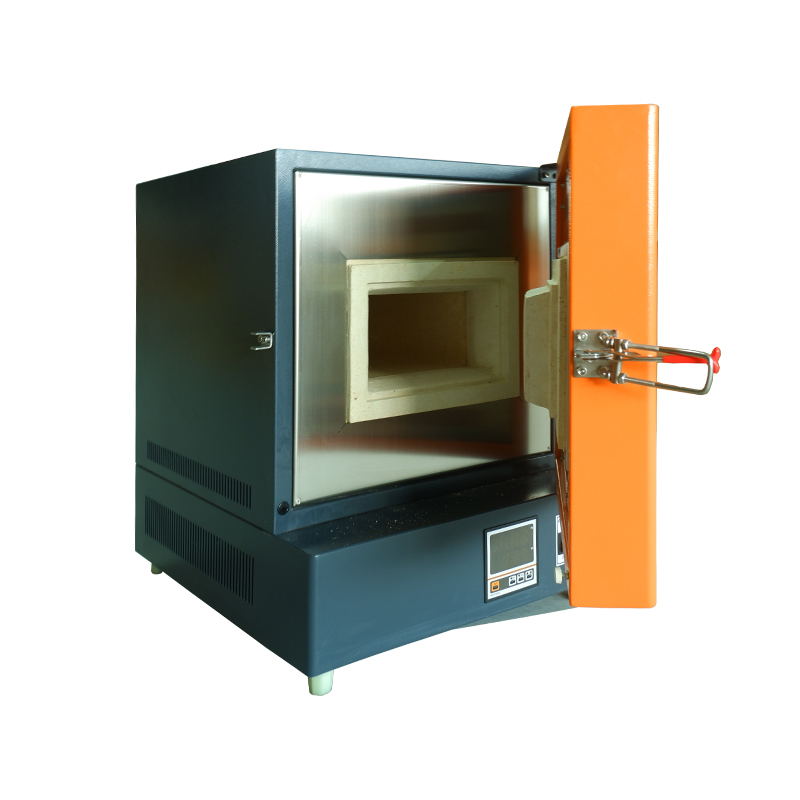 1000–1300 °C Box-Type Resistance FurnaceBox-type resistance furnace for material synthesis, heat treatment, and analytical testing; 1000–1300 °C models avoid costly high-temperature element systems.View Product →
For the majority of analytical and small production tasks, a 1000 to 1300 °C box-type resistance furnace with ceramic fibre insulation and a programmable controller covers the requirement without the maintenance burden of a high-temperature element system.
Maintenance and Compliance: What Keeps Results Defensible
A muffle furnace is a slow-wearing instrument, which makes neglect easy and expensive. The routine below keeps performance predictable and satisfies most audit expectations.
- Verify the control thermocouple against a reference at least once a year, or every six months in accredited work. Record the offset, not just a pass or fail.
- Inspect the door gasket and the chamber lip for distortion. Edge losses are the largest single source of deviation in a loaded chamber.
- Measure element resistance at intervals and compare with the commissioning value. Rising resistance signals ageing before a run fails.
- Never vacuum or brush ceramic fibre while hot. Clean below 200 °C with a soft brush and remove spills before the next cycle.
- Confirm over-temperature cut-out and door interlock function on the same schedule as calibration.
On the compliance side, three items belong in the procurement file: a documented quality system at the manufacturing stage, traceable calibration certificates for the controller and any survey thermocouples, and a clear statement of the furnace's electrical and safety approvals for your region. Laboratories that also run humidity and thermal cycling work often buy furnaces alongside environmental test chambers, and it is worth confirming that both come with comparable documentation rather than assuming it.
The definition of a muffle furnace is simple, but the decisions around it are not: temperature tier, element material, chamber volume, uniformity evidence and long-term consumable cost each change the outcome of the same experiment. Buyers who specify all five up front rarely need to replace the unit when their process moves 100 °C higher.
Manufacturers that build both drying equipment and high-temperature furnaces tend to understand the boundary between the two, which is useful when a process sits in the middle. The high-temperature furnace range from a supplier that also produces drying ovens, vacuum chambers and incubators is usually easier to integrate into one laboratory workflow than equipment sourced piece by piece.
Send Message
Recommended Products
Products provided by famous enterprises are deeply trusted by users.

- CONTACT
-
- No. 119, Qingliang Avenue, Yaozhuang Town, Zhejiang, China.
- [email protected] ( Email )
- +86-13671719019 ( Phone )
- +86-021-57440136 ( Tel )
- PRODUCT
-
- Drying Oven Series
- Vacuum Box Series
- Explosion-proof Series
- High-temperature Furnace Series
- Incubator Series
- Test Chamber Series
- Other Series
- Forced Air Drying Oven
- Resistance Furnace
- Vacuum Tube Furnace
- Mold Incubator
- Vacuum Atmosphere Furnace
- Biochemical Incubator
- Carbon Dioxide Incubator
- Explosion-Proof Vacuum Drying Oven
- High and Low Temperature Test Chamber
- MOBILE
Copyright ©
Shanghai Dengsheng Instrument Manufacturing Co., Ltd.
All Rights Reserved. Laboratory Equipment Manufacturers

 Back to Top
