
 Español
  عربى
عربى 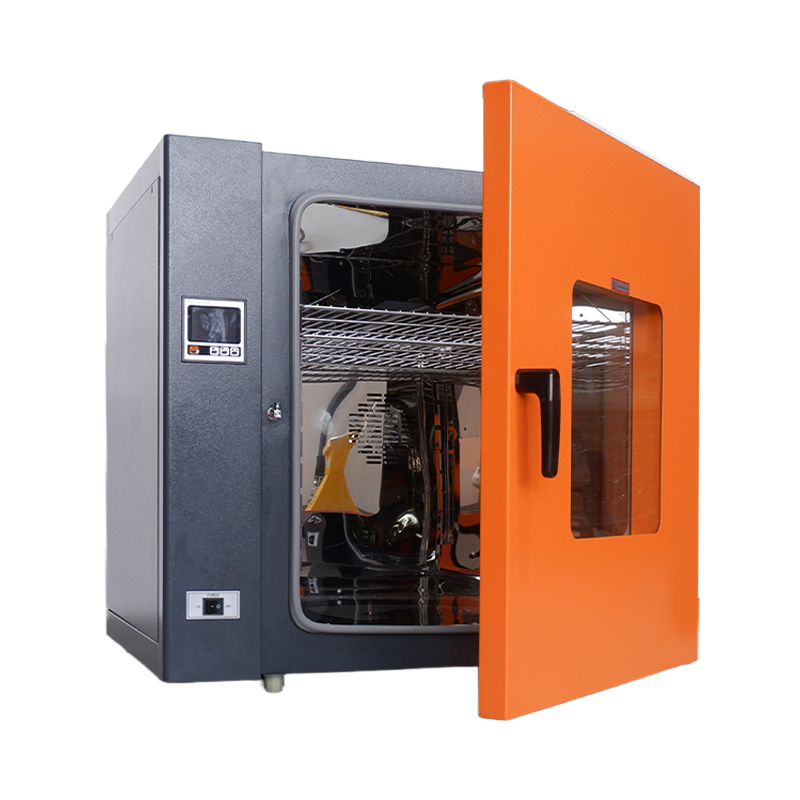



Industry News
Home / News / Industry News / Salt Bath Heat Treatment: Process, Salt Types, Cost, and Safety Limits
Salt Bath Heat Treatment: Process, Salt Types, Cost, and Safety Limits
Date:Sep 21, 2026
At 1,050 °C, a rack of A2 tooling inserts lowered into molten salt reaches austenitizing temperature in roughly 60 to 90 seconds. The same rack in a cold-wall vacuum furnace needs 35 to 45 minutes. That gap is not a scheduling detail. It sets austenite grain size, the distortion already locked into the part before the quench begins, and the straightening labour that appears in next month's scrap report.
Salt bath heat treatment is the fastest commercial way to bring steel to temperature and hold it uniformly. It earns its place when sections are thin or geometry is complex, when distortion must stay within a few thousandths of an inch, or when the process needs an isothermal hold such as martempering, austempering, or a nitriding and carburizing salt. It is the wrong purchase when parts are thick, annual tonnage is low, or nobody on the floor wants to own salt chemistry, fume extraction, and waste disposal. Three numbers decide it: minimum section thickness, annual tonnage, and the current scrap or straightening rate.
What follows is the heat transfer behind the process, the salt families and their temperature windows, a side-by-side comparison with vacuum and atmosphere furnaces, the hidden costs that never appear in a quotation, and the maintenance routine that keeps a bath alive.
Content
What Happens Inside a Molten Salt Bath
A salt bath is a heated pot of molten salt, usually a nitrate, nitrite, chloride, or cyanide-based mixture, that transfers heat to the workpiece through direct liquid contact. Because the part is never exposed to air at temperature, there is no scale and no decarburization on the surface, and no protective atmosphere to balance.
Heat transfer is limited by the part, not by the furnace
Molten salt sits at a density near 1.8 to 2.0 g/cm3 with a large volumetric heat capacity, so the bath behaves as a thermal reservoir rather than an air stream. Its convective coefficient against steel is one to two orders of magnitude higher than that of a circulating atmosphere furnace. The surface of the part reaches bath temperature almost immediately, and the remaining time is set by conduction through the section. A 25 mm section that needs 40 minutes in vacuum may need 3 to 4 minutes in salt.
- Temperature uniformity: with agitation, a well-maintained bath holds the load within roughly ±3 to ±5 °C, which supports tight austenitizing windows and repeatable case depths.
- No oxidation or decarburization: the liquid excludes air, so machined surfaces leave the bath clean and ready for the next operation.
- Isothermal holding: a second bath at 200 to 350 °C allows martempering or austempering until transformation finishes at one temperature.
- Buoyant support: the liquid carries the part, reducing the sag that gravity causes in long or thin components.
Matching salt chemistry to the temperature window
Table 1: Salt families used in industrial heat treatment, grouped by working temperature.
Salt choice is not interchangeable. Nitrate and nitrite salts decompose above roughly 600 °C and can react violently with certain metals and organics; chloride salts absorb moisture and must be started slowly; cyanide-bearing salts demand dedicated ventilation, separate tooling, and controlled waste treatment. Running the wrong salt at the wrong temperature is a safety incident, not a quality issue.
Salt Bath vs Vacuum vs Atmosphere: A Practical Comparison
Table 2: Typical industrial ranges for a 25 mm section; exact values depend on alloy, loading, and equipment condition.
The pattern is consistent. Salt wins on speed, uniformity, and distortion control, and loses on chemistry management and waste handling. Vacuum wins on cleanliness for thick, high-value parts but heats slowly. Atmosphere furnaces sit in the middle and remain the cheapest route for tempering or annealing large volumes where slight surface oxidation is tolerable.
Hidden Metrics: Heat-Up, Drag-Out, and Chemistry Drift
1.0
Salt bath
3.0
Fluidized bed
5.0
Atmosphere
8.0
Vacuum
Figure 1: Relative heat-up time index for a 25 mm section, salt bath = 1.0.
Heat-up time is the visible metric. Drag-out is the expensive one. Every part leaving the bath carries salt on its surface, typically a few grams to a few tens of grams, and that salt ends up in the rinse water, the quench tank, or on the floor. Over a year, drag-out is usually the largest salt consumption line in the budget, larger than evaporation losses, and it grows quietly with part complexity.
Bath chemistry also drifts. Nitrate baths accumulate carbonate as they age, which raises the melting point and lowers the usable top temperature. Chloride baths collect oxides and sludge that insulate heating elements and create temperature stratification. Most shops analyse the bath weekly or fortnightly and decant sludge monthly; skipping that routine shows up as erratic case depth long before it shows up as a failed part.
Where Salt Baths Are Still Specified
Tool and die: 34%
Aerospace components: 22%
Automotive powertrain: 18%
Medical instruments: 12%
Energy and heavy equipment: 8%
Other: 6%
Figure 2: Approximate distribution of molten salt process usage across end markets.
The distribution makes sense once distortion and section thickness are considered together. Tool and die work involves thin, high-hardness sections where straightening is expensive. Aerospace and automotive parts carry tight dimensional tolerances and documented process windows. Medical and energy applications use salt mainly for liquid nitriding, where the bath doubles as a case-hardening medium rather than only a heating medium.
Payback, Selection, and a Five-Step Buying Process
A salt line pays back through scrap reduction and cycle time. If a shop straightens 5% of its long shafts today and brings that below 1% with an isothermal salt process, the saving usually covers a nitrate bath within 18 to 30 months. If distortion is not a problem and the sections are thick, salt rarely pays back at all.
- Fix the temperature window first. Determine the exact austenitizing, austempering, or nitriding temperature and hold time; this narrows the salt family before any equipment is quoted.
- Match the salt, then size the pot. Pot size follows the largest load, not the average load. Loading above roughly 30 to 40% of bath mass in parts will sag in temperature and stretch the cycle unpredictably.
- Decide on agitation and a second bath. Agitation delivers the ±3 to ±5 °C uniformity; a second, smaller bath is what enables martempering and austempering.
- Plan pre-heat and post-rinse equipment. Moisture on parts causes violent spatter in a hot bath, and residual salt must be rinsed and dried out of blind holes and threads.
- Budget the waste stream from day one. Cyanide-bearing salt waste cannot go to a municipal treatment plant; alkaline chlorination or licensed disposal is a recurring cost, not a one-time project.
For shops that decide the chemistry burden is not worth it, a controlled-atmosphere route using proven high-temperature furnace series equipment covers tempering, preheating, and many case-hardening steps without a molten salt inventory or a waste permit.
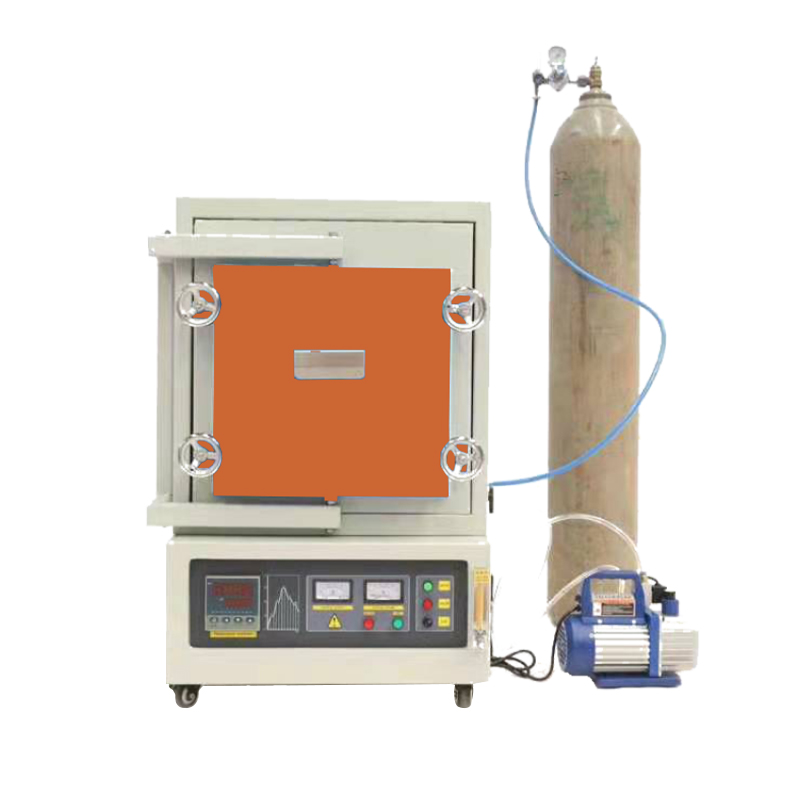 Timer function Vacuum Atmosphere FurnaceVacuum atmosphere furnaces are core equipment for high-temperature heat treatment of materials by creating a vacuum and introducing a controlled atmosphere (such as in...View Product →
Maintenance, Safety, and Compliance
Routine bath care
- Analyse salt chemistry weekly: carbonate content in nitrate baths, cyanate content in nitriding salts, and moisture in chlorides.
- Skim sludge and dross before it reaches the heating elements, and keep a written log of salt additions and decanting dates.
- Never add cold salt or wet tools to a running bath; charge slowly at the edge and allow the melt to re-stabilise before loading parts.
- Cover the bath when idle to cut energy loss and limit moisture absorption overnight.
Drying parts before and after the bath
Moisture is the most common cause of a salt bath eruption. Water trapped in a blind hole or threaded bore flashes to steam instantly at 500 °C and throws salt out of the pot, and the same applies to wet fixtures, damp thermocouples, and cold parts brought into a humid room. A high-precision drying oven is the standard tool for that step, holding parts at 120 to 150 °C until no measurable moisture remains.
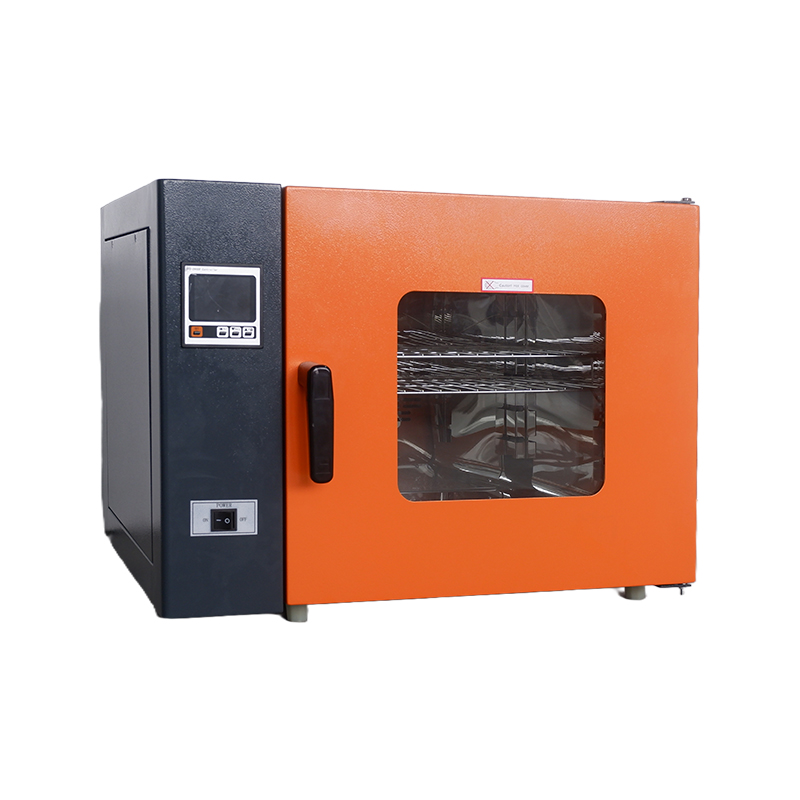 200℃ High-Reliability High-Precision Drying OvenPrecision drying ovens, as precision heat treatment equipment, are indispensable basic equipment in modern industrial and scientific research systems. Their core princ...View Product →
After treatment, parts leave the bath coated in salt. A warm water rinse removes most of it; the remainder hides in cavities and threads. A vacuum drying oven pulls that residual moisture out at low temperature, which prevents flash corrosion and stops leftover salt from re-hydrating on machined surfaces.
 Exquisite Appearance Flexible and Convenient Vacuum Drying OvenThis product features a vertical, floor-standing design, efficiently integrating the vacuum pump and working chamber into a single, compact structure. This eliminates ...View Product →
Compliance and documentation
Salt furnaces fall under the same pyrometry and quality frameworks as any other heat treating equipment: AMS 2750 for aerospace, CQI-9 for automotive, NADCAP for special processes, and ISO 9001 for general quality management. Expect quarterly temperature uniformity surveys and monthly checks on control and recording instruments, plus fume extraction records and waste manifests for nitrate or cyanide-bearing material. Shops that buy safety-rated equipment on price alone usually discover the real cost later; the same pattern appears across every category of protective hardware, including explosion-proof equipment for hazardous areas.
Salt bath heat treatment is a focused tool, not a general solution. It delivers heating rates, uniformity, and isothermal control that no gas furnace matches, and in exchange it asks for disciplined salt chemistry, moisture control, ventilation, and a waste plan. If your parts are thin, your distortion targets are tight, and your volumes justify the chemistry, the process will hold its place on the floor for decades. If they are not, a properly sized vacuum or atmosphere system will be cheaper to run and far easier to hand to the next shift. Decide with the section thickness and the scrap rate in front of you, not with the purchase price.
Send Message
Recommended Products
Products provided by famous enterprises are deeply trusted by users.


- CONTACT
-
- No. 119, Qingliang Avenue, Yaozhuang Town, Zhejiang, China.
- [email protected] ( Email )
- +86-13671719019 ( Phone )
- +86-021-57440136 ( Tel )
- PRODUCT
-
- Drying Oven Series
- Vacuum Box Series
- Explosion-proof Series
- High-temperature Furnace Series
- Incubator Series
- Test Chamber Series
- Other Series
- Forced Air Drying Oven
- Resistance Furnace
- Vacuum Tube Furnace
- Mold Incubator
- Vacuum Atmosphere Furnace
- Biochemical Incubator
- Carbon Dioxide Incubator
- Explosion-Proof Vacuum Drying Oven
- High and Low Temperature Test Chamber
- MOBILE
Copyright ©
Shanghai Dengsheng Instrument Manufacturing Co., Ltd.
All Rights Reserved. Laboratory Equipment Manufacturers

 Back to Top
