
 Español
  عربى
عربى 



Industry News
Home / News / Industry News / Types of Sintering Furnaces: A Complete Guide for Labs and Industrial Use
Types of Sintering Furnaces: A Complete Guide for Labs and Industrial Use
Date:Oct 08, 2026
If your sintering runs produce inconsistent density, unwanted grain growth, or unpredictable shrinkage, the furnace type is often the first variable to examine. A sintering furnace does more than reach high temperatures—it controls atmosphere, heating rate, cooling profile, and temperature uniformity. Those four factors determine whether a powder compact becomes a reliable component or a batch of scrap. Below is a practical breakdown of the main types of sintering furnaces, the trade-offs between them, and how to match a furnace to your material and production volume.
Key takeaway: For most laboratory and small-batch production, vacuum sintering furnaces offer the best balance of atmosphere control and cost. Atmosphere furnaces suit high-volume continuous processing, hot press furnaces handle difficult-to-densify materials, and microwave furnaces deliver rapid heating for specific ceramics. Selecting the wrong type can double cycle times and increase rejection rates.
Content
- 1 Core Principles: What a Sintering Furnace Must Control
- 2 Types of Sintering Furnaces: A Detailed Breakdown
- 3 Data Comparison: Key Parameters Across Furnace Types
- 4 Hidden Metrics: Heating Efficiency and Energy Demand
- 5 Industry Application Distribution
- 6 Selection Guide: A Step-by-Step Approach
- 7 Maintenance and Compliance Recommendations
Core Principles: What a Sintering Furnace Must Control
Sintering bonds particles through atomic diffusion at temperatures below the material's melting point. The furnace must manage four critical variables simultaneously:
- Temperature uniformity: Variations above ±5°C across the workload lead to uneven densification and distortion. Typical production furnaces specify ±3°C to ±5°C in the hot zone.
- Atmosphere composition: Oxygen, nitrogen, hydrogen, argon, or vacuum each interact differently with the powder surface. Residual oxygen above 10 ppm can oxidize metals and inhibit bonding.
- Heating and cooling rates: Controlled ramps prevent thermal shock and manage binder removal. Ramp rates from 1°C/min to 20°C/min are common, depending on part thickness.
- Pressure and gas flow: Vacuum levels below 10 Pa reduce contamination, while positive pressure aids binder removal and heat transfer.
Understanding these principles helps narrow the choice among furnace types.
Types of Sintering Furnaces: A Detailed Breakdown
Vacuum Sintering Furnaces
Vacuum furnaces evacuate the chamber to remove oxygen and other contaminants before heating. They typically operate from 10-3 to 10-5 mbar. This environment suits reactive metals like titanium, zirconium, and tantalum, as well as cemented carbides and high-purity ceramics. Because no gas convection occurs, heat transfer relies on radiation, which demands careful element placement and workload orientation.
A vacuum sintering furnace usually achieves maximum temperatures between 1,200°C and 2,200°C. Cycle times range from 4 to 12 hours for batch loads. One limitation: vacuum alone cannot remove carbon-based binders efficiently; a separate debinding step or a partial-pressure gas purge is often required.
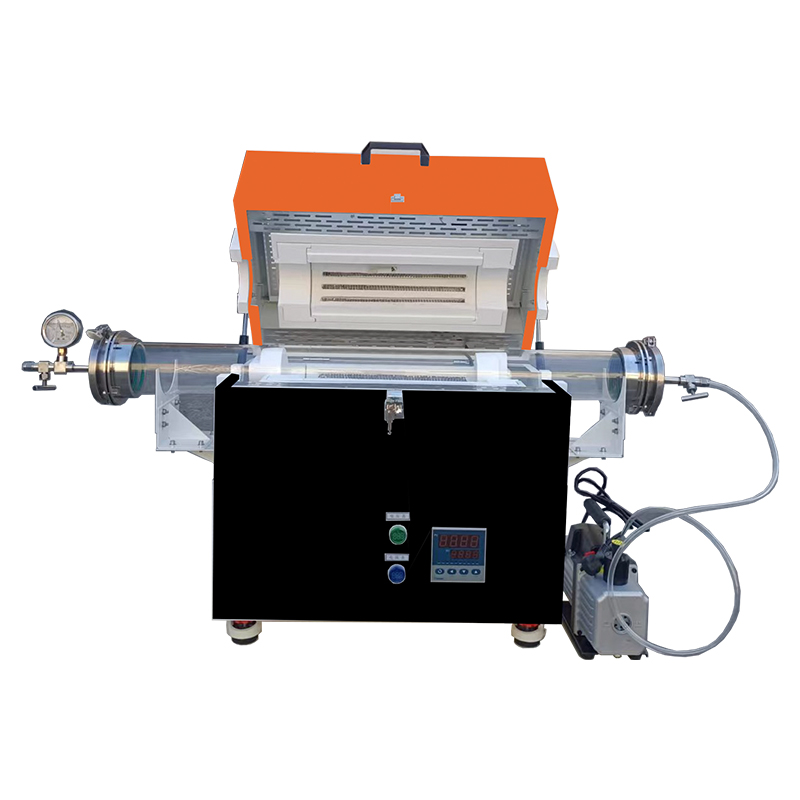 Antioxidant Vacuum Tube Furnace with 1200–1700°C OptionsA vacuum tube furnace for research and small-batch high-temperature processing, offering 1200°C, 1400°C, and 1700°C models, controlled atmospheres, and rapid atmosphere switching.View Product →
For research and small-batch production where oxidation risk is high, a vacuum tube furnace provides a flexible platform. It allows rapid atmosphere switching and precise temperature control across multiple set points.
Atmosphere Sintering Furnaces
Atmosphere furnaces introduce a controlled gas—typically nitrogen, hydrogen, argon, or a mixture—to displace oxygen and sometimes participate in the sintering reaction. Hydrogen atmospheres offer reducing conditions and high thermal conductivity, making them ideal for stainless steels and copper alloys. Nitrogen is safer and cheaper but requires low dew point to avoid oxidation.
These furnaces often run continuously with mesh belts or pusher mechanisms, achieving throughputs of hundreds of kilograms per hour. Maximum temperatures generally range from 1,100°C to 1,600°C, limited by the alloy used for the retort or muffle. Gas flow rates must be tuned to balance cost and atmosphere purity; a typical flow is 10 to 30 liters per minute per square meter of load surface.
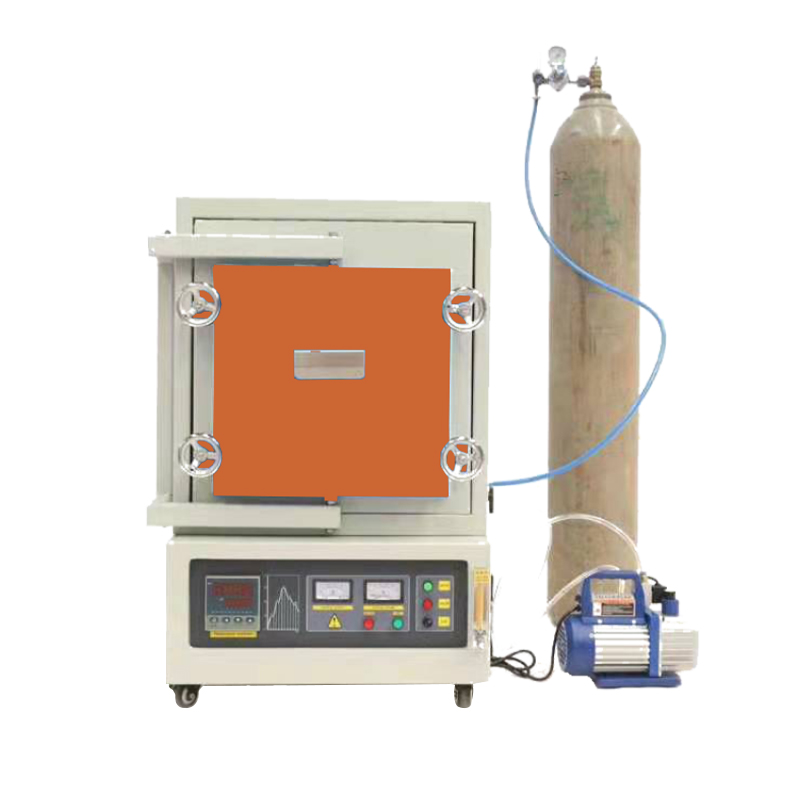 Timer Function Vacuum Atmosphere Furnace for Controlled Heat TreatmentA vacuum atmosphere furnace supporting alternating vacuum and gas modes, useful for debinding and sintering without transferring workloads, with inert, reducing, or carbonitriding atmospheres.View Product →
When a process requires alternating vacuum and gas atmospheres, a vacuum atmosphere furnace offers the flexibility of both modes in one chamber. This design supports debinding under vacuum and sintering under positive pressure without transferring the workload.
Hot Press Sintering Furnaces
Hot press furnaces apply uniaxial pressure (typically 10 to 50 MPa) during heating, which accelerates densification and reduces sintering temperature by 100°C to 300°C. This method is essential for materials that resist solid-state sintering, such as boron carbide, silicon nitride, and certain intermetallics.
Graphite dies and punches are common, limiting atmosphere options to vacuum or inert gas. Cycle times are longer—6 to 24 hours—because the load must be heated, pressed, and cooled without cracking the die. Energy consumption per part is higher than pressureless sintering, so hot pressing is usually reserved for high-value components or when full density is non-negotiable.
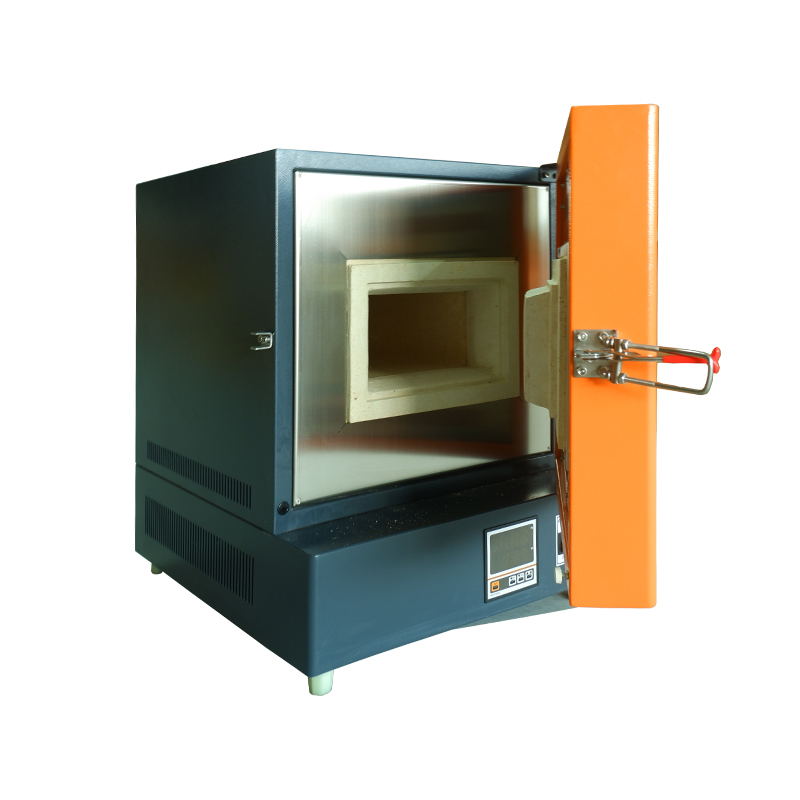 Stable-Performance Box-Type Resistance Furnace for Laboratory and Industrial R&DA box-type resistance furnace for general high-temperature sintering, heat treatment, and laboratory-scale trials, with 1000°C, 1200°C, and 1300°C models.View Product →
For general high-temperature sintering without pressure, a box-type resistance furnace provides a robust, cost-effective solution. It handles temperatures up to 1,300°C and is well suited for laboratory-scale trials and small production batches.
Microwave Sintering Furnaces
Microwave furnaces couple electromagnetic energy directly into the material, generating heat volumetrically rather than through surface radiation. This can cut sintering times by 50% to 90% and lower energy consumption by up to 70% for certain ceramics like alumina and zirconia.
The challenge lies in uniform coupling. Materials with low dielectric loss at room temperature may need a susceptor to initiate heating. Temperature control is also more complex because conventional thermocouples interfere with the microwave field, requiring optical pyrometry. Maximum temperatures reach 1,600°C to 1,800°C in production units, with chamber sizes typically smaller than comparable vacuum or atmosphere furnaces.
Data Comparison: Key Parameters Across Furnace Types
The table below summarizes typical operating ranges and considerations. Values are representative and vary by manufacturer and configuration.
Parameter
Vacuum
Atmosphere
Hot Press
Microwave
Max temperature
1,200–2,200°C
1,100–1,600°C
1,200–2,000°C
1,600–1,800°C
Atmosphere
Vacuum (10-3–10-5 mbar)
N2, H2, Ar, mixtures
Vacuum or inert gas
Inert gas or air
Pressure
None (vacuum)
Near atmospheric
10–50 MPa uniaxial
None
Heating rate
1–10°C/min
2–20°C/min
1–5°C/min
10–100°C/min
Typical cycle time
4–12 h
2–8 h (continuous)
6–24 h
0.5–3 h
Table 1: Representative parameters for common sintering furnace types. Actual values depend on material, load, and equipment design.
Hidden Metrics: Heating Efficiency and Energy Demand
Beyond temperature and atmosphere, energy consumption per kilogram of sintered part separates economical choices from expensive ones. The chart below compares relative energy demand for a typical 1 kg load of steel powder, normalized to vacuum sintering as 100%.
Vacuum
100%
Atmosphere
85%
Hot press
140%
Microwave
60%
Microwave sintering uses the least energy per part but is limited in material compatibility. Hot pressing consumes the most because of simultaneous pressure and long cooling cycles. Atmosphere furnaces benefit from continuous operation, spreading energy over more parts.
Industry Application Distribution
Sintering furnaces serve diverse sectors. The pie chart below shows a typical distribution of furnace sales by application area, based on recent industry data for batch and continuous systems.
Automotive & aerospace (35%)
Medical & dental (25%)
Electronics & energy (20%)
Research & others (20%)
Automotive and aerospace drive demand for vacuum and atmosphere furnaces that handle large batches of structural parts. Medical applications favor vacuum furnaces for titanium implants and hot press furnaces for ceramic dental restorations. Electronics and energy sectors use atmosphere furnaces for magnetic materials and microwave furnaces for solid oxide fuel cell components.
Selection Guide: A Step-by-Step Approach
Choosing the right furnace follows a logical sequence. Skipping steps often leads to oversized equipment or unacceptable part quality.
- Define material and atmosphere sensitivity: Check if the powder reacts with oxygen, nitrogen, or hydrogen. Titanium and zirconium require vacuum below 10-2 mbar. Copper alloys tolerate nitrogen but need reducing conditions for oxide removal.
- Determine required density and microstructure: If full density is mandatory and pressureless sintering fails, hot pressing or sinter-HIP becomes necessary. For 90–95% density, vacuum or atmosphere sintering may suffice.
- Establish temperature and time profile: Use differential scanning calorimetry or dilatometry to identify sintering onset. Ensure the furnace can achieve the required ramp rates without overshoot.
- Estimate throughput and load size: Batch furnaces suit varied production; continuous furnaces excel at high volumes of identical parts. Calculate cycle time including heating, soaking, and cooling.
- Evaluate total cost of ownership: Include energy, atmosphere gas, maintenance, and consumables. A vacuum furnace may cost more upfront but use less gas than an atmosphere furnace running hydrogen.
Maintenance and Compliance Recommendations
Even a well-chosen furnace degrades without proper care. Follow these practices to protect your investment and meet industry standards:
- Calibrate thermocouples quarterly: Drift of 5°C can alter density by 2%. Use a certified reference thermocouple and document results.
- Inspect seals and gas lines monthly: Vacuum leaks raise oxygen levels and extend pump-down time. Helium leak testing detects small leaks that a pressure rise test misses.
- Replace heating elements on condition: Graphite elements erode; molybdenum elements embrittle. Keep spare sets and log resistance changes.
- Comply with safety standards: NFPA 86 for ovens and furnaces, AMS 2750 for aerospace heat treatment, and ISO 9001 for quality management. Hydrogen systems require additional ventilation and gas detection.
- Document every cycle: Traceability helps diagnose quality issues and satisfies customer audits. Record temperature, atmosphere, pressure, and cooling rate.
Routine maintenance costs typically run 3–5% of the furnace purchase price annually. Neglecting it can lead to premature failure and unplanned downtime costing far more than the maintenance itself.
Matching a sintering furnace to your material, production volume, and quality standard is a decision that pays off over thousands of cycles. Start with the material's atmosphere sensitivity, then work through temperature profile, throughput, and total cost. The right furnace type—vacuum, atmosphere, hot press, or microwave—will deliver consistent density, predictable shrinkage, and a lower cost per good part.
Send Message
Recommended Products
Products provided by famous enterprises are deeply trusted by users.

- CONTACT
-
- No. 119, Qingliang Avenue, Yaozhuang Town, Zhejiang, China.
- [email protected] ( Email )
- +86-13671719019 ( Phone )
- +86-021-57440136 ( Tel )
- PRODUCT
-
- Drying Oven Series
- Vacuum Box Series
- Explosion-proof Series
- High-temperature Furnace Series
- Incubator Series
- Test Chamber Series
- Other Series
- Forced Air Drying Oven
- Resistance Furnace
- Vacuum Tube Furnace
- Mold Incubator
- Vacuum Atmosphere Furnace
- Biochemical Incubator
- Carbon Dioxide Incubator
- Explosion-Proof Vacuum Drying Oven
- High and Low Temperature Test Chamber
- MOBILE
Copyright ©
Shanghai Dengsheng Instrument Manufacturing Co., Ltd.
All Rights Reserved. Laboratory Equipment Manufacturers

 Back to Top
