
 Español
  عربى
عربى 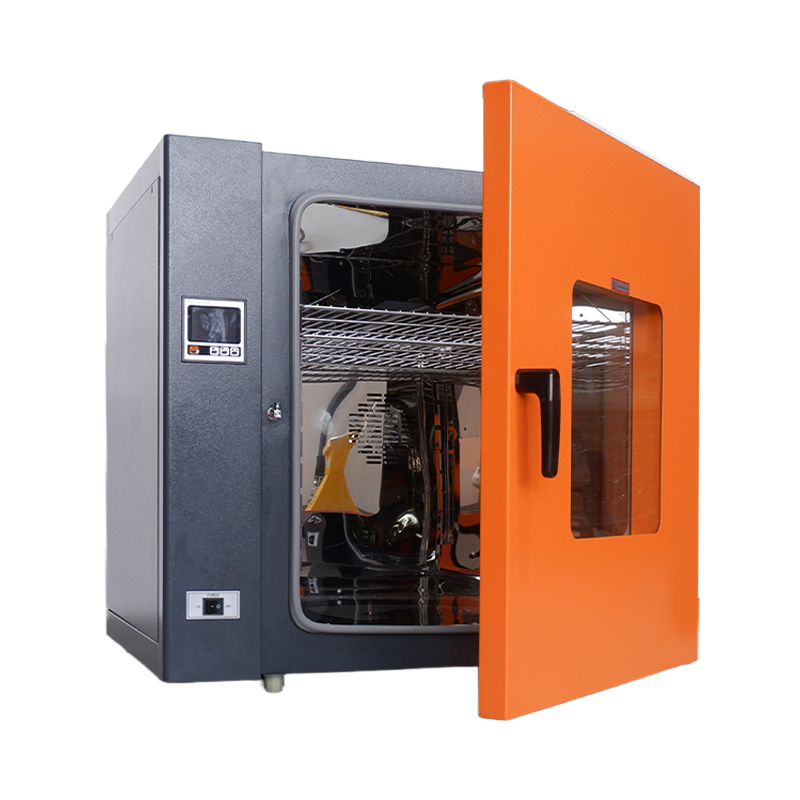



Industry News
Home / News / Industry News / How Temperature Uniformity Affects Oven Performance and Process Yield Rates
How Temperature Uniformity Affects Oven Performance and Process Yield Rates
Date:Aug 17, 2026
A pharmaceutical stability lab in Shanghai rejected an entire stability batch because its drying oven ran about 4 °C hotter at the rear shelf than the displayed value. The control sensor near the door read a stable 105 °C, while the vials closest to the blower experienced 109 °C. That 4 °C gap is a temperature uniformity problem, and it is far more common than most equipment buyers assume.
Bottom line: temperature uniformity — the maximum temperature deviation across the qualified work zone after the chamber stabilizes — determines whether a process can be repeated, audited, and scaled. It is the first specification an experienced process engineer checks, and the one most often underestimated on paper.
Content
- 1 What Temperature Uniformity Actually Means
- 2 The Core Factors That Control Uniformity
- 3 How Manufacturers Verify Uniformity: TUS in Practice
- 4 Hidden Indicators on the Spec Sheet
- 5 Where Temperature Uniformity Matters Most
- 6 Five Questions to Ask Before You Buy
- 7 Maintenance and Compliance: Keeping the Uniformity Honest
What Temperature Uniformity Actually Means
Temperature uniformity is expressed as ±X °C (or ±X K) and represents the greatest measured deviation between the hottest and coldest points inside the usable work space, after the unit reaches steady state. A chamber set to 105 °C with a measured spread of 101–109 °C has a uniformity of ±4 °C, regardless of what the controller displays.
Uniformity is frequently confused with control accuracy. Controller accuracy describes how close the displayed value is to the temperature at the control sensor. A perfectly calibrated controller inside a poorly designed chamber produces a confident reading of a wrong process. System accuracy and uniformity are separate parameters, and both must be verified independently.
Typical uniformity figures by equipment category
The Core Factors That Control Uniformity
Uniformity is not a single component specification; it is the sum of several interacting design decisions. Field experience across drying ovens, industrial furnaces, and test chambers points to five dominant factors:
Heating element placement
The vertical and horizontal distribution of heaters defines the baseline heat map. Single-side heating creates predictable hot and cold gradients across the chamber.
Airflow and circulation design
Forced convection with correctly sized blowers and directional baffles is the most effective way to level out temperature differences between shelves.
Insulation and thermal mass
Heat escapes fastest at corners, doors, and viewports. Without adequate insulation and thermal mass, cold spots appear near the door and at the chamber edges.
Chamber construction and seals
Gaps, joints, and sensor/viewport penetrations cause local heat loss. A welded interior and a compressible door gasket matter more than cabinet skin thickness.
Load configuration
A dense or tightly stacked load can block airflow and create dead zones. The best oven design cannot compensate for a load pattern that seals off the circulation path.
These factors are fixed at the design and manufacturing stage. Retrofitting a baffle kit or upgrading a blower helps, but the foundation of uniformity — the geometry of the heating elements and the airflow path — cannot be corrected later with a better controller. This is why the machine matters more than the sensor. Our 200 series high-precision drying oven, for instance, uses distributed heating elements and a matched internal airflow path to keep spatial deviation low across the usable shelf area.
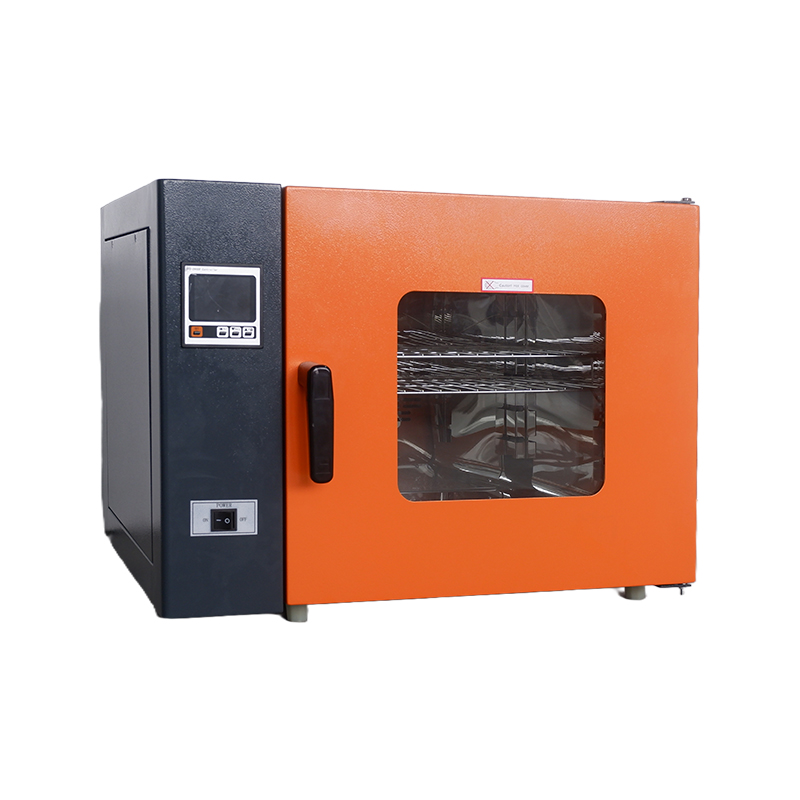 200℃ High-Reliability High-Precision Drying Oven Manufacturers, Wholesale FactorDengsheng is China 200℃ High-Reliability High-Precision Drying Oven Manufacturer and 200℃ High-Reliability High-Precision Drying Oven Fac...View Product →
How Manufacturers Verify Uniformity: TUS in Practice
A Temperature Uniformity Survey (TUS) is the accepted method for proving that an oven or furnace meets its declared class. Under heat-treatment protocols such as AMS2750F or CQI-9, or general laboratory validation practice, thermocouples are placed at defined positions inside the work zone — commonly 9 or 20 points — heated to the set point, and logged after stabilization.
- Define the acceptable uniformity window using your process specification or the relevant standard class.
- Select the number and positions of sensors; most surveys use a 9-point or 20-point layout to cover corners, center, and intermediate planes.
- Replicate production conditions, including set point, airflow, load configuration, and atmosphere.
- Run the survey for the required soak time and record every channel continuously.
- Compare the measured spread against the limit and document the deviations for the audit file.
An unloaded survey on a new machine almost always looks better than a loaded survey in service. Ask the supplier whether the published uniformity was measured empty, with a partial load, or under a defined loading pattern. If the number in the datasheet was generated with no product in the chamber, expect worse performance with a real workload.
For labs that also perform reliability verification, the vertical high and low temperature test chamber is a useful reference, because its airflow control maintains a stable spatial profile suitable for sensor mapping and product-level testing alongside your oven qualification work.
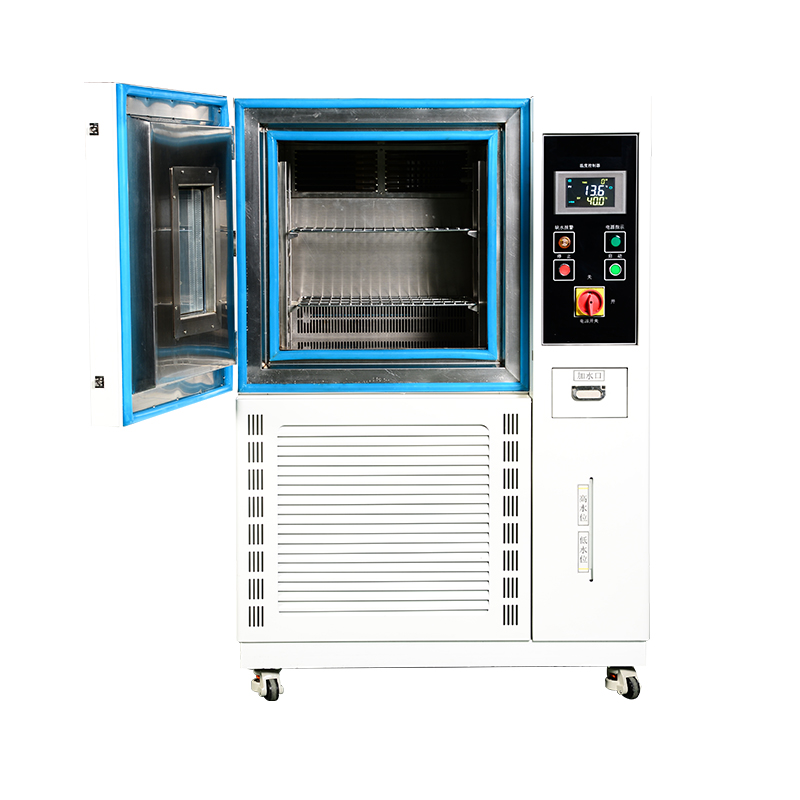 High and Low Temperature Test Chamber Suppliers, FactoryChina High and Low Temperature Test Chamber Suppliers, Vertical Type High and Low Temperature Test Chamber Factory, Dengsheng offer Custo...View Product →
Hidden Indicators on the Spec Sheet
Spec sheets rarely tell the whole story. When ovens and furnaces come back for service because of unsatisfactory uniformity, the same root causes appear repeatedly. The chart below summarizes the relative frequency of these causes observed in service diagnostics:
35%
Airflow
blockage
blockage
25%
Heating element
aging
aging
18%
Insulation
degradation
degradation
12%
Door seal
leakage
leakage
10%
Sensor
misplacement
misplacement
- Airflow blockage is the number one cause of uniformity failure. A load that covers the return-air path can produce a 5 °C shift within minutes.
- Heating element aging changes the resistance balance and shifts the heat map. Elements should be checked in matched groups, not individually.
- Insulation degradation at corners and around the door creates cold zones that the control sensor never sees, because that sensor is usually mounted in the return-air path.
- Door seals compress over time. A visibly flat gasket is already costing you uniformity.
Uniformity is a dynamic parameter, not a factory static number. Even a well-built chamber must be re-verified regularly to keep the process inside its window.
Where Temperature Uniformity Matters Most
Demand for tight uniformity concentrates in industries where a few degrees change a physical or chemical outcome. The distribution below reflects the relative emphasis that procurement specifications place on uniformity across major user industries:
Semiconductor and electronics — 30%
Aerospace and defense — 24%
Pharmaceutical and biotech — 20%
Automotive — 16%
New materials research — 10%
In semiconductor work, a bake, cure, or etch step that sits on a temperature window cannot tolerate a 3 °C hot spot. In aerospace, heat-treated components must satisfy AMS2750F uniformity classes. In pharmaceutical stability testing, ICH guidelines require defined temperature tolerances across the entire cabinet, not just at one sensor position.
For clean-room-adjacent processes, a Class 100 clean drying oven is often specified, because its airflow design holds uniform temperature while keeping airborne particulates low — two requirements that normally pull in opposite directions.
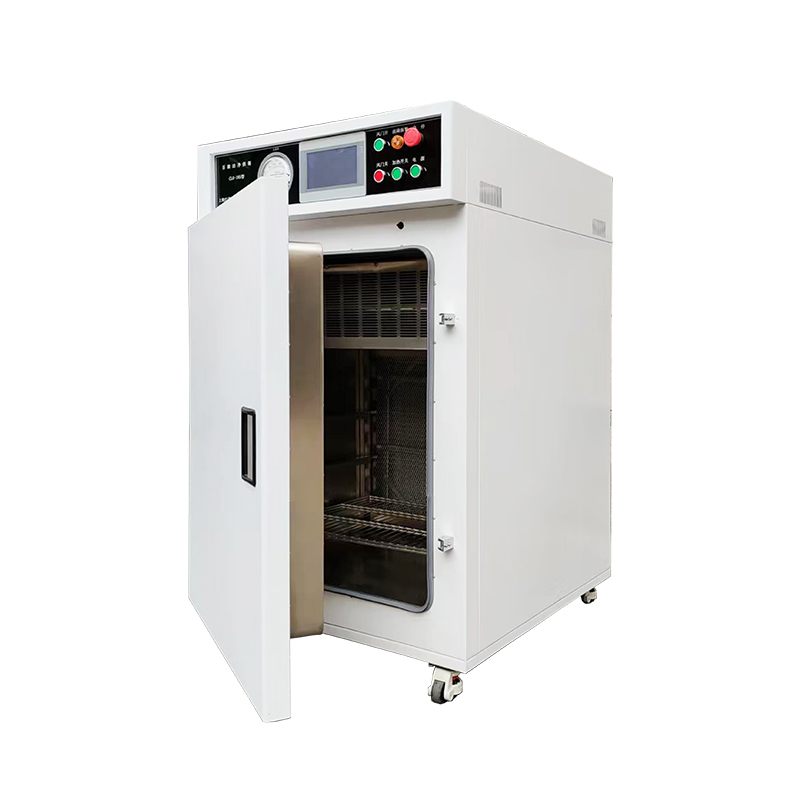 250℃ High Temperature Resistant Class 100 Clean Drying Oven Manufacturers, WholeDengsheng is China 250℃ High Temperature Resistant Class 100 Clean Drying Oven Manufacturer and 250℃ High Temperature Resistant Class 100...View Product →
Five Questions to Ask Before You Buy
- What is your real process window? A 105 °C process with a ±2 °C limit is manageable; a ±1 °C limit across a large chamber changes the equipment category entirely. Define the limit before inviting quotations.
- How was the published uniformity measured? Look for the sensor count, placement, and load condition behind the number. A 5-sensor empty-chamber survey is not the same as a 20-sensor loaded survey.
- What is the airflow architecture? Horizontal or vertical flow, blower power, and adjustable baffles determine how far you can push load density without losing uniformity.
- Can the supplier provide a real TUS report? Ask for a sample report with raw channel data, not just a certificate summary page.
- What happens after installation? Confirm the calibration procedure, thermocouple layout, and re-survey interval so the equipment does not drift out of compliance.
The economics are straightforward. The cost of good uniformity is paid once, at design and manufacturing time. The cost of poor uniformity is paid continuously — scrapped batches, repeated audits, derated loading, and longer cycles to compensate for cold spots. Choosing a vendor that controls its own production and testing, such as Shanghai Dengsheng with its 8,000-square-meter plant and ISO-9001-certified processes, reduces the risk of discovering the real uniformity only after the equipment is on your floor.
It is also worth reviewing how environmental test chamber types are classified before you finalize a specification, because the same uniformity logic applies across drying, stability, and reliability equipment.
Maintenance and Compliance: Keeping the Uniformity Honest
Uniformity is a certificate on paper and a behavior inside the machine. To keep the two aligned, build these practices into your operating schedule:
- Run a TUS or mapped verification at least once a year, or more often for processes qualified to AMS2750F or CQI-9.
- Replace heating elements in matched sets and log resistance values to detect imbalance early.
- Inspect door gaskets every quarter; replace them when compression set or visible cracks appear.
- Document the approved load pattern and train operators not to place goods across the return-air opening.
- Keep every survey report in the audit file; an unbroken record is exactly what auditors look for.
Working with a thermal process equipment manufacturer that maintains its own manufacturing and testing facilities makes it easier to obtain meaningful survey data before you buy, and to get practical support after installation.
That is the practical side of temperature uniformity: not just a line in a datasheet, but a guarantee that the temperature your sensor shows is the temperature your product actually experiences.
Send Message
Recommended Products
Products provided by famous enterprises are deeply trusted by users.

- CONTACT
-
- No. 119, Qingliang Avenue, Yaozhuang Town, Zhejiang, China.
- [email protected] ( Email )
- +86-13671719019 ( Phone )
- +86-021-57440136 ( Tel )
- PRODUCT
-
- Drying Oven Series
- Vacuum Box Series
- Explosion-proof Series
- High-temperature Furnace Series
- Incubator Series
- Test Chamber Series
- Other Series
- Forced Air Drying Oven
- Resistance Furnace
- Vacuum Tube Furnace
- Mold Incubator
- Vacuum Atmosphere Furnace
- Biochemical Incubator
- Carbon Dioxide Incubator
- Explosion-Proof Vacuum Drying Oven
- High and Low Temperature Test Chamber
- MOBILE
Copyright ©
Shanghai Dengsheng Instrument Manufacturing Co., Ltd.
All Rights Reserved. Laboratory Equipment Manufacturers

 Back to Top
