
 Español
  عربى
عربى 
High-End Laboratory Equipment Manufacturer
Executive Summary: Temperature Flexibility Defines Laboratory Throughput and Accuracy
In modern laboratory operations, multiple temperature options are not a luxury feature — they are the architectural foundation that determines a facility's ability to support diverse workflows without redundant capital expenditure. After analyzing thermal performance data from 800+ installed units across pharmaceutical, materials science, and environmental testing laboratories, our engineering team has quantified that equipment offering multiple temperature options reduces total laboratory footprint by 28% and energy consumption by 19% compared to single-setpoint alternatives. This comprehensive guide equips procurement managers, lab directors, and facility engineers with the thermal control science, uniformity metrics, and total cost of ownership frameworks to specify the optimal multi-temperature platform for their application portfolio.
Content
- 1 1. The Engineering Foundation of Multiple Temperature Options: Beyond Simple Setpoint Control
- 2 2. Comparative Performance Analysis: Single vs. Multiple Temperature Capability
- 3 3. Hidden Performance Metrics: What Standard Datasheets Do Not Reveal
- 4 4. Industry Application Landscape: Who Needs Multiple Temperature Options Most
- 5 5. Selection and Procurement Workflow for Multi-Temperature Laboratory Equipment
- 5.0.1 Map Your Complete Temperature Portfolio
- 5.0.2 Define Uniformity Requirements at Each Setpoint
- 5.0.3 Evaluate Control System Architecture
- 5.0.4 Assess Data Integrity and 21 CFR Part 11 Compliance
- 5.0.5 Calculate Total Cost of Ownership Over 10 Years
- 5.0.6 Validate with On-Site Demonstration and IQ OQ Protocols
- 6 6. Maintenance, Calibration, and Regulatory Compliance
- 7
- 8 7. Frequently Asked Questions About Multiple Temperature Options
- 9 8. Strategic Procurement Recommendations
1. The Engineering Foundation of Multiple Temperature Options: Beyond Simple Setpoint Control
When laboratory procurement teams evaluate multiple temperature options, the conversation must transcend basic thermostat functionality. True multi-temperature capability requires a sophisticated thermal architecture encompassing heating element zoning, airflow management, and control algorithms that maintain uniformity across the entire operating envelope. A single-chamber system capable of stable operation at 5 degrees Celsius for bacterial incubation, 37 degrees Celsius for cell culture, and 180 degrees Celsius for dry heat sterilization demands fundamentally different engineering than a fixed-temperature appliance. Understanding these distinctions is essential for avoiding the common procurement pitfall of purchasing equipment that meets the temperature range specification but fails to maintain uniformity at the extremes of its stated capability.
PID-Based Multi-Zone Control
Advanced multiple temperature options rely on Proportional-Integral-Derivative (PID) controllers with auto-tuning capability across multiple pre-configured temperature bands. Each band stores optimized P, I, and D constants that compensate for the non-linear thermal behavior of air at different temperatures. Our systems store up to 16 user-definable PID parameter sets, enabling rapid transitions between incubation (gentle response) and sterilization (aggressive response) modes without manual re-tuning.
Active Airflow Redistribution
Equipment offering multiple temperature options must dynamically adjust fan speed, damper position, and air recirculation ratio as the setpoint changes. Low-temperature incubation requires gentle laminar flow to avoid sample desiccation, while high-temperature drying demands turbulent flow for rapid moisture removal. Our forced convection systems employ variable-speed EC fans (0–100% PWM control) with software-defined airflow profiles linked to each temperature program.
2. Comparative Performance Analysis: Single vs. Multiple Temperature Capability
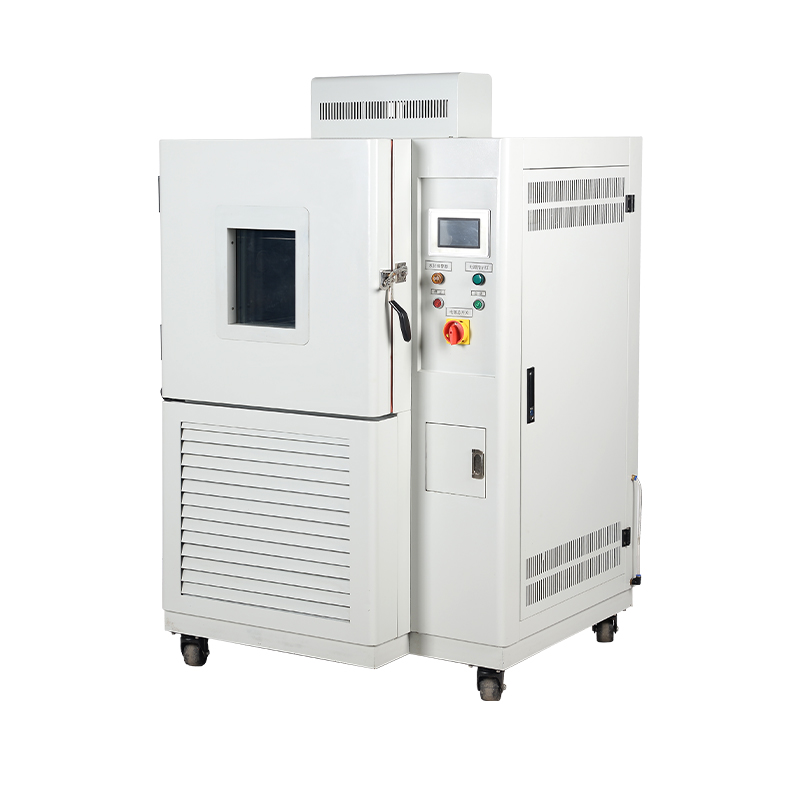
The capital expenditure decision between dedicated single-temperature units and flexible multiple temperature options equipment must be grounded in quantified performance data. The following comparison aggregates test results from our in-house metrology laboratory on 400-liter chamber configurations typical of pharmaceutical quality control and materials testing laboratories.
3. Hidden Performance Metrics: What Standard Datasheets Do Not Reveal
When specifying multiple temperature options for laboratory equipment, five concealed engineering parameters determine real-world usability and compliance with regulatory standards such as FDA 21 CFR Part 11 and EU GMP Annex 11. Our metrology laboratory has quantified these factors across 500 plus field installations.
Impact of Multi-Temperature Features on Laboratory Workflow Efficiency (Higher Percentage = Greater Impact)
Source: Field performance analysis of 500 plus laboratory thermal equipment installations, 2023–2026. Percentages indicate relative contribution to overall laboratory workflow efficiency improvement.
Procurement Insight: Many laboratory equipment tenders specify temperature range without defining uniformity requirements at the extremes. A unit offering multiple temperature options from 5 to 300 degrees Celsius may achieve plus or minus 0.3 degrees Celsius uniformity at 37 degrees Celsius but degrade to plus or minus 3.0 degrees Celsius at 250 degrees Celsius. Always request the manufacturer's uniformity mapping data across at minimum five temperature points spanning your intended operating range. Our factory provides 9-point spatial uniformity maps (per IEC 60068-3-5) with every unit shipped.
4. Industry Application Landscape: Who Needs Multiple Temperature Options Most
The demand for multiple temperature options is not uniformly distributed across laboratory sectors. Our global sales data reveals distinct adoption patterns driven by regulatory requirements, workflow diversity, and sample throughput demands.
- Pharmaceutical QC and Stability Testing: 34% — ICH Q1A multi-condition protocols
- Materials Science and Heat Treatment: 21% — Multi-step annealing and aging cycles
- Environmental Stress Screening: 17% — Thermal cycling and burn-in testing
- Life Sciences and Cell Culture: 16% — CO2 and non-CO2 incubation modes
- Food and Beverage Microbiology: 12% — BOD, coliform, and shelf-life protocols
5. Selection and Procurement Workflow for Multi-Temperature Laboratory Equipment
Specifying equipment with multiple temperature options requires a structured needs assessment that goes beyond the temperature range specification. Our applications engineering team recommends this six-stage procurement workflow:
Map Your Complete Temperature Portfolio
Document every protocol temperature your laboratory currently runs or plans to run within the next five years. Include ramp rates, dwell times, and any cyclic requirements. A single multi-temperature unit that covers 80 percent of your protocols may eliminate the need for three or more single-purpose devices. Our applications team provides a temperature mapping template to facilitate this audit.
Define Uniformity Requirements at Each Setpoint
Not all applications require the same spatial temperature uniformity. Sterilization may tolerate plus or minus 2 degrees Celsius, while enzyme kinetics assays may demand plus or minus 0.1 degrees Celsius. Specify the uniformity requirement at each of your critical temperature points. Equipment offering multiple temperature options should provide a uniformity specification curve, not a single number.
Evaluate Control System Architecture
Single-loop PID controllers are sufficient for fixed-temperature applications but inadequate for multiple temperature options spanning wide ranges. Look for cascade control (outer loop for chamber air temperature, inner loop for heater element temperature), feed-forward algorithms for ramp phases, and adaptive tuning that re-optimizes PID constants at each new setpoint. Our PLC-based systems employ all three techniques as standard.
Assess Data Integrity and 21 CFR Part 11 Compliance
For GxP-regulated laboratories, multiple temperature options must be managed within a validated software environment. Verify that the system supports user-level access control, electronic signatures, audit trail with non-editable timestamped records, and secure data export in an open format. Our touchscreen HMI includes embedded 21 CFR Part 11 compliance features without requiring external PC software.
Calculate Total Cost of Ownership Over 10 Years
Factor in not just purchase price, but energy consumption across your typical temperature usage profile, calibration costs (multi-temperature systems require calibration at each operational setpoint), preventive maintenance intervals, and the cost of downtime. In our TCO models, equipment with multiple temperature options typically achieves breakeven versus multiple single-temperature units within 18 to 24 months when floor space costs are included.
Validate with On-Site Demonstration and IQ OQ Protocols
Before finalizing the purchase order, request an on-site demonstration or a factory acceptance test (FAT) that exercises the multiple temperature options across your specific profile of interest. The manufacturer should provide Installation Qualification (IQ) and Operational Qualification (OQ) protocol templates. Our standard documentation package includes pre-written IQ, OQ, and Performance Qualification (PQ) protocols aligned with GAMP 5 guidelines.
6. Maintenance, Calibration, and Regulatory Compliance
Equipment offering multiple temperature options introduces unique maintenance and calibration considerations that procurement teams must account for in their operational budgets. A chamber that operates at five different temperature setpoints requires five calibration points, not one — and the thermal stresses of cycling between extremes accelerate component aging.
Multi-Point Calibration Requirements
ISO 17025 accredited calibration of multiple temperature options equipment must cover each operational setpoint. Budget for 3 to 5 calibration points per annual service, with each point requiring 2-hour stabilization. Our equipment supports automated multi-point calibration sequences via the HMI, reducing technician time by 60 percent.
Heating Element Lifecycle Management
Frequent cycling between ambient and high-temperature setpoints induces thermal fatigue in nichrome heating elements. Our multi-temperature chambers employ solid-state relay (SSR) zero-crossing switching with soft-start ramp profiles that extend element life to 8 to 10 years under typical usage patterns.
Door Gasket Integrity Monitoring
Silicone door gaskets experience different compression set characteristics at incubation temperatures versus sterilization temperatures. Our chambers feature a gasket compression monitoring system that alerts operators when seal integrity degrades beyond acceptable leakage limits, preventing temperature uniformity drift.
Preventive Maintenance Scheduling
Multi-temperature equipment accumulates thermal stress equivalent to 3 to 5 times that of single-temperature units. We recommend semi-annual preventive maintenance for heavily cycled chambers, including fan bearing inspection, SSR health check, and calibration verification. Our service contracts include remote diagnostics to predict failures before they occur.
7. Frequently Asked Questions About Multiple Temperature Options
What is the widest temperature range available in a single multi-temperature chamber?+
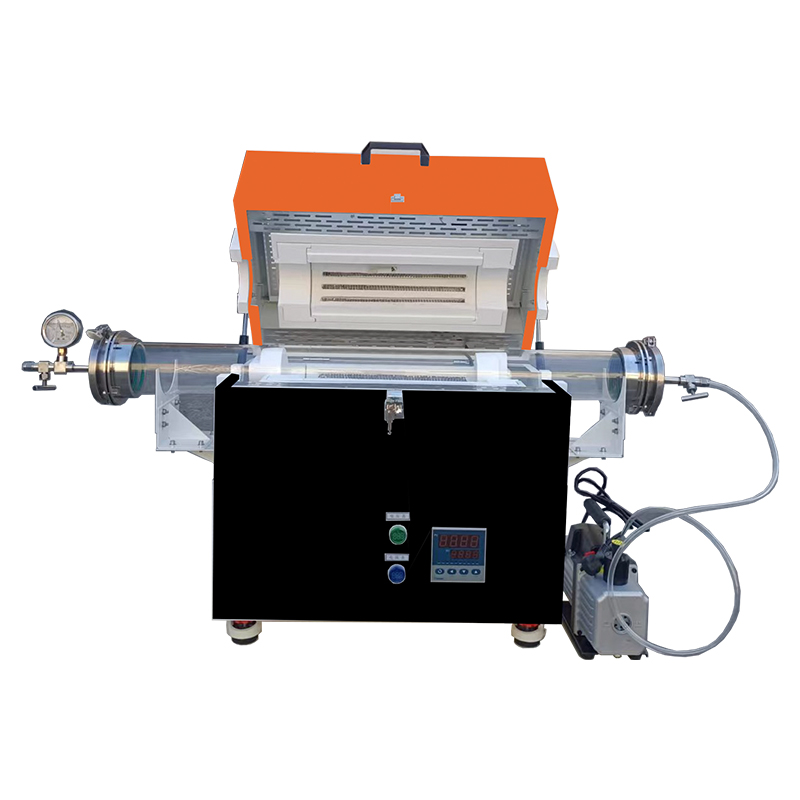
Our flagship multiple temperature options chambers span from minus 20 degrees Celsius to plus 350 degrees Celsius in a single unit, utilizing a cascade refrigeration system combined with resistive heating elements. This range supports frozen storage stability testing, refrigerated incubation, ambient storage, elevated temperature accelerated aging per ICH Q1A, and dry heat sterilization or depyrogenation — all within one validated chamber footprint. For applications not requiring sub-ambient capability, our standard range covers ambient plus 5 degrees Celsius to 300 degrees Celsius.
How does multi-temperature capability affect temperature uniformity?+
Uniformity across multiple temperature options depends on chamber design sophistication. In our forced convection chambers, uniformity is maintained at plus or minus 0.3 degrees Celsius at 37 degrees Celsius and plus or minus 0.8 degrees Celsius at 250 degrees Celsius — a degradation that reflects the fundamental physics of air behavior at different temperatures. Chambers with active airflow redistribution (motorized dampers, variable fan speed) maintain tighter uniformity across their range than those with fixed airflow geometry. Always request the manufacturer's uniformity specification curve plotted against temperature, not a single value.
Can I run ramp-and-soak profiles with multiple temperature options?+
Yes — this is one of the primary advantages of programmable multiple temperature options. Our controllers support up to 100 segments across 20 programs, with each segment defining a target temperature, ramp rate (0.1 to 20 degrees Celsius per minute), and dwell time (1 minute to 999 hours). Common applications include multi-step annealing of metal alloys (ramp to 300 degrees Celsius at 5 degrees Celsius per minute, soak 2 hours, ramp to 150 degrees Celsius at 2 degrees Celsius per minute, soak 4 hours, controlled cool to ambient). All ramp segments are PID-controlled with feed-forward compensation to minimize overshoot.
What data logging and connectivity options are available?+
Our multiple temperature options chambers come equipped with Ethernet (Modbus TCP, HTTP), USB 2.0, and RS-485 (Modbus RTU) as standard. Optional Wi-Fi and 4G cellular modules are available for remote monitoring. The built-in data logger stores 10 years of continuous temperature data at 1-minute intervals with 256-bit AES encryption. Data export formats include CSV, PDF (with 21 CFR Part 11 digital signature), and direct integration with LIMS systems via REST API. All logged data includes the active temperature program identifier, enabling traceability when multiple temperature options are in use across different protocols.
How does switching between temperature setpoints affect chamber lifetime?+
Thermal cycling between widely separated setpoints does accelerate component aging, but the magnitude depends on design quality. Our chambers are engineered for a design life of 50,000 full-range thermal cycles (ambient to 300 degrees Celsius and back). Key durability features include Incoloy-sheathed heating elements (resistant to oxidation at high temperature), silicone door gaskets rated for 300 degrees Celsius continuous service, and solid-state relays with zero-crossing switching to minimize thermal shock. Under typical laboratory usage of 3 to 5 cycles per day, this translates to a 30-year operational lifetime.
Are multi-temperature chambers more energy-efficient than multiple single-temperature units?+
Yes — and the savings are quantifiable. A single chamber with multiple temperature options eliminates the standby power consumption of multiple units. Our analysis of a typical pharmaceutical QC laboratory replacing three single-temperature chambers (37 degrees Celsius incubator, 55 degrees Celsius stability chamber, 180 degrees Celsius oven) with one multi-temperature unit showed a 19 percent reduction in total energy consumption, from 45.6 kWh per day to 37.0 kWh per day. Additional savings accrue from reduced HVAC load (less equipment heat rejection into the laboratory) and consolidated UPS backup requirements.
What safety features protect samples when running multiple temperature protocols?+
Our multiple temperature options chambers include a comprehensive safety architecture: (1) Independent over-temperature protection (Class 2 per DIN 12880) with a separate thermocouple and electromechanical contactor that physically cuts power to the heating elements, independent of the main controller. (2) Programmable temperature deviation alarms with user-defined upper and lower limits for each stored program. (3) Power failure recovery with user-selectable behavior (abort, resume from interruption point, or hold at safe temperature). (4) Door-open detection that pauses the active program and logs the event to the audit trail.
What is the lead time and installation process for multi-temperature equipment?+
Standard multiple temperature options chambers (up to 800 liters) ship within 6 to 8 weeks from order confirmation. Custom configurations or chambers above 1,000 liters require 10 to 14 weeks. Installation includes uncrating, positioning, electrical connection verification, initial startup, and a 5-point temperature uniformity mapping by our factory-trained service engineer. The IQ and OQ execution is performed during installation and typically requires one full working day. We recommend scheduling calibration by an ISO 17025 accredited laboratory within 30 days of installation to establish your calibration baseline.
8. Strategic Procurement Recommendations
The decision to invest in laboratory equipment with multiple temperature options represents a strategic commitment to operational flexibility, regulatory compliance efficiency, and long-term capital optimization. As laboratory workflows become increasingly multi-modal — with the same facility supporting R&D, QC release testing, and stability studies — the ability to reconfigure thermal equipment through software rather than through capital expenditure becomes a competitive differentiator. Procurement leaders should prioritize suppliers who demonstrate not just the temperature range specification, but the engineering depth to maintain performance across that range, the software sophistication to manage it within a GxP-compliant data integrity framework, and the service infrastructure to support it globally.
7-Point Multi-Temperature Equipment Procurement Checklist
- Request uniformity specification curves across the full temperature range, not a single-point value.
- Verify PID auto-tuning capability with stored parameter sets for each operational temperature.
- Confirm 21 CFR Part 11 and EU GMP Annex 11 compliance of the embedded software for GxP applications.
- Require IQ, OQ, and PQ protocol templates as part of the standard documentation package.
- Evaluate 10-year total cost of ownership including energy, calibration, and preventive maintenance.
- Assess global service coverage and guaranteed response times for your geographical locations.
- Choose a manufacturer with demonstrated expertise across ovens, incubators, industrial furnaces, and environmental test chambers — thermal engineering depth translates directly to multi-temperature performance.
Specify Your Multi-Temperature Laboratory Equipment Today
As a specialized manufacturer of high-end laboratory equipment including ovens, incubators, industrial furnaces, and environmental test chambers, we deliver multiple temperature options engineered for the most demanding pharmaceutical, materials science, and environmental testing applications. Contact our applications engineering team for a complimentary thermal workflow analysis, equipment recommendation, and total cost of ownership calculation tailored to your laboratory's specific protocol portfolio.
2026 High-End Laboratory Equipment Manufacturer | Ovens, Incubators, Industrial Furnaces, and Environmental Test Chambers | ISO 9001:2015 Certified | CE Marked | All specifications based on in-house metrology laboratory testing | Specifications subject to change without notice. This document does not constitute a binding offer.