
 Español
  عربى
عربى 



Industry News
Home / News / Industry News / How Many Types of Environmental Test Chambers Are There — and Which One Do You Need?
How Many Types of Environmental Test Chambers Are There — and Which One Do You Need?
Date:Feb 24, 2026
If you're sourcing thermal or climate testing equipment for the first time — or expanding an existing lab — one of the first questions you'll face is a deceptively simple one: what kind of environmental test chamber do you actually need? The answer depends on your industry, the nature of your test samples, applicable standards, and budget. This guide breaks down the major types of environmental test chambers available today, explains what each one does, and helps you match the right chamber to your specific application.
Content
- 1 What Is an Environmental Test Chamber?
- 2 Temperature-Only Test Chambers
- 3 Temperature and Humidity Test Chambers
- 4 Thermal Shock Test Chambers
- 5 Major Environmental Chamber Types at a Glance
- 6 Salt Spray and Corrosion Test Chambers
- 7 Altitude and Low-Pressure Test Chambers
- 8 Walk-In Environmental Test Chambers
- 9 How to Choose the Right Environmental Test Chamber
What Is an Environmental Test Chamber?
An environmental test chamber is a controlled enclosure designed to simulate specific environmental conditions — such as temperature, humidity, vibration, altitude, or corrosive atmospheres — to evaluate how products, materials, or components respond under stress. Industries ranging from aerospace and automotive to pharmaceuticals and consumer electronics rely on environmental chambers to validate product durability, identify failure modes, and meet regulatory compliance requirements before goods reach the market.
The term "environmental chamber" is broad by nature. It covers dozens of distinct equipment types, each engineered for a specific set of test conditions. Choosing the wrong type can lead to inaccurate results, failed audits, or costly retesting. Understanding the landscape is the critical first step.
Temperature-Only Test Chambers
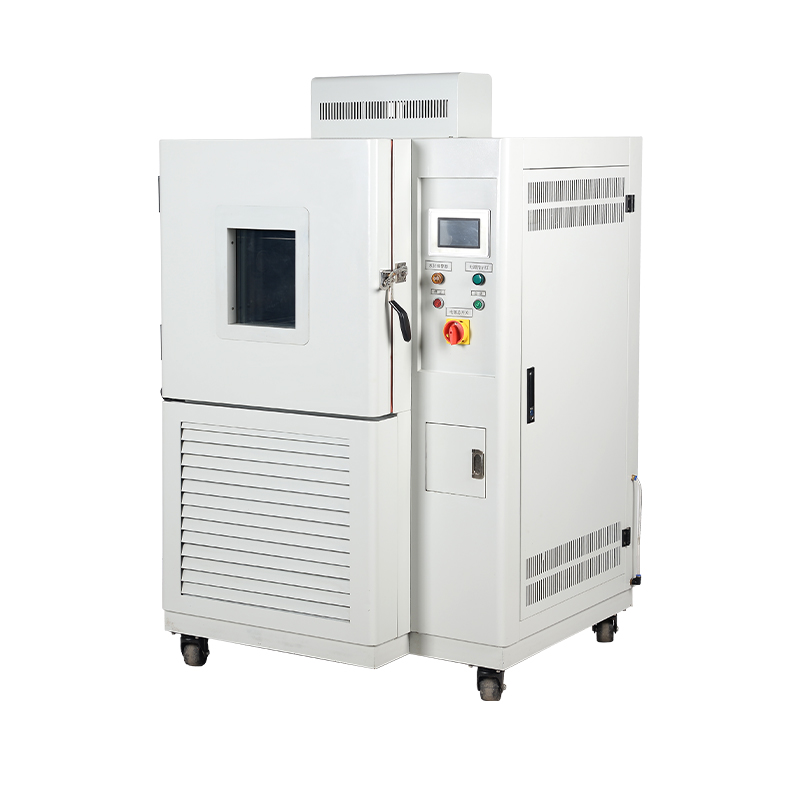
The most fundamental category of environmental test chamber is the temperature-only model, which cycles or holds a set temperature across a defined range — typically from as low as -70°C to as high as +180°C depending on the unit. These chambers are widely used for burn-in testing of electronics, aging tests on polymers and adhesives, and heat resistance evaluation of mechanical components.
Key specifications to evaluate in a temperature-only test chamber include:
- Temperature range: Confirm the chamber can reach both the minimum and maximum temperatures your test protocol requires, not just one extreme
- Temperature uniformity (ΔT): High-precision applications require ±0.5°C or better spatial uniformity across the working volume
- Ramp rate: How quickly the chamber can transition between temperatures, measured in °C per minute — critical for accelerated life testing
- Working volume: Internal usable space after accounting for airflow baffles and shelving systems
Temperature and Humidity Test Chambers
The temperature and humidity test chamber — sometimes called a climatic chamber or climate chamber — adds humidity control to temperature simulation. These are among the most commonly used environmental test chambers globally, and are essential for testing products destined for tropical, coastal, or highly variable climates. They are widely specified under IEC 60068-2-78 (damp heat), IEC 60068-2-38 (composite temperature/humidity cycling), and ASTM D5423, among others.
Typical humidity range is 10% to 98% RH, with some high-performance models reaching 5% RH on the low end using specialized drying systems. Applications include corrosion resistance testing of metal finishes, moisture ingress testing of sealed enclosures, and long-term stability testing of pharmaceutical packaging materials.
Thermal Shock Test Chambers
Thermal shock chambers are purpose-built to expose products to rapid, extreme temperature transitions — far beyond what a standard temperature cycling chamber can achieve. A two-zone thermal shock chamber maintains one hot zone and one cold zone simultaneously, with a pneumatic transfer mechanism moving the product basket between zones in under 10 seconds. This subjects the sample to instantaneous thermal stress that reveals solder joint failures, delamination, seal integrity issues, and material expansion mismatches.
Thermal shock testing is a core requirement in military (MIL-STD-883), automotive (AEC-Q100), and consumer electronics qualification processes. When evaluating a thermal shock test chamber, pay close attention to the recovery time — how quickly the zone returns to set temperature after a transfer — as this directly affects the severity and repeatability of the test.
Major Environmental Chamber Types at a Glance
| Chamber Type | Key Parameters Controlled | Typical Industries | Common Standards |
| Temperature-Only Chamber | Temperature | Electronics, Materials | IEC 60068-2-2, ASTM E145 |
| Temperature & Humidity Chamber | Temperature, Humidity | Pharma, Automotive, Consumer Electronics | IEC 60068-2-78, ASTM D5423 |
| Thermal Shock Chamber | Rapid Temperature Transition | Aerospace, Semiconductor, Military | MIL-STD-883, AEC-Q100 |
| Salt Spray / Corrosion Chamber | Salt Fog Concentration, Temperature | Automotive, Marine, Coatings | ASTM B117, ISO 9227 |
| Altitude / Low Pressure Chamber | Pressure, Temperature | Aerospace, Defense, EV Battery | MIL-STD-810, IEC 60068-2-13 |
| Walk-In Environmental Chamber | Temperature, Humidity (large scale) | Automotive, Medical Devices, HVAC | ISO 16750, GB/T standards |
Salt Spray and Corrosion Test Chambers
Salt spray chambers — also referred to as salt fog or corrosion test chambers — generate a precisely controlled saline mist environment to accelerate corrosion processes that would otherwise take years to manifest in the field. They are an essential environmental chamber type for evaluating surface coatings, platings, anodizing treatments, and base metal corrosion resistance. The most widely referenced standard, ASTM B117, specifies a 5% sodium chloride solution at 35°C with continuous fog exposure. ISO 9227 adds cyclic corrosion variants that more accurately reflect real-world exposure conditions.
Salt spray chambers are heavily used in the automotive sector for fastener qualification, exterior trim validation, and underbody component approval — where corrosion performance is a direct safety and warranty concern.
Altitude and Low-Pressure Test Chambers
Altitude simulation chambers reduce internal pressure to replicate conditions at high elevations — from mountain logistics environments to stratospheric aircraft and satellite deployment scenarios. For EV battery manufacturers, low-pressure testing has become a mandatory qualification step, as lithium-ion cells can swell, vent, or rupture under reduced atmospheric pressure. These chambers often combine vacuum capability with temperature control, and in some configurations, humidity control as well, creating a highly versatile environmental test platform.
Walk-In Environmental Test Chambers
When sample size exceeds what a benchtop or floor-standing environmental chamber can accommodate, walk-in test chambers provide the solution. These large-format environmental chambers are custom-built to specific internal dimensions — ranging from a few cubic meters to room-sized installations — and are capable of testing entire vehicle assemblies, HVAC systems, medical imaging equipment, and large industrial electronics. Walk-in chambers require careful facility planning, including structural floor loading assessments, dedicated electrical supply, and refrigerant management infrastructure.
How to Choose the Right Environmental Test Chamber
Selecting the right test chamber comes down to aligning four core variables: the environmental stresses your product must withstand, the test standards your industry or customers require, the physical dimensions of your test samples, and your facility's infrastructure capabilities. Start by identifying your governing test standard — this will often specify the chamber type, performance parameters, and acceptable tolerances directly. Then verify that candidate chambers can demonstrate conformance through calibration certificates and third-party audit records.
For teams with complex or multi-parameter testing needs, a custom-configured environmental chamber — rather than a catalog product — may be the most cost-effective long-term choice. Custom builds allow you to specify internal dimensions, atmosphere control, data connectivity, safety interlocks, and load configurations precisely matched to your workflow, reducing workarounds, downtime, and retesting costs over the equipment's service life.
Send Message
Recommended Products
Products provided by famous enterprises are deeply trusted by users.


- CONTACT
-
- No. 119, Qingliang Avenue, Yaozhuang Town, Zhejiang, China.
- [email protected] ( Email )
- +86-13671719019 ( Phone )
- +86-021-57440136 ( Tel )
- PRODUCT
-
- Drying Oven Series
- Vacuum Box Series
- Explosion-proof Series
- High-temperature Furnace Series
- Incubator Series
- Test Chamber Series
- Other Series
- Forced Air Drying Oven
- Resistance Furnace
- Vacuum Tube Furnace
- Mold Incubator
- Vacuum Atmosphere Furnace
- Biochemical Incubator
- Carbon Dioxide Incubator
- Explosion-Proof Vacuum Drying Oven
- High and Low Temperature Test Chamber
- MOBILE
Copyright ©
Shanghai Dengsheng Instrument Manufacturing Co., Ltd.
All Rights Reserved. Laboratory Equipment Manufacturers

 Back to Top
