
 Español
  عربى
عربى 



Industry News
Home / News / Industry News / Explosion-Proof Instruments for Offshore Drilling: Preventing Catastrophic Explosions in 2026
Explosion-Proof Instruments for Offshore Drilling: Preventing Catastrophic Explosions in 2026
Date:Apr 07, 2026
Content
Multi-Layered Safety Architecture in Explosion-Proof Design
Explosion-Proof Instruments and Equipment are engineered with a comprehensive safety philosophy that integrates flameproof enclosures, intrinsic safety circuits, potting compounds, and inerting systems to eliminate ignition sources in hazardous atmospheres. The foundational layer involves reinforced alloy steel or stainless-steel housings with precision-machined flanges and compression seals that contain any internal arc or spark, preventing propagation to external flammable gases or dust. For equipment like drying ovens and test chambers, this robust enclosure is complemented by thermal isolation barriers and pressure-relief vents calibrated to activate only under extreme internal pressure, ensuring controlled energy dissipation without catastrophic failure. The intrinsic safety approach further limits electrical energy within circuits to levels below the minimum required to ignite specific gas-air mixtures, making these systems inherently safe even during component faults.
Core Protection Technologies for Hazardous Environments
- Flameproof enclosures utilize gap-flame arrestor principles, where precisely engineered joint clearances cool hot gases below ignition temperature before they can escape to the external atmosphere.
- Potting techniques encapsulate sensitive electronics in epoxy or silicone compounds, providing mechanical stability, moisture resistance, and elimination of spark gaps within circuit assemblies.
- Inerting protection systems, such as positive-pressure nitrogen purging, maintain a slightly higher internal pressure than the external environment to physically exclude flammable gases from entering equipment housings.
When selecting Explosion-Proof Instruments and Equipment for environments where gases could explode, engineers must evaluate the specific hazardous area classification (Zone 0, 1, or 2 for gases; Zone 20, 21, or 22 for dusts) and match equipment protection levels accordingly. Temperature class ratings (T1-T6) ensure surface temperatures remain below the auto-ignition point of surrounding atmospheres, while ingress protection (IP66/IP67) safeguards against water and particulate intrusion common in industrial settings. This meticulous specification process forms the basis of reliable operation in high-risk sectors including chemical processing, petroleum refining, and pharmaceutical manufacturing.
Critical Applications in Offshore Drilling Operations
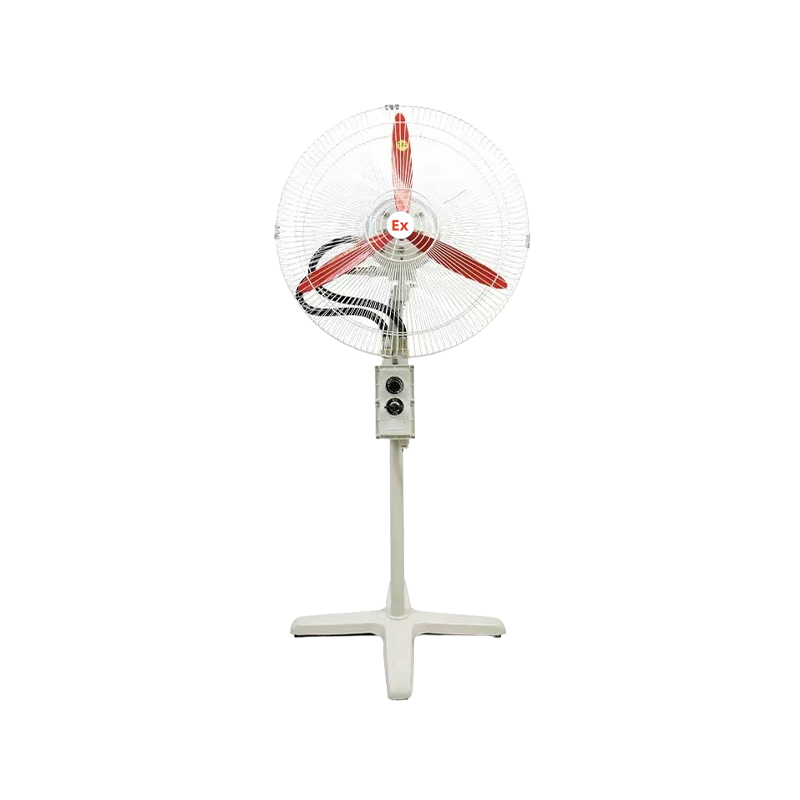
Offshore drilling platforms represent one of the most demanding environments for Explosion-Proof Instruments and Equipment, where methane, hydrogen sulfide, and volatile organic compounds create persistent explosion hazards. Equipment such as explosion-proof fans and air ventilators employ fully enclosed motors with spark-free blade designs and static-dissipative coatings to prevent charge accumulation during continuous air circulation. These units maintain safe atmospheric conditions in control rooms, battery compartments, and chemical storage areas while withstanding saltwater corrosion, high humidity, and extreme temperature fluctuations inherent to marine operations. The integration of explosion-proof air conditioners with redundant cooling circuits ensures critical instrumentation remains within operational temperature ranges without introducing ignition risks.
| Equipment Type | Offshore Application | Key Safety Feature |
| Explosion-Proof Vacuum Chambers | Sample preparation and solvent removal in drilling fluid labs | Low-pressure oxygen removal eliminates combustion support |
| Explosion-Proof High/Low Temp Test Chambers | Material validation for subsea equipment under extreme conditions | Inert gas maintenance prevents internal ignition during thermal cycling |
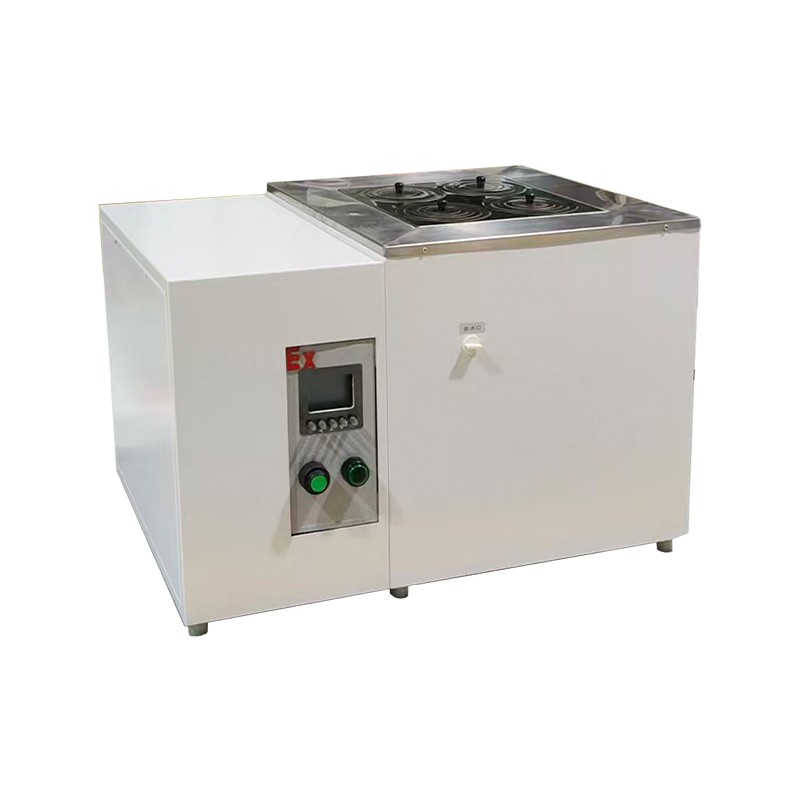
| Explosion-Proof Water Baths | Constant-temperature heating of flammable drilling additives | Sealed heating elements and spark-free controls isolate ignition sources |
Equipment-Specific Solutions for Marine Environments
The unique challenges of offshore drilling demand specialized adaptations in Explosion-Proof Instruments and Equipment. Salt-fog resistance requires marine-grade stainless steel or specialized polymer coatings that prevent corrosion-induced seal failures. Vibration-dampening mounts protect sensitive instrumentation from platform motion while maintaining explosion-proof integrity. For equipment like drying ovens used in mud-logging operations, positive-pressure nitrogen filling systems continuously monitor and adjust inert gas flow to maintain a safe internal atmosphere even during door openings or process fluctuations. These engineering refinements ensure that equipment not only meets certification standards but delivers reliable performance in the dynamic, high-consequence environment of offshore drilling where any ignition source could trigger a catastrophic explode event.
Intelligent Monitoring and Certification Standards
Modern Explosion-Proof Instruments and Equipment integrate intelligent control systems that transform passive safety into active risk management. Embedded temperature sensors, pressure transducers, and gas detection modules provide real-time monitoring of internal and external conditions, with data transmitted to centralized safety management platforms. Fault self-diagnosis protocols automatically identify seal degradation, motor overheating, or inert gas pressure drops before they compromise protection levels, enabling predictive maintenance and preventing unplanned downtime. When anomalies are detected, systems can initiate automated responses such as emergency purging, equipment shutdown, or alarm activation to alert personnel of potential hazards.
- International certifications such as CNAS, ATEX, IECEx, and UL validate that equipment has undergone rigorous testing for explosion containment, temperature classification, and environmental durability under standardized hazardous conditions.
- Digital twin technology allows virtual simulation of equipment performance under various gas mixtures and pressure scenarios, optimizing design before physical prototyping and reducing certification timelines.
- Wireless telemetry capabilities enable remote safety status tracking across dispersed offshore assets, supporting centralized oversight and rapid response coordination during emergency situations.
Integration with Industrial Safety Management Systems
Explosion-Proof Instruments and Equipment function as critical nodes within broader industrial safety ecosystems, interfacing with distributed control systems, emergency shutdown protocols, and personnel tracking platforms. This integration enables holistic risk assessment where equipment status, atmospheric conditions, and operational parameters are analyzed collectively to identify emerging hazards. For offshore drilling operations, such connectivity supports dynamic zoning where equipment protection levels automatically adjust based on real-time gas detection data, optimizing both safety and operational flexibility. The convergence of explosion-proof hardware with intelligent software represents a paradigm shift from reactive safety measures to proactive, data-driven risk prevention.
Inherent Safety Philosophy and Lifecycle Value
Beyond technical specifications, Explosion-Proof Instruments and Equipment embody the "inherent safety" concept that prioritizes hazard elimination over hazard control. By designing systems that cannot ignite flammable atmospheres under normal or fault conditions, organizations reduce reliance on administrative controls, personal protective equipment, and emergency response procedures that carry inherent limitations. This philosophy delivers substantial lifecycle value through reduced insurance premiums, minimized production interruptions from safety incidents, and enhanced regulatory compliance across global jurisdictions. For capital-intensive sectors like offshore drilling, where downtime costs can exceed hundreds of thousands of dollars per hour, the reliability of certified explosion-proof equipment directly impacts operational profitability and asset protection.
| Value Dimension | Traditional Approach | Inherent Safety with Explosion-Proof Equipment |
| Risk Mitigation | Procedural controls and PPE dependence | Engineering controls eliminate ignition sources at design stage |
| Operational Continuity | Frequent safety stoppages for hazard assessments | Continuous operation with real-time safety monitoring |
| Total Cost of Ownership | High incident response and retrofit expenses | Lower lifecycle costs through preventive design and certification |
Future-Proofing Industrial Safety Infrastructure
As industrial processes evolve toward greater automation and digitalization, Explosion-Proof Instruments and Equipment must adapt to emerging challenges including hydrogen economy applications, carbon capture operations, and advanced material processing. Next-generation developments focus on modular designs that allow protection level upgrades without complete equipment replacement, smart materials that self-heal minor seal compromises, and AI-driven predictive analytics that anticipate failure modes before they manifest. For offshore drilling and other high-risk sectors, these innovations ensure that safety infrastructure remains resilient against evolving hazard profiles while supporting sustainable production goals. Investing in certified, intelligent explosion-proof solutions today establishes a foundation for safe, efficient, and compliant operations in the industrial landscape of tomorrow.
Send Message
Recommended Products
Products provided by famous enterprises are deeply trusted by users.


- CONTACT
-
- No. 119, Qingliang Avenue, Yaozhuang Town, Zhejiang, China.
- [email protected] ( Email )
- +86-13671719019 ( Phone )
- +86-021-57440136 ( Tel )
- PRODUCT
-
- Drying Oven Series
- Vacuum Box Series
- Explosion-proof Series
- High-temperature Furnace Series
- Incubator Series
- Test Chamber Series
- Other Series
- Forced Air Drying Oven
- Resistance Furnace
- Vacuum Tube Furnace
- Mold Incubator
- Vacuum Atmosphere Furnace
- Biochemical Incubator
- Carbon Dioxide Incubator
- Explosion-Proof Vacuum Drying Oven
- High and Low Temperature Test Chamber
- MOBILE
Copyright ©
Shanghai Dengsheng Instrument Manufacturing Co., Ltd.
All Rights Reserved. Laboratory Equipment Manufacturers

 Back to Top
