
 Español
  عربى
عربى 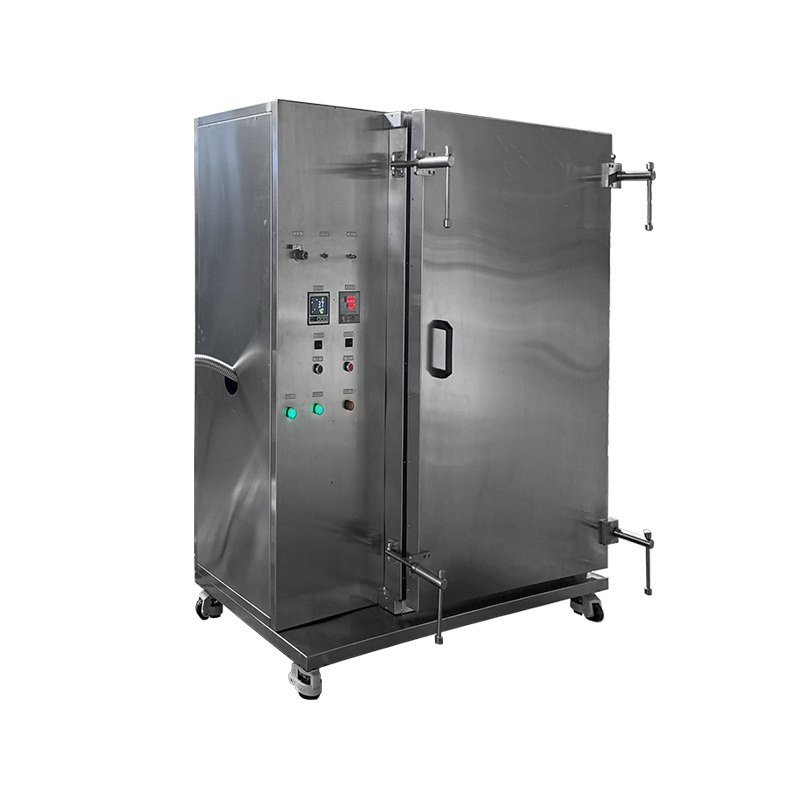



Industry News
Industrial & Lab Vacuum Drying Oven Guide
Date:Mar 30, 2026
Content
- 1 Why Vacuum Drying Ovens Represent a Step Change in Heat Treatment
- 2 Core Operating Principles: Temperature, Vacuum, and Time
- 3 Key Performance Advantages Over Conventional Drying Methods
- 4 Industrial Vacuum Drying Oven: High-Volume Processing Applications
- 5 Lab Vacuum Drying Oven: Precision Processing for Research and Development
- 6 Selecting the Right Vacuum Drying Oven for Your Application
Why Vacuum Drying Ovens Represent a Step Change in Heat Treatment
Conventional drying methods — forced-air convection ovens, infrared dryers, and spray dryers — share a fundamental limitation: they expose the material being processed to atmospheric oxygen, ambient humidity, and temperatures that must be high enough to drive evaporation under normal atmospheric pressure. For commodity materials with robust chemical stability, this limitation is inconsequential. For the advanced materials that define modern high-technology industries — battery electrode slurries, pharmaceutical active ingredients, semiconductor components, nanomaterial precursors, and biological preparations — atmospheric drying is not merely suboptimal; it is frequently incompatible with the required end-product quality.
Both the industrial vacuum drying oven and the lab vacuum drying oven address this limitation through the same fundamental operating principle: creating and maintaining a sealed, low-pressure environment that simultaneously lowers the boiling point of solvents and water, eliminates reactive oxygen and airborne contaminants, and allows precise independent control of temperature, vacuum level, and process duration. The result is a heat treatment platform that can dry, cure, degas, or thermally condition materials that would be degraded, oxidized, or contaminated by any conventional alternative process.
Core Operating Principles: Temperature, Vacuum, and Time
The technical performance of a vacuum drying oven rests on the precise and coordinated control of three interdependent process parameters: chamber temperature, vacuum level, and dwell time. Each parameter interacts with the others in ways that determine both the efficiency of the drying or heat treatment process and the integrity of the material being processed. Understanding these interactions is essential for developing effective process protocols and for selecting equipment with the right specifications for a given application.
Electric Heating and Temperature Uniformity
Heat is delivered to the chamber through electric heating elements — typically embedded in the chamber walls or integrated into shelving plates — that provide a stable, controllable thermal source. Because convective heat transfer is substantially reduced in a vacuum environment (there are few gas molecules to carry thermal energy), industrial vacuum drying ovens rely primarily on conduction through the shelf surface and radiation from the chamber walls to transfer heat to the sample. This makes shelf contact area and shelf temperature uniformity critical design parameters. High-quality vacuum drying ovens specify temperature uniformity within ±1 to ±2°C across the usable chamber volume, verified by multi-point mapping under operating vacuum conditions — a specification that is significantly more demanding to achieve than uniformity in a convection oven where forced air circulation actively equalizes temperature gradients.
Vacuum System Performance and Chamber Integrity
The vacuum pump system is the second critical subsystem, and its performance specification directly determines the minimum achievable pressure and the rate at which the chamber reaches working vacuum after loading. Industrial vacuum drying ovens typically employ rotary vane or dry-scroll vacuum pumps capable of achieving ultimate pressures of 1 to 10 Pa (0.01 to 0.1 mbar), while laboratory-scale units may use diaphragm pumps for chemically aggressive solvent applications where pump oil contamination is a concern. Chamber integrity — the leak rate of the sealed enclosure under operating vacuum — is equally important; a chamber with excessive outgassing from gaskets, welds, or feedthrough fittings will never achieve or maintain the target vacuum level regardless of pump capacity, wasting energy and compromising process consistency.
Key Performance Advantages Over Conventional Drying Methods
The low-pressure environment inside a vacuum drying oven delivers a set of processing advantages that are simply unachievable in atmospheric drying equipment. These advantages are not marginal improvements — they represent qualitative differences in what can be processed and what product quality is achievable.
- Reduced solvent boiling point: At a chamber pressure of 1 kPa (approximately 1% of atmospheric pressure), water boils at just 7°C. Ethanol boils below -20°C under equivalent conditions. This means that solvents and moisture can be removed from heat-sensitive materials at temperatures far below those required in atmospheric drying — preserving the chemical structure, biological activity, and physical morphology of the sample.
- Elimination of oxidative degradation: By evacuating the chamber and optionally backfilling with inert gas such as nitrogen or argon, the vacuum drying oven creates a chemically inert atmosphere that completely suppresses oxidation, hydrolysis, and other oxygen-driven reactions. This is critical for easily oxidized samples including lithium battery materials, metal nanopowders, enzyme preparations, and unsaturated organic compounds.
- Prevention of microbial growth and contamination: The combination of reduced oxygen partial pressure, sealed chamber, and controlled temperature creates an environment hostile to microbial proliferation — a significant advantage for pharmaceutical, food, and bioengineering applications where contamination during processing would render the product unusable.
- Uniform drying without surface case hardening: In convective drying, rapid surface evaporation creates a dried skin that impedes moisture migration from the interior — a defect known as case hardening. Vacuum drying drives moisture removal from the interior outward uniformly, producing a homogeneously dried product with consistent density and porosity throughout.
- Degassing and volatile contaminant removal: The vacuum environment efficiently removes dissolved gases, residual processing solvents, and trace volatile organic contaminants from materials — a capability exploited in the semiconductor industry for cleaning microcircuit components and in advanced materials research for preparing contamination-free precursors.
Industrial Vacuum Drying Oven: High-Volume Processing Applications
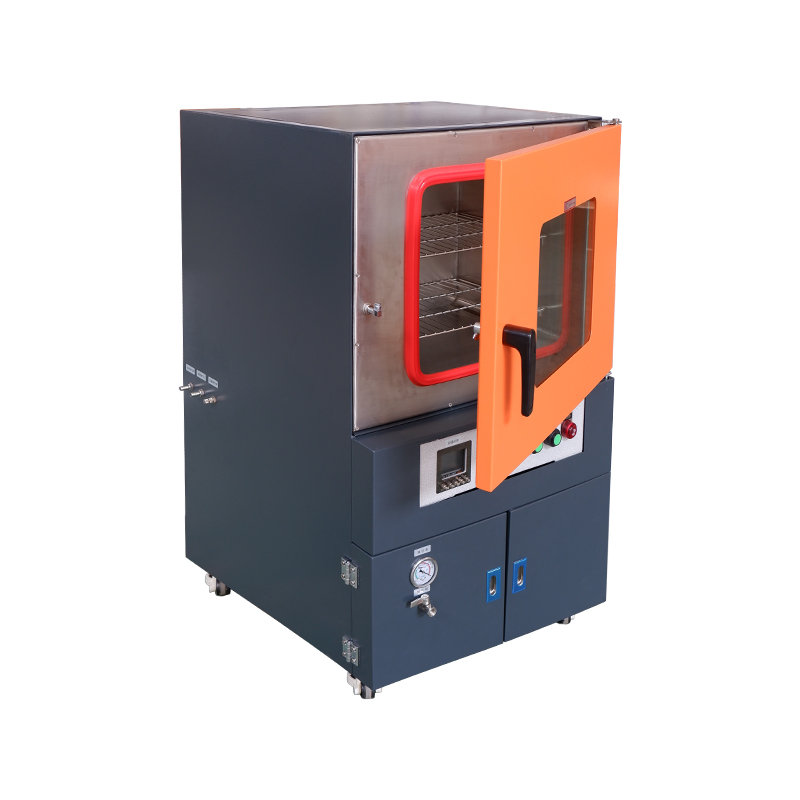
The industrial vacuum drying oven is engineered for production-scale throughput demands, with chamber volumes ranging from 100 liters to several thousand liters in large batch configurations. Industrial units prioritize loading capacity, process repeatability across production batches, energy efficiency, and the robustness to withstand continuous multi-shift operation over years without performance degradation. The structural design typically features thick-wall stainless steel chambers with mirror-polished interiors for cleanability, multiple independently heated shelving zones for large batch temperature uniformity, and programmable controllers that can store and reproduce complex multi-step temperature-vacuum-time profiles across production runs.
In lithium battery manufacturing, industrial vacuum drying ovens are deployed at the electrode preparation stage to remove residual NMP solvent or water from coated electrode foils before cell assembly. Incomplete drying at this stage introduces moisture into the cell that reacts with the electrolyte during formation cycling, generating gas, consuming lithium inventory, and degrading cycle life — outcomes that are commercially unacceptable in a product where performance warranty claims can extend to ten years. The vacuum drying oven provides the controlled, oxygen-free drying environment that ensures electrode slurries are uniformly dried and free of solvent residues to the parts-per-million level required by cell quality specifications.
In pharmaceutical manufacturing, industrial vacuum drying ovens serve both active pharmaceutical ingredient (API) drying and finished dosage form processing applications. APIs that are thermally labile, prone to oxidation, or hygroscopic — characteristics shared by many antibiotic compounds, enzyme preparations, and peptide-based drugs — require the gentle, controlled drying conditions that only a vacuum oven can provide at production scale. Regulatory compliance under GMP frameworks requires full documentation of the drying process parameters, and modern industrial vacuum drying ovens provide the data logging, alarm management, and audit trail capabilities needed to satisfy FDA, EMA, and equivalent national regulatory inspection requirements.
Lab Vacuum Drying Oven: Precision Processing for Research and Development
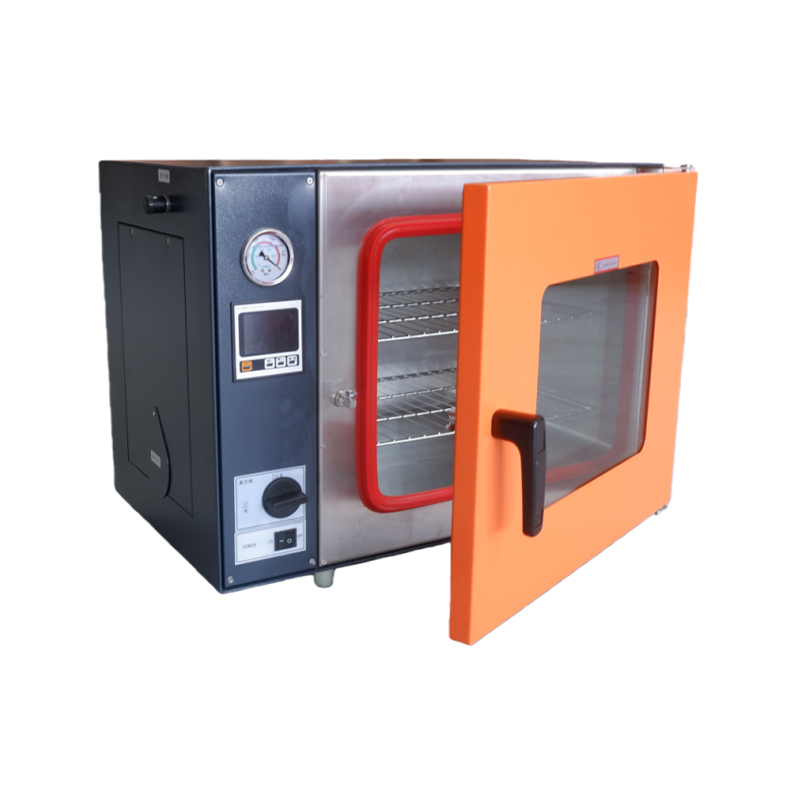
The lab vacuum drying oven addresses the same processing challenges as its industrial counterpart but is scaled and specified for the smaller batch sizes, greater process flexibility, and higher experimental precision demanded by research, development, and quality control laboratory environments. Chamber volumes in the laboratory segment typically range from 6 to 100 liters, with emphasis on temperature uniformity, vacuum level precision, and rapid response to setpoint changes that allow researchers to develop and characterize drying protocols before scaling them to production equipment.
| Feature | Lab Vacuum Drying Oven | Industrial Vacuum Drying Oven |
| Chamber volume | 6 – 100 liters | 100 – 5,000+ liters |
| Temperature range | RT +10°C to 200°C (typical) | RT +10°C to 300°C (typical) |
| Ultimate vacuum | 1 – 133 Pa depending on pump type | 1 – 10 Pa with industrial pump |
| Primary use | R&D, QC, small-batch processing | Production-scale batch processing |
| Controller | PID with programmable ramp/soak | PLC with GMP data logging, SCADA |
| Inert gas backfill | Optional N₂ / Ar inlet port | Standard with flow control |
In nanomaterial research and advanced chemical synthesis, the lab vacuum drying oven is an indispensable tool for precursor heat treatment and sample conditioning. Metal-organic framework (MOF) synthesis, sol-gel ceramic precursor drying, and carbon nanotube functionalization are representative examples of processes where the combination of precise low-temperature control, oxygen-free atmosphere, and solvent removal under vacuum determines whether the final material achieves its target structure, surface area, and chemical purity. The lab vacuum drying oven provides researchers with the experimental control needed to systematically optimize these process variables and translate successful protocols into reproducible, publishable results.

Selecting the Right Vacuum Drying Oven for Your Application
Matching equipment specification to application requirements is the foundation of a successful vacuum drying oven procurement decision. The following considerations should guide the selection process for both industrial and laboratory contexts:
- Maximum operating temperature vs. sample thermal sensitivity: Select a unit whose maximum rated temperature significantly exceeds your process requirement — operating an oven at or near its maximum rating compromises temperature stability and controller accuracy.
- Vacuum pump compatibility with solvent chemistry: Rotary vane pumps with oil are unsuitable for aggressive solvents that contaminate or degrade pump oil — specify dry-scroll or diaphragm pump configurations for solvent-heavy applications in the lab vacuum drying oven category.
- Chamber material and surface finish: Stainless steel 304 is standard; 316L is required for halogenated solvent compatibility or pharmaceutical GMP applications where extractables and leachables testing is mandated.
- Inert gas backfill capability: Applications involving easily oxidized samples — lithium battery materials, metal powders, oxygen-sensitive pharmaceuticals — require a verified inert gas inlet system with flow control and the ability to perform multiple vacuum-backfill purge cycles to reduce residual oxygen to acceptably low levels.
- Data logging and regulatory compliance features: Industrial vacuum drying ovens deployed in pharmaceutical or medical device manufacturing must provide 21 CFR Part 11-compliant electronic records, temperature and vacuum alarm documentation, and calibration traceability to satisfy regulatory inspection requirements.
Send Message
Recommended Products
Products provided by famous enterprises are deeply trusted by users.

- CONTACT
-
- No. 119, Qingliang Avenue, Yaozhuang Town, Zhejiang, China.
- [email protected] ( Email )
- +86-13671719019 ( Phone )
- +86-021-57440136 ( Tel )
- PRODUCT
-
- Drying Oven Series
- Vacuum Box Series
- Explosion-proof Series
- High-temperature Furnace Series
- Incubator Series
- Test Chamber Series
- Other Series
- Forced Air Drying Oven
- Resistance Furnace
- Vacuum Tube Furnace
- Mold Incubator
- Vacuum Atmosphere Furnace
- Biochemical Incubator
- Carbon Dioxide Incubator
- Explosion-Proof Vacuum Drying Oven
- High and Low Temperature Test Chamber
- MOBILE
Copyright ©
Shanghai Dengsheng Instrument Manufacturing Co., Ltd.
All Rights Reserved. Laboratory Equipment Manufacturers

 Back to Top
