
 Español
  عربى
عربى 



Industry News
Vacuum Drying Oven: Lab Equipment Guide
Date:Apr 14, 2026
Content
- 1 What Is a Vacuum Drying Oven and Why Does It Matter?
- 2 Core Technology: How Vacuum Drying Ovens Work
- 3 Disruptive Advantages Over Traditional Drying Methods
- 4 Industry Applications: Where Vacuum Drying Ovens Are Essential
- 5 Vacuum Drying Ovens in Pharmaceutical and Bioengineering Labs
- 6 Selecting the Right Vacuum Drying Oven for Your Lab
- 7 Maintenance Best Practices to Extend Equipment Lifespan
What Is a Vacuum Drying Oven and Why Does It Matter?
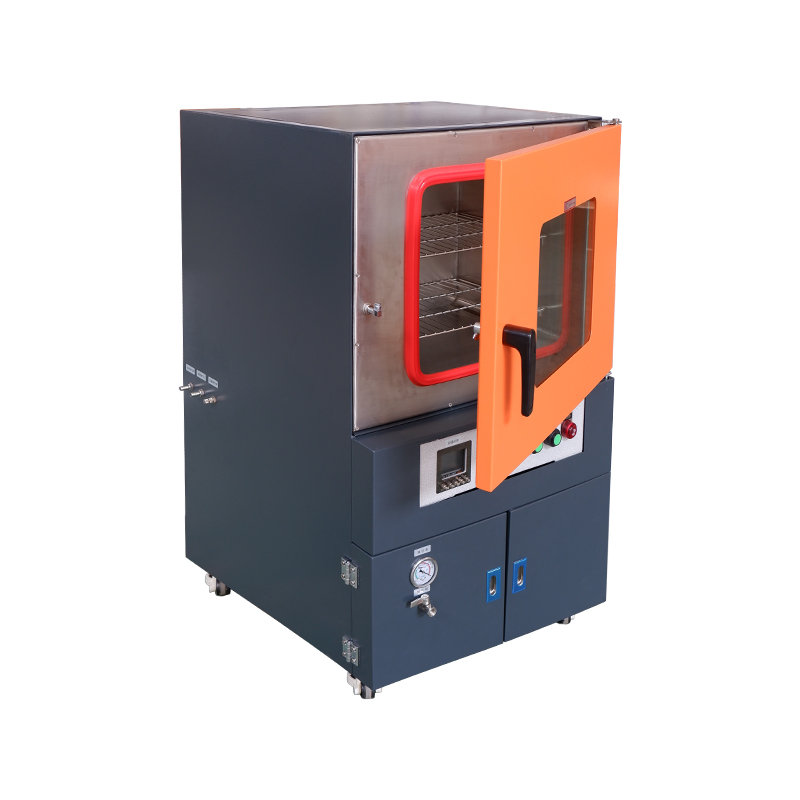
A vacuum drying oven is a category of precision lab equipment that combines controlled thermal energy with a continuously maintained low-pressure environment to process materials that cannot tolerate conventional heat exposure. Unlike standard convection or forced-air ovens, these systems seal the working chamber and extract gas molecules using a high-performance vacuum pump, creating an isolated environment that is simultaneously low-oxygen, low-humidity, and thermally stable. This combination makes the vacuum drying oven one of the most versatile and indispensable pieces of lab equipment in sectors ranging from pharmaceutical manufacturing to advanced semiconductor fabrication.
The significance of this equipment extends beyond simple drying. In any application where heat-sensitive compounds, oxidation-prone materials, or sterility-critical samples are involved, a standard drying approach introduces unacceptable risk. The vacuum drying oven resolves this challenge by allowing researchers and process engineers to precisely dial in the pressure, temperature, and duration of treatment — three variables whose coordinated control defines the quality of the final product. Vacuum drying ovens represent a significant advancement and leap forward in heat treatment technology, setting a new standard for the processing of high-end materials and sensitive samples across the modern laboratory.
Core Technology: How Vacuum Drying Ovens Work
The operating principle of a vacuum drying oven rests on the coordinated management of three physical parameters: temperature, vacuum level, and time. Electric heating elements — typically embedded in the chamber walls or shelves — provide a uniform, stable heat source that can be maintained within tight tolerances, often ±1°C or better in high-specification lab equipment models. Simultaneously, a vacuum pump continuously removes gas molecules from the sealed chamber, progressively reducing internal pressure to the target setpoint, commonly ranging from a few hundred pascals down to near-absolute vacuum in research-grade systems.
The most transformative physical effect of this reduced pressure is the dramatic lowering of solvent boiling points. Water, which boils at 100°C at atmospheric pressure, can be driven off at 40°C or below under sufficient vacuum — a critical advantage when processing biological samples, polymers, or active pharmaceutical ingredients that degrade or denature at elevated temperatures. The result is rapid, low-temperature dehydration and drying that preserves molecular integrity while achieving thorough moisture removal, a combination that no conventional drying method can reliably replicate.
Key Functional Components
- Sealed stainless steel chamber: Provides chemical resistance, structural integrity under negative pressure, and easy sterilization between sample runs.
- Electric heating shelves: Ensure direct conductive heat transfer to sample trays, promoting uniform drying across the entire chamber volume.
- High-performance vacuum pump: Continuously evacuates gas molecules to achieve and maintain the target pressure level throughout the drying cycle.
- Digital PID controller: Regulates temperature and vacuum independently with programmable setpoints, enabling precise, repeatable process parameters.
- Inert gas inlet valve: Allows nitrogen or argon backfill to create a clean, oxygen-free atmosphere, fundamentally inhibiting oxidation and other adverse chemical reactions during heating.
Disruptive Advantages Over Traditional Drying Methods
The low-pressure environment within the chamber offers multiple disruptive advantages that collectively elevate the vacuum drying oven above all conventional alternatives. The most immediate benefit is the prevention of thermal degradation. Heat-sensitive compounds — antibiotics, enzyme preparations, cell products, and polymer blends — can be fully dried at temperatures well below their decomposition thresholds. This is simply not achievable with forced-air or infrared drying systems operating at ambient pressure.
Equally important is the elimination of oxidative damage. By removing active oxygen from the sealed chamber and optionally backfilling with an inert gas such as nitrogen, the system creates a chemically inert atmosphere that completely inhibits oxidation, hydrolysis, and other adverse reactions. This perfectly preserves the original properties and high purity of the materials being processed — a requirement that is non-negotiable in advanced material synthesis and pharmaceutical production. Additionally, the isolated environment prevents microbial growth and dust contamination, making this lab equipment an ideal solution for industries with the strictest hygiene and cleanliness standards.
Industry Applications: Where Vacuum Drying Ovens Are Essential
The versatility of this lab equipment is reflected in its widespread adoption across highly diverse industries. Each sector leverages a different combination of the vacuum oven's core capabilities to solve specific processing challenges.
| Industry | Primary Application | Key Benefit |
| Pharmaceuticals & Bioengineering | Dehydration of antibiotics, enzymes, cell cultures | Prevents thermal denaturation and microbial contamination |
| Semiconductors & Precision Electronics | Removal of moisture and volatile contaminants from microcircuit components | Ensures component reliability and electrical integrity |
| Lithium Battery Manufacturing | Uniform drying of electrode slurries and separator materials | Guarantees impurity-free, high-performance electrodes |
| Advanced Chemical Synthesis | Handling of easily oxidized samples and precursor heat treatment | Inert atmosphere prevents unwanted side reactions |
| Nanomaterial Research | Precursor thermal processing and surface modification | Preserves nanostructure integrity and phase purity |
| Food Science & Quality Control | Moisture content analysis and low-temperature drying | Maintains nutritional integrity and hygienic standards |
Vacuum Drying Ovens in Pharmaceutical and Bioengineering Labs
In pharmaceutical and bioengineering laboratories, the vacuum drying oven provides a safe dehydration solution for temperature-sensitive antibiotics, enzyme preparations, and cell products. These substances are biologically active and structurally fragile — exposure to temperatures above 50°C, or to ambient oxygen, can irreversibly alter their efficacy and safety profiles. By processing these materials under precisely controlled vacuum and moderate heat, manufacturers preserve the full biological activity of the product while achieving the low moisture content required for long-term stability and regulatory compliance.
The pharmaceutical sector also demands absolute sterility and contamination control. The sealed environment of the vacuum drying oven isolates external air, preventing microbial growth and dust contamination throughout the drying cycle. This makes it a critical piece of lab equipment not only for active ingredient drying but also for the preparation of sterile intermediates and the qualification of moisture-sensitive excipients used in tablet, capsule, and injectable formulations.
Selecting the Right Vacuum Drying Oven for Your Lab
Choosing the appropriate vacuum drying oven requires careful evaluation of several performance parameters and application-specific requirements. Selecting the wrong specification can compromise product quality, process efficiency, and even laboratory safety. The following factors should guide the selection process:
- Chamber volume and shelf configuration: Match the internal volume to your typical batch size. Multi-shelf designs maximize throughput while maintaining uniform heat distribution across all sample positions.
- Ultimate vacuum level: Research-grade applications may require ultimate pressures below 1 Pa, while industrial drying processes often operate effectively at 100–1000 Pa. Confirm the pump specification meets your process needs.
- Temperature range and uniformity: Most lab equipment in this category covers 10°C to 200°C, but uniformity across the chamber is equally important. Look for specifications citing ±1°C or better for precision applications.
- Inert gas compatibility: If your samples require an oxidation-free atmosphere, confirm the unit is equipped with an inert gas inlet and that all seals and fittings are rated for the intended gas type.
- Materials of construction: Stainless steel interiors resist chemical attack from common solvents and cleaning agents. Verify compatibility with the specific materials and solvents used in your process.
- Safety certifications: For regulated environments such as pharmaceutical GMP labs or semiconductor cleanrooms, ensure the lab equipment carries appropriate certifications, such as CE marking, UL listing, or ISO compliance documentation.
Maintenance Best Practices to Extend Equipment Lifespan
To sustain the performance and accuracy that define high-quality lab equipment, vacuum drying ovens require consistent, structured maintenance. Door gaskets and chamber seals are the most wear-prone components and should be inspected regularly for cracking, deformation, or loss of elasticity — a compromised seal will prevent the system from reaching and holding target vacuum levels, directly undermining process quality. The vacuum pump requires periodic oil changes or filter replacements depending on its design type, and the pump inlet filter should be checked and cleared of accumulated particulate or solvent condensate after every significant drying cycle.
Internal chamber walls and shelves should be cleaned after each use to remove solvent residues, particulate contamination, or sample overflow. Leaving residues in place between runs can lead to cross-contamination, corrosion of chamber surfaces, or off-gassing during subsequent processes. Temperature and vacuum sensor calibration should be verified on a scheduled basis — at minimum quarterly in active laboratory environments — using traceable reference standards to ensure that process parameters remain accurate and that the data generated by the equipment meets regulatory and quality assurance requirements.

Send Message
Recommended Products
Products provided by famous enterprises are deeply trusted by users.

- CONTACT
-
- No. 119, Qingliang Avenue, Yaozhuang Town, Zhejiang, China.
- [email protected] ( Email )
- +86-13671719019 ( Phone )
- +86-021-57440136 ( Tel )
- PRODUCT
-
- Drying Oven Series
- Vacuum Box Series
- Explosion-proof Series
- High-temperature Furnace Series
- Incubator Series
- Test Chamber Series
- Other Series
- Forced Air Drying Oven
- Resistance Furnace
- Vacuum Tube Furnace
- Mold Incubator
- Vacuum Atmosphere Furnace
- Biochemical Incubator
- Carbon Dioxide Incubator
- Explosion-Proof Vacuum Drying Oven
- High and Low Temperature Test Chamber
- MOBILE
Copyright ©
Shanghai Dengsheng Instrument Manufacturing Co., Ltd.
All Rights Reserved. Laboratory Equipment Manufacturers

 Back to Top
