
 Español
  عربى
عربى 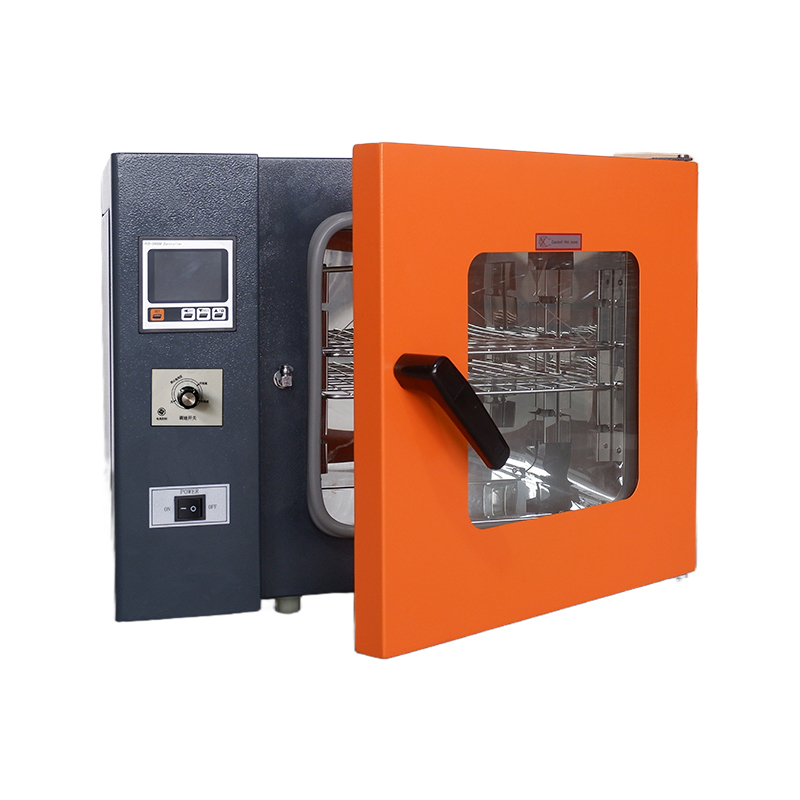



Industry News
Home / News / Industry News / Why Are Modular Drying Ovens Gaining Traction in Multi-Product Manufacturing Facilities?
Why Are Modular Drying Ovens Gaining Traction in Multi-Product Manufacturing Facilities?
Date:Mar 02, 2026
Content
- 1 The Multi-Product Manufacturing Challenge and Why Standard Ovens Fall Short
- 2 Wide Temperature Range as a Foundation for Process Versatility
- 3 Airflow Architecture and Heat Distribution Uniformity
- 4 Nitrogen Purging Integration for Oxidation-Sensitive Processes
- 5 Comparing Modular and Fixed-Configuration Drying Ovens for Multi-Product Use
- 6 Process-Specific Applications Where Modular Drying Ovens Deliver Clear Value
- 7 Selecting a Drying Oven Platform Built for Long-Term Manufacturing Flexibility
The Multi-Product Manufacturing Challenge and Why Standard Ovens Fall Short
Manufacturing facilities that produce multiple product lines face a fundamental tension in thermal processing equipment selection. A single-product plant can specify a drying oven optimized for one set of process conditions and run it at maximum efficiency indefinitely. A multi-product facility, by contrast, may need to process pharmaceutical intermediates at tightly controlled low temperatures in the morning, cure electronic component assemblies at elevated temperatures in the afternoon, and anneal specialty metal powder compacts at high temperatures overnight—all in the same production week, sometimes in the same production day. Conventional fixed-configuration drying ovens are designed around a single operating profile and deliver their best performance within a narrow band of conditions. When process requirements shift significantly, performance compromises accumulate: temperature uniformity degrades outside the design range, airflow patterns optimized for one load geometry perform poorly with another, and the inability to create inert atmospheres rules out entire categories of oxidation-sensitive materials.
Modular drying ovens address this structural mismatch by building configurability into the equipment architecture itself. Rather than committing to fixed chamber dimensions, fixed heating element arrangements, and fixed airflow geometries at the point of manufacture, modular designs allow the operating configuration to be adapted to the process requirement—changing shelf arrangements, adjusting airflow patterns, integrating atmosphere control systems, and scaling chamber volume—without replacing the core equipment asset. In facilities where product portfolios evolve rapidly and capital equipment replacement cycles are measured in years, this adaptability translates directly into competitive advantage.
Wide Temperature Range as a Foundation for Process Versatility
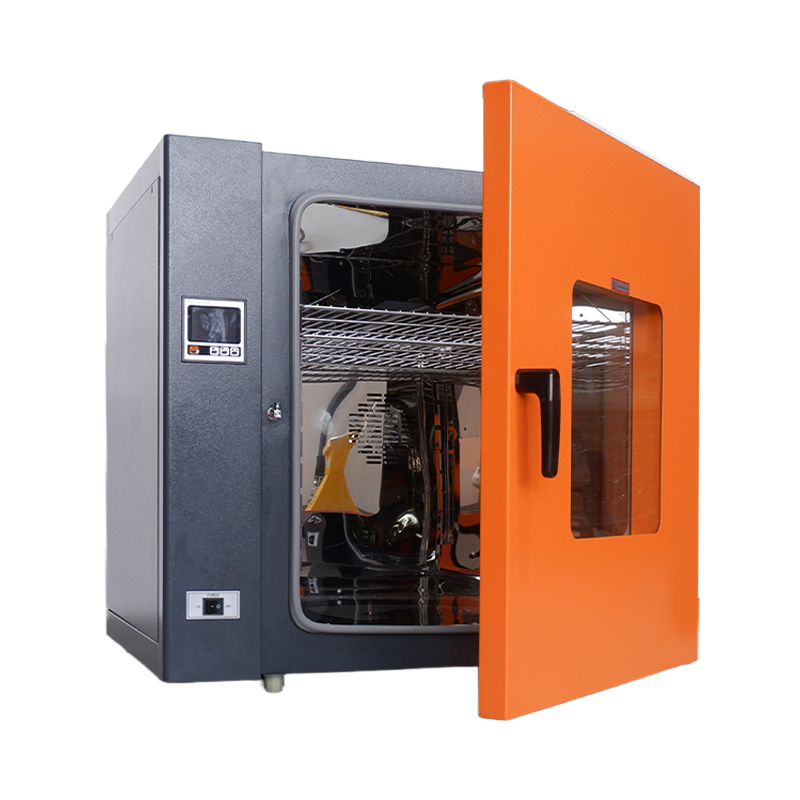
The operating temperature range of a drying oven is the most fundamental parameter determining its applicability across a multi-product manufacturing environment. Advanced industrial drying ovens capable of operating across a span from 250°C to 600°C can serve processes as diverse as basic moisture removal and dehydration at the lower end of the range, through standard curing and baking operations in the mid-range, up to high-temperature annealing and sintering cycles that approach the upper limit. This breadth means that a single equipment platform can support the thermal processing requirements of new materials synthesis, pharmaceutical research and development, precision chemical synthesis, electronic component processing, and food safety analysis within a single facility without requiring dedicated equipment for each application category.
Achieving reliable temperature uniformity across such a wide operating range requires heating system design that performs consistently at both extremes, not just at the nominal mid-range conditions for which many ovens are optimized. Precision electric heating tubes provide a highly stable and controllable heat source across the full operating range, with fast response to setpoint changes and minimal overshoot that could damage temperature-sensitive materials. The heating system must maintain calibrated output linearity from low-power gentle drying operations through maximum-power high-temperature cycles, ensuring that the oven's stated temperature accuracy is achievable at every point in its operating envelope rather than only at the conditions specified in the manufacturer's reference test.
Airflow Architecture and Heat Distribution Uniformity
Temperature uniformity within the drying oven chamber is the engineering characteristic that most directly determines process repeatability and product quality consistency. A chamber that maintains a ±2°C uniformity specification across its usable volume ensures that every item in a loaded batch experiences the same thermal treatment—critical for pharmaceutical batch consistency, electronic component reliability, and materials characterization validity. Achieving this uniformity requires more than simply installing sufficient heating capacity; it demands deliberate airflow management that overcomes the natural tendency of heated air to stratify, creating hot zones near heating elements and cold zones in remote corners of the chamber.
High-efficiency centrifugal fans drive controlled and continuous turbulent airflow through the heated chamber, ensuring that the thermal energy generated by the heating elements is rapidly and uniformly distributed to every part of the usable volume. The turbulent flow regime created by properly designed centrifugal fans is significantly more effective at heat transfer to load surfaces than laminar flow, reducing the temperature differential between the airstream and the product surface and accelerating the heating, dehydration, and curing processes. In multi-product manufacturing facilities where drying ovens must handle a variety of load configurations—from densely packed shallow trays to open racks of bulky components—the airflow system must maintain acceptable uniformity across this range of geometries, which requires fan sizing and ducting design that provides consistent velocity distribution regardless of how the chamber is loaded.
Nitrogen Purging Integration for Oxidation-Sensitive Processes
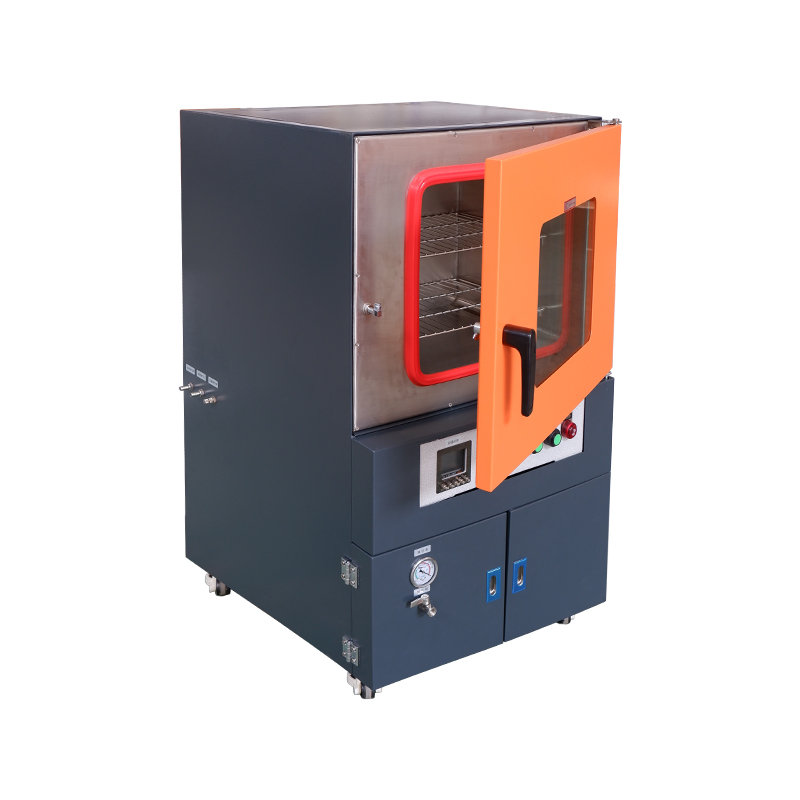
One of the most significant capability differentiators between standard drying ovens and advanced modular platforms is the ability to integrate a professional nitrogen purging system that creates and maintains an inert atmosphere within the chamber during thermal processing. Many of the highest-value materials processed in modern multi-product manufacturing facilities are extremely sensitive to oxidation, hydrolysis, denaturation, or degradation when exposed to oxygen or moisture at elevated temperatures. Processing these materials in a conventional air-atmosphere drying oven—even with precise temperature control—produces unacceptable quality outcomes: surface oxidation of metal powders, degradation of specialty polymers, contamination of precision electronic pastes, and loss of biological activity in humidity-sensitive biological samples.
The nitrogen purging system addresses this challenge by continuously injecting high-purity nitrogen into the chamber to replace and remove reactive gases, creating a low-oxygen, high-cleanliness inert atmosphere that is maintained throughout the thermal cycle. The effectiveness of this approach depends on the integration quality between the nitrogen delivery system and the chamber design: nitrogen injection points must be positioned to ensure complete displacement of atmospheric air rather than channeling through the chamber and leaving pockets of reactive gas near the load. The chamber sealing system must prevent atmospheric ingress during the purging process, and the exhaust management system must safely handle the displaced gas without creating pressure buildups that compromise chamber integrity or operator safety.
This innovative configuration makes the drying oven an indispensable processing platform for high-end metal powders used in additive manufacturing and powder metallurgy, specialty polymers requiring controlled-atmosphere annealing, precision electronic pastes where surface chemistry must be preserved during curing, and biological samples where moisture control and oxidation prevention are simultaneously required. The ability to switch between standard air-atmosphere operation and nitrogen-purged inert atmosphere operation within the same equipment platform is a powerful capability multiplier for multi-product facilities whose material portfolios include both standard and oxidation-sensitive items.
Comparing Modular and Fixed-Configuration Drying Ovens for Multi-Product Use
The practical differences between modular and fixed-configuration drying ovens become concrete when evaluated against the specific operational demands of multi-product manufacturing facilities:
| Evaluation Criterion | Fixed-Configuration Drying Oven | Modular Drying Oven |
| Operating temperature range | Narrow, optimized for one process | Wide, 250°C–600°C full-range capable |
| Atmosphere control | Air only, no inert gas option | Nitrogen purging system integrable |
| Chamber configurability | Fixed shelf and rack layout | Reconfigurable for varied load types |
| Uniformity across load geometries | Optimized for one configuration | Centrifugal fan system maintains uniformity |
| Product portfolio adaptability | Low, requires new equipment for new processes | High, reconfigured without capital replacement |
| Application coverage | Single industry or process type | Pharma, electronics, materials, food, chemicals |
Process-Specific Applications Where Modular Drying Ovens Deliver Clear Value
The value proposition of a modular drying oven platform becomes most tangible when examined through the lens of specific processing applications that multi-product manufacturing facilities routinely encounter. In new materials synthesis and testing, researchers require precise and repeatable control over heating profiles that may change significantly between experiments—a drying oven that maintains calibrated temperature uniformity across its full operating range and logs process data for each run provides the experimental reproducibility that materials characterization demands.
In the preparation of biological agents and pharmaceutical research and development, the drying oven must deliver gentle, uniform heating at lower temperatures while maintaining contamination-free chamber conditions and supporting rapid changeover between product batches. The ability to purge with nitrogen is particularly valuable here for humidity-sensitive biological samples and lyophilized pharmaceutical materials that would degrade in standard air atmosphere at elevated temperatures. Regulatory compliance requirements in pharmaceutical manufacturing also demand detailed process records that modern drying oven control systems can generate automatically.
For dust-free baking of electronic components—a process where particle contamination can cause catastrophic device failures—the drying oven's chamber cleanliness, airflow control, and temperature uniformity are all critical quality parameters. Modular platforms that can be reconfigured with HEPA-filtered air supply and smooth interior surfaces compatible with rigorous cleaning protocols between product runs meet the cleanliness standards that electronic component manufacturers require without dedicating separate equipment to each product line.
Selecting a Drying Oven Platform Built for Long-Term Manufacturing Flexibility
The decision to invest in a modular drying oven rather than a fixed-configuration unit is fundamentally a decision about how a manufacturing facility wants to manage process equipment over its useful life. Fixed equipment delivers optimized performance for today's known requirements at a lower initial acquisition cost, but creates capital replacement needs every time process requirements evolve significantly. Modular platforms carry a higher initial investment that is recovered through the elimination or deferral of replacement purchases as the product portfolio changes, and through the reduction of qualification and validation costs that arise when new equipment is introduced.
When evaluating drying oven platforms for multi-product manufacturing deployment, facilities should assess the following capability requirements against their current and anticipated process portfolio:
- Temperature range coverage from basic dehydration and baking through high-temperature annealing and heat treatment, with verified uniformity performance at both ends of the operating range
- Airflow system design based on high-efficiency centrifugal fans capable of maintaining uniform heat distribution across the variety of load configurations the facility will use
- Nitrogen purging system integration capability with documented performance data showing oxygen concentration levels achievable within the chamber under standard purge conditions
- Control system features including programmable ramp-and-soak profiles, data logging, alarm management, and communication interfaces compatible with facility manufacturing execution systems
- Chamber reconfiguration options including adjustable shelving, alternative rack systems, and access port provisions for thermocouples, atmosphere monitoring instruments, or sample extraction during processing
A drying oven that combines all of these capabilities within a single, well-engineered platform is not simply a heating device—it is a core technology platform supporting cutting-edge technological innovation and high-end manufacturing processes across every industry sector that depends on precise, repeatable, and flexible thermal processing to deliver consistent product quality. For multi-product manufacturing facilities navigating an increasingly dynamic production environment, the modular drying oven represents one of the highest-return equipment investments available in 2026.

Send Message
Recommended Products
Products provided by famous enterprises are deeply trusted by users.


- CONTACT
-
- No. 119, Qingliang Avenue, Yaozhuang Town, Zhejiang, China.
- [email protected] ( Email )
- +86-13671719019 ( Phone )
- +86-021-57440136 ( Tel )
- PRODUCT
-
- Drying Oven Series
- Vacuum Box Series
- Explosion-proof Series
- High-temperature Furnace Series
- Incubator Series
- Test Chamber Series
- Other Series
- Forced Air Drying Oven
- Resistance Furnace
- Vacuum Tube Furnace
- Mold Incubator
- Vacuum Atmosphere Furnace
- Biochemical Incubator
- Carbon Dioxide Incubator
- Explosion-Proof Vacuum Drying Oven
- High and Low Temperature Test Chamber
- MOBILE
Copyright ©
Shanghai Dengsheng Instrument Manufacturing Co., Ltd.
All Rights Reserved. Laboratory Equipment Manufacturers

 Back to Top
