
 Español
  عربى
عربى 



Industry News
Home / News / Industry News / What Are the Key Types of Vacuum Drying Ovens for Laboratory Use in 2026?
What Are the Key Types of Vacuum Drying Ovens for Laboratory Use in 2026?
Date:Mar 09, 2026
Content
- 1 Why Vacuum Drying Ovens Remain Essential in Modern Laboratory Settings
- 2 Standard Bench-Top Vacuum Drying Ovens for General Laboratory Use
- 3 Explosion-Proof Vacuum Drying Ovens for Solvent-Handling Applications
- 4 Precision Vacuum Drying Ovens for Pharmaceutical and Analytical Applications
- 5 Industrial Vacuum Drying Ovens: Scale, Throughput, and Process Integration
- 6 Comparing Key Vacuum Drying Oven Types at a Glance
- 7 Microwave-Assisted Vacuum Drying Ovens for Rapid Processing
- 8 Critical Selection Criteria for Choosing the Right Vacuum Drying Oven
- 9 Emerging Trends Shaping Vacuum Drying Oven Technology in 2026
Why Vacuum Drying Ovens Remain Essential in Modern Laboratory Settings
A vacuum drying oven removes moisture and solvents from heat-sensitive or oxidation-prone materials by combining reduced atmospheric pressure with controlled thermal energy. By lowering the pressure inside the chamber, the boiling point of water and organic solvents drops dramatically, allowing drying to proceed at temperatures far below those required under atmospheric conditions. This principle makes the vacuum drying oven indispensable across pharmaceutical research, materials science, electronics manufacturing, food science, polymer development, and chemical analysis — any field where sample integrity must be preserved during the drying process. In 2026, the range of vacuum drying oven types available to laboratory users has expanded considerably, driven by advances in chamber materials, vacuum pump technology, digital control systems, and the growing need to handle increasingly specialised sample types. Understanding the distinctions between these types is essential for laboratories seeking to match equipment capability to application requirements without overpaying for unnecessary features or underspecifying a unit that will become a bottleneck in critical workflows.
Standard Bench-Top Vacuum Drying Ovens for General Laboratory Use
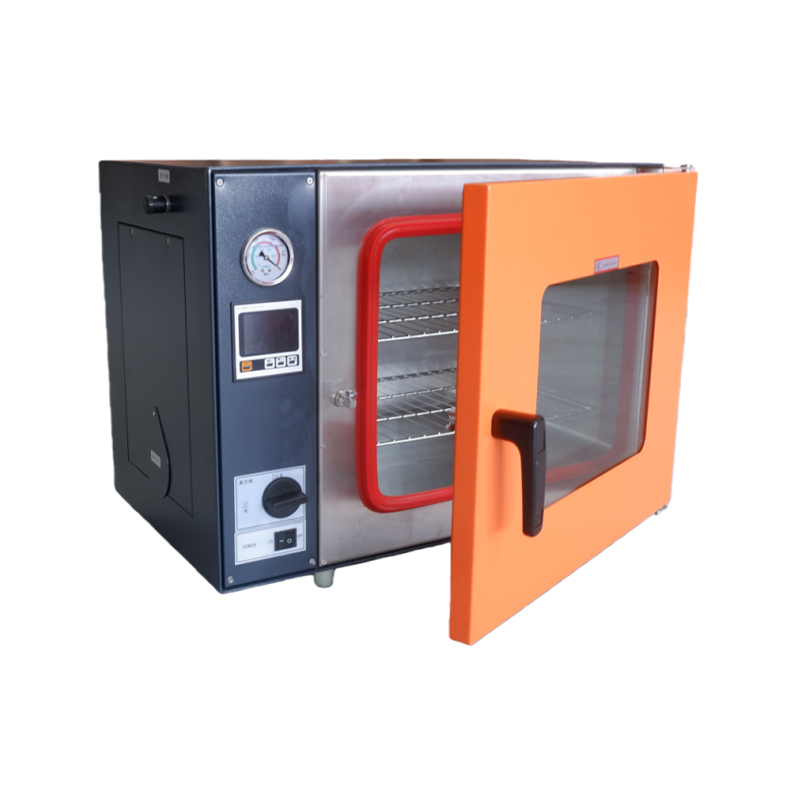
The standard bench-top vacuum drying oven is the most widely deployed type in research and quality control laboratories worldwide. These units typically offer chamber volumes ranging from 20 litres to 100 litres, with stainless steel or electropolished aluminium inner chambers designed for chemical resistance and ease of cleaning. Operating temperature ranges commonly span from ambient to 200°C or 250°C, with vacuum levels achievable to approximately 0.1 mbar when paired with a two-stage rotary vane pump — sufficient for the vast majority of general drying, degassing, and moisture determination applications.
Modern bench-top vacuum drying ovens in 2026 increasingly feature PID microprocessor controllers with programmable temperature ramp and soak profiles, allowing complex drying cycles to run unattended with precise repeatability. Multi-shelf configurations with heated shelves — rather than simple convection or radiation heating — provide significantly more uniform temperature distribution across the sample load, a critical requirement when processing multiple samples simultaneously in a comparative study. Safety features such as overheat protection, vacuum relief valves, and inert gas purge ports for nitrogen backfilling before chamber opening are now standard rather than optional on laboratory-grade units.
Explosion-Proof Vacuum Drying Ovens for Solvent-Handling Applications
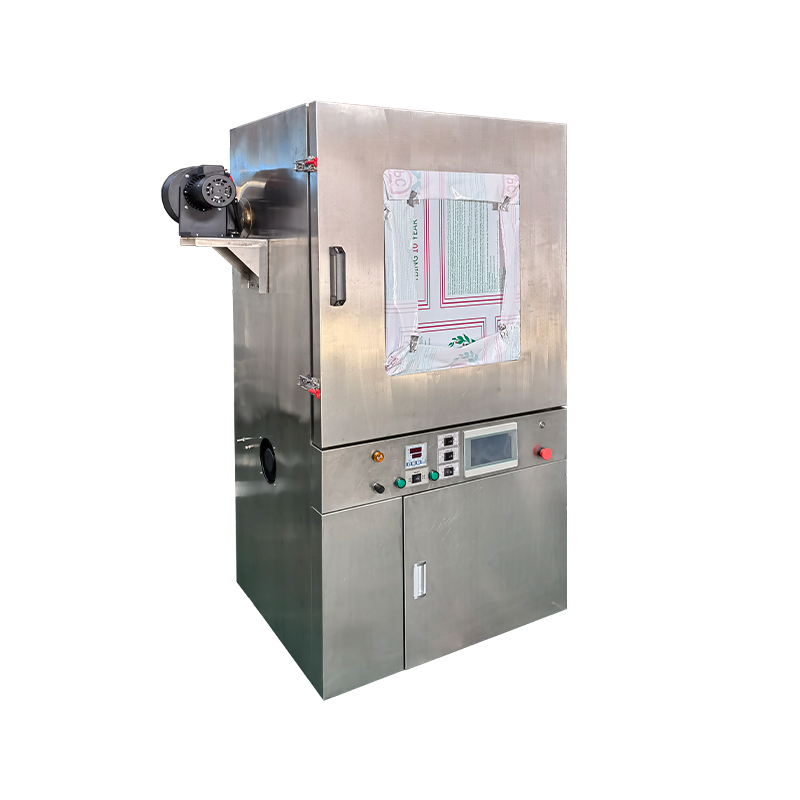
When the materials being dried contain flammable solvents — ethanol, acetone, hexane, toluene, and similar organic compounds — a standard vacuum drying oven poses an unacceptable ignition risk. Explosion-proof vacuum drying ovens address this by eliminating all potential ignition sources from within and immediately adjacent to the chamber. These units feature spark-free internal lighting using fibre optic transmission from an external light source, sealed electrical components rated to ATEX or IECEx Zone 2 or Zone 1 classifications depending on the severity of the hazard category, and chamber designs that minimise the accumulation of solvent vapour pockets.
The vacuum system in an explosion-proof vacuum drying oven is typically connected to a solvent trap — a cold trap cooled by dry ice, liquid nitrogen, or an electrically refrigerated condenser — positioned between the chamber and the vacuum pump. This trap condenses and collects solvent vapour before it reaches the pump, protecting the pump from solvent contamination and preventing flammable vapour from accumulating in the exhaust stream. Laboratories routinely drying solvent-containing polymer samples, pharmaceutical intermediates, or organic synthesis products should always specify explosion-proof certification as a non-negotiable requirement rather than a cost-saving trade-off.
Precision Vacuum Drying Ovens for Pharmaceutical and Analytical Applications
Pharmaceutical laboratories, particularly those operating under GMP (Good Manufacturing Practice) or working to pharmacopoeial methods such as USP, EP, or JP moisture determination procedures, require vacuum drying ovens with performance characteristics that go substantially beyond what general-purpose units provide. Precision vacuum drying ovens in this category are distinguished by tighter temperature uniformity specifications — typically ±1°C or better across the entire chamber volume — combined with validated and traceable calibration documentation that satisfies regulatory audit requirements.
Key features that define precision vacuum drying ovens for pharmaceutical use include independent over-temperature safety circuits with separately calibrated sensors, 21 CFR Part 11-compliant data logging and audit trail capabilities for electronic records, chamber surfaces finished to sanitary standards with electropolished interiors and crevice-free construction to facilitate validated cleaning procedures, and IQ/OQ/PQ qualification documentation packages supplied by the manufacturer. In 2026, several leading manufacturers offer factory qualification services where the IQ and OQ protocols are executed at the factory before shipment, reducing on-site installation qualification time and cost for regulated laboratories.
Industrial Vacuum Drying Ovens: Scale, Throughput, and Process Integration
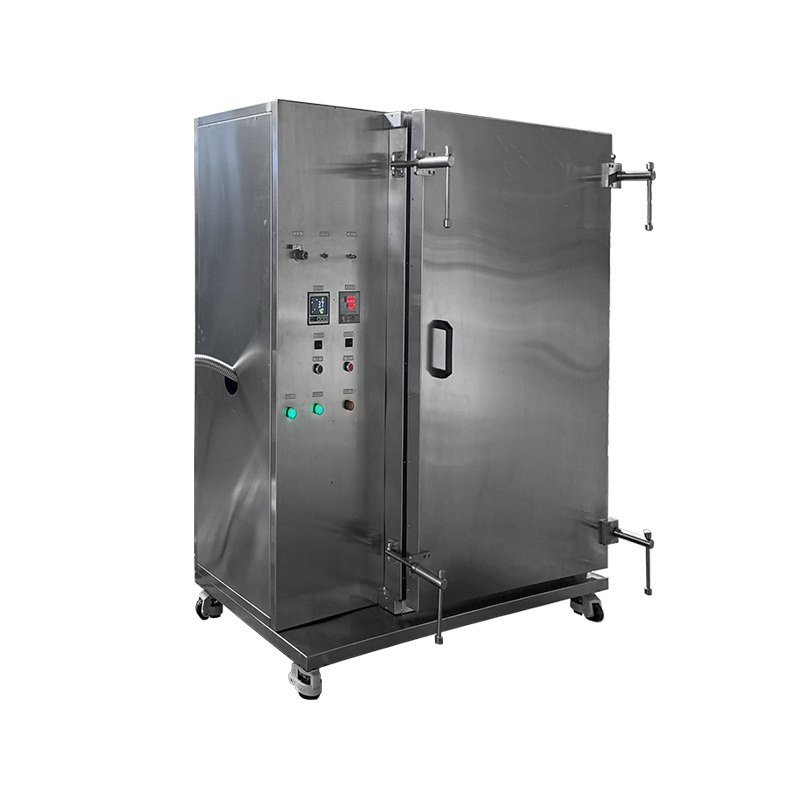
An industrial vacuum drying oven operates on the same thermodynamic principles as its laboratory counterpart but at a scale, throughput capacity, and process integration level designed for production or pilot-scale manufacturing rather than small-sample research. Chamber volumes in industrial vacuum drying oven configurations typically begin at 200 litres and extend to several cubic metres, with multi-trolley loading systems, fork-lift accessible doors, and rail-guided shelf assemblies that allow entire batches of product to be loaded and unloaded efficiently as complete units.
The heating systems in an industrial vacuum drying oven are generally more sophisticated than the simple shelf heaters of bench-top units. Oil-heated or steam-heated shelves with precisely controlled fluid circulation provide excellent thermal mass and uniformity across large chamber volumes. Some industrial vacuum drying oven designs incorporate independently controlled heating zones — top, middle, and bottom shelf circuits — allowing the temperature profile across a deep chamber to be optimised for specific product drying curves. Vacuum systems at industrial scale commonly use oil-sealed rotary vane pumps in series configuration, Roots blower booster pumps to achieve lower ultimate pressures rapidly in large chamber volumes, or dry screw vacuum pumps where oil contamination of the product is unacceptable.
Industries that routinely specify industrial vacuum drying oven equipment include battery electrode manufacturing — where the moisture content of cathode and anode materials must be reduced to parts-per-million levels before cell assembly — ceramic and advanced materials processing, wood and composite drying for aerospace components, and pharmaceutical bulk active ingredient drying where product batch sizes make bench-top equipment impractical.
Comparing Key Vacuum Drying Oven Types at a Glance
The following table summarises the principal characteristics of the main vacuum drying oven types discussed, providing a quick reference for laboratory managers and procurement teams making selection decisions:
| Type | Typical Volume | Temp Range | Key Feature | Primary Application |
| Standard bench-top | 20–100 L | Ambient to 250°C | PID control, heated shelves | General drying, degassing |
| Explosion-proof | 20–150 L | Ambient to 200°C | ATEX/IECEx rated, solvent trap | Flammable solvent drying |
| Precision / GMP | 30–120 L | Ambient to 220°C | ±1°C uniformity, 21 CFR Part 11 | Pharmaceutical, pharmacopoeial |
| Industrial vacuum drying oven | 200 L to several m³ | Ambient to 300°C+ | Multi-zone heating, trolley loading | Batch production, batteries, ceramics |
| Microwave-assisted vacuum | 10–50 L | Ambient to 150°C | Volumetric heating, rapid cycle | Food science, polymer research |
Microwave-Assisted Vacuum Drying Ovens for Rapid Processing
Microwave-assisted vacuum drying ovens represent a growing niche in laboratory equipment that combines microwave volumetric heating with reduced pressure to achieve drying speeds significantly faster than conventional shelf-heated vacuum drying oven designs. In a conventional vacuum drying oven, heat transfers from the shelf surface into the sample by conduction, which can be slow for large sample masses or thermally insulating materials. Microwave energy penetrates the sample volume and excites water molecules throughout the bulk simultaneously, dramatically accelerating moisture removal even at the low temperatures made possible by the reduced pressure environment.
Applications where microwave-assisted vacuum drying ovens deliver compelling advantages over conventional designs include food moisture determination — where rapid results are essential for production quality control — polymer and rubber compound drying where cycle time reduction translates directly into manufacturing throughput, and herbal extract processing where thermal sensitivity and speed are simultaneously required. The main limitation of this type is chamber volume: the need to contain microwave energy safely constrains chamber sizes to the 10–50 litre range, making them unsuitable for large batch processing but ideal for high-throughput small-sample applications.
Critical Selection Criteria for Choosing the Right Vacuum Drying Oven
With the diversity of vacuum drying oven types available in 2026, selecting the most appropriate unit requires a structured evaluation of application requirements against equipment capabilities. The following criteria should guide every selection decision:
- Maximum operating temperature and temperature uniformity: Determine the highest process temperature required and the uniformity tolerance the application demands. Pharmaceutical moisture determination by pharmacopoeial methods requires stricter uniformity than general material conditioning.
- Ultimate vacuum level required: Most laboratory applications are satisfied by vacuum levels of 1–10 mbar. Highly hygroscopic pharmaceutical compounds or outgassing studies may require ultimate pressures below 0.1 mbar, demanding a higher-specification pump and tighter chamber sealing.
- Flammability of sample solvents: Any application involving organic solvents mandates an explosion-proof vacuum drying oven with appropriate ATEX or IECEx certification. This is a safety requirement, not a performance preference, and should not be compromised for budget reasons.
- Regulatory and documentation requirements: GMP-regulated environments require validation support documentation, electronic audit trails, and independent safety circuits. Standard commercial vacuum drying ovens do not provide these features and cannot be retrofitted to full GMP compliance cost-effectively.
- Throughput and chamber volume: Match chamber volume to the anticipated maximum sample load with a reasonable margin. An undersized vacuum drying oven that must be run in multiple batches where a single batch would suffice creates unnecessary workflow bottlenecks and increases energy consumption per unit of dried material.
- Connectivity and data integration: Modern laboratories increasingly require vacuum drying oven data — temperature logs, vacuum records, cycle parameters — to integrate with LIMS or manufacturing execution systems via RS-232, USB, or Ethernet interfaces. Confirm data output options before purchase, as retrofitting connectivity to older designs is often impractical.
Emerging Trends Shaping Vacuum Drying Oven Technology in 2026
Several technology trends are actively reshaping the vacuum drying oven market in 2026 and will continue to influence product development over the coming years. Dry scroll and dry claw vacuum pumps are increasingly displacing traditional oil-sealed rotary vane pumps in laboratory vacuum drying oven installations, eliminating oil mist contamination risks, reducing maintenance intervals, and enabling cleaner exhaust streams that simplify solvent vapour management. IoT-enabled vacuum drying ovens with cloud-connected monitoring dashboards allow laboratory managers to track multiple units across a facility remotely, receive alert notifications for process deviations, and generate automated compliance reports without manual data transcription.
Energy efficiency is also receiving increased attention, with manufacturers developing better-insulated chamber designs and more efficient heating element configurations that reduce the energy consumption of the vacuum drying oven across long drying cycles — a meaningful operational cost factor when units run continuously in production support roles. For laboratories evaluating an industrial vacuum drying oven for pilot or production-scale work, heat recovery systems that capture and reuse thermal energy from the vacuum pump exhaust and chamber wall losses are beginning to appear in premium product lines, offering measurable reductions in facility energy consumption that justify their additional capital cost over multi-year operational horizons.
Send Message
Recommended Products
Products provided by famous enterprises are deeply trusted by users.

- CONTACT
-
- No. 119, Qingliang Avenue, Yaozhuang Town, Zhejiang, China.
- [email protected] ( Email )
- +86-13671719019 ( Phone )
- +86-021-57440136 ( Tel )
- PRODUCT
-
- Drying Oven Series
- Vacuum Box Series
- Explosion-proof Series
- High-temperature Furnace Series
- Incubator Series
- Test Chamber Series
- Other Series
- Forced Air Drying Oven
- Resistance Furnace
- Vacuum Tube Furnace
- Mold Incubator
- Vacuum Atmosphere Furnace
- Biochemical Incubator
- Carbon Dioxide Incubator
- Explosion-Proof Vacuum Drying Oven
- High and Low Temperature Test Chamber
- MOBILE
Copyright ©
Shanghai Dengsheng Instrument Manufacturing Co., Ltd.
All Rights Reserved. Laboratory Equipment Manufacturers

 Back to Top
