
 Español
  عربى
عربى 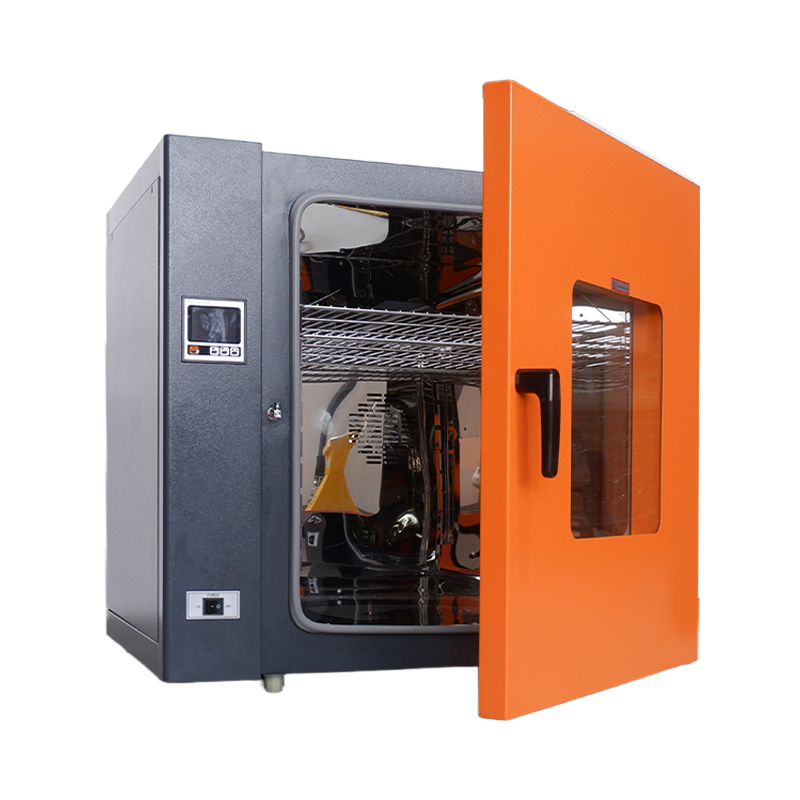



Industry News
Home / News / Industry News / Vacuum Drying Oven for Heat-Sensitive Materials: Battery, Pharma & Semiconductor
Vacuum Drying Oven for Heat-Sensitive Materials: Battery, Pharma & Semiconductor
Date:Jun 04, 2026
Across the most demanding sectors of modern manufacturing and laboratory science, one processing challenge keeps resurfacing: how do you reliably remove moisture, solvents, or volatile compounds from materials that cannot tolerate the heat required to do it? The answer, increasingly, is the vacuum drying oven — a thermal processing system that fundamentally changes the relationship between temperature and evaporation, making it possible to dry heat-sensitive materials quickly, safely, and without chemical degradation.
Content
- 1 Why Conventional Ovens Fall Short for Heat-Sensitive Materials
- 2 How a Vacuum Drying Oven Works: The Core Principle
- 3 Oxidation Protection: The Hidden Advantage of Vacuum Drying
- 4 Lithium Battery Electrode Drying: Why Moisture Is the Enemy
- 5 Semiconductor and Electronics Applications
- 6 Pharmaceutical Vacuum Drying: Protecting API Integrity
- 7 Choosing the Right Vacuum Drying Oven for Your Application
- 8 Conclusion
Why Conventional Ovens Fall Short for Heat-Sensitive Materials
Standard forced-air convection ovens work by circulating heated air across a sample surface until moisture evaporates. Under atmospheric pressure, water evaporates at 100°C — and many solvents require even higher temperatures to drive off completely. For robust industrial materials, this presents no problem. For heat-sensitive substances, however, the required temperatures introduce risks that are difficult to manage.
Thermal degradation, denaturation of biological molecules, oxidative reactions triggered by hot circulating air, and loss of volatile active compounds are all documented failure modes of conventional high-temperature drying. In pharmaceutical manufacturing, these effects can render an active ingredient clinically inactive. In lithium battery production, residual moisture at the parts-per-million level can trigger internal cell reactions that compromise both capacity and safety. In semiconductor fabrication, even trace contamination from high-temperature processing can cause microcircuit failure.
These limitations are not solvable by simply lowering the oven temperature in a conventional system — at lower temperatures, evaporation under normal pressure slows dramatically, extending drying times to impractical lengths. A fundamentally different approach is required.
How a Vacuum Drying Oven Works: The Core Principle
The operating principle of a vacuum drying oven is based on a straightforward physical relationship: as pressure inside a sealed chamber decreases, the boiling point of any liquid contained within the materials being processed also decreases. At a chamber pressure of 10 kPa (roughly 10% of atmospheric pressure), water boils at approximately 46°C rather than 100°C. Organic solvents with even lower boiling points can be driven off at temperatures close to ambient.
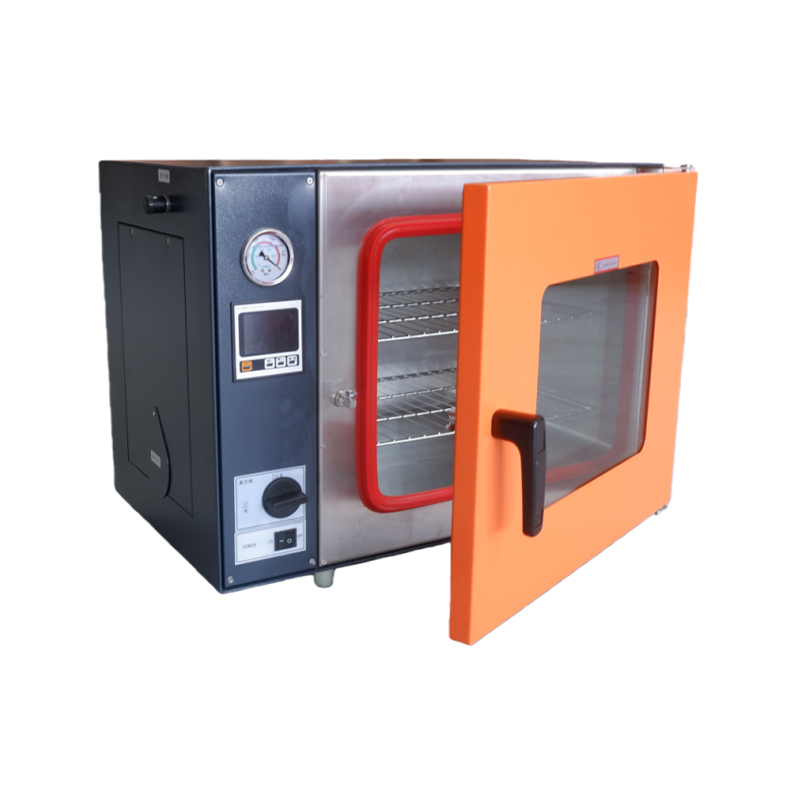
In practice, the system operates through a coordinated three-parameter process. A high-performance vacuum pump continuously evacuates gas molecules from the sealed stainless steel chamber, establishing and maintaining the target low-pressure environment. Electric heating elements — typically embedded in shelf surfaces for direct conductive heat transfer — raise the sample temperature to the setpoint. A programmable PID controller manages the relationship between temperature, vacuum level, and drying time, holding all three within tight tolerances throughout the process cycle.
The result is controlled, low-temperature dehydration that removes moisture efficiently without subjecting samples to the thermal stress that conventional drying demands. Materials that would degrade, denature, or decompose above 60°C can be processed safely at 40–50°C under vacuum conditions with equivalent or superior drying outcomes.
Oxidation Protection: The Hidden Advantage of Vacuum Drying
Temperature management is the most visible benefit of vacuum drying, but oxidation prevention is equally significant in many industrial applications — and frequently overlooked in basic equipment comparisons.
In a conventional oven, the circulating air that carries heat to the sample surface also delivers a continuous supply of oxygen. For materials that are sensitive to oxidative reactions — metal powders, certain polymers, electrode active materials, enzyme preparations, and easily oxidized chemical intermediates — this oxygen exposure during the thermal processing stage can irreversibly alter material properties, reduce purity, or cause surface degradation that affects downstream performance.
Vacuum drying eliminates this exposure pathway. By evacuating the chamber to the target operating pressure before and during heating, the system removes the active oxygen that would otherwise be present throughout the drying cycle. The result is a chemically inert processing environment that preserves the original composition, surface chemistry, and structural properties of the material being dried. For applications where handling flammable solvents is a concern, an explosion-proof vacuum drying oven provides the additional safety architecture needed to manage solvent vapor safely under reduced pressure conditions.
This oxidation-protection characteristic is not a secondary benefit — in lithium battery cathode material preparation, semiconductor cleaning, and pharmaceutical API processing, it is often the primary reason vacuum drying is specified over all alternatives.
Lithium Battery Electrode Drying: Why Moisture Is the Enemy
The lithium battery manufacturing sector has become one of the most demanding and technically rigorous end markets for vacuum drying technology. The reason is straightforward: moisture is incompatible with lithium battery chemistry at every level, from raw material handling through to cell assembly.
Battery-grade lithium salts, cathode active materials such as lithium iron phosphate and nickel-cobalt-manganese oxides, and electrode slurries all require drying to moisture thresholds measured in parts per million. Research has documented that residual water levels above 300 ppm in electrode materials can trigger the formation of hydrofluoric acid within the assembled cell — a corrosive compound that attacks internal components and contributes to capacity fade and safety risk over the cell's service life.
Vacuum drying addresses the electrode moisture challenge on multiple fronts simultaneously. The reduced pressure environment accelerates solvent and moisture evaporation from the electrode slurry without requiring elevated temperatures that could disrupt particle morphology, cause agglomeration, or alter the oxidation state of transition metal compounds in cathode materials. Uniform shelf heating ensures consistent moisture removal across all trays in a batch, eliminating the within-batch variation that can compromise yield in high-volume production environments.
For both laboratory-scale battery research and pilot-to-production scale-up, vacuum drying ovens represent the critical moisture-control step that underpins cell performance consistency.
Semiconductor and Electronics Applications
Precision electronics and semiconductor manufacturing place some of the most stringent demands on any drying or thermal processing system. Component geometries continue to shrink with each technology generation, and as feature sizes decrease, the tolerance for contamination, moisture, or process-induced stress decreases in proportion.
Vacuum drying ovens are used across multiple stages of semiconductor and electronics production:
- Wafer and substrate drying — removing trace moisture from silicon wafers and ceramic substrates prior to deposition or bonding steps, where surface contamination can cause adhesion failure or electrical defects
- PCB baking — driving absorbed moisture from printed circuit board laminates before reflow soldering, preventing the steam-induced delamination known as "popcorning"
- IC and component packaging — drying encapsulant materials and adhesives at controlled low temperatures that preserve bond wire geometry and die attachment integrity
- Optical component processing — removing volatile contaminants from lens assemblies and optical coatings without the thermal stress that can induce birefringence or coating delamination
In each of these applications, the combination of precise temperature control, low-oxygen environment, and gentle vacuum-assisted evaporation produces outcomes that cannot be replicated with conventional thermal processing equipment.
Pharmaceutical Vacuum Drying: Protecting API Integrity
The pharmaceutical and bioengineering industries represent perhaps the most regulated and technically exacting application environment for vacuum drying technology. Active pharmaceutical ingredients, biological products, and sterile materials must meet strict specifications for chemical identity, purity, and potency — and the drying process is a critical control point where those specifications can be met or compromised.
Heat-sensitive drugs present a particular challenge. Many antibiotics, enzyme preparations, and peptide-based therapeutics begin to degrade at temperatures as low as 40–60°C under normal atmospheric conditions. Proteins denature, losing their three-dimensional structure and biological activity. Some organic APIs undergo hydrolysis or oxidation reactions when exposed to heat and oxygen simultaneously during conventional oven drying.
Vacuum drying eliminates both thermal and oxidative stress from the drying step. By processing at temperatures below the thermal stability threshold of the active compound — made possible by the vacuum-lowered boiling point of water — manufacturers can achieve the required moisture specifications without sacrificing product potency or purity. The sealed chamber environment also prevents external contamination during processing, supporting the clean drying conditions required under GMP manufacturing frameworks.
Cell-based products and biological materials benefit further from the gentle processing conditions: enzyme activity is preserved, protein conformation is maintained, and moisture-sensitive biological structures remain intact through the full drying cycle.
Choosing the Right Vacuum Drying Oven for Your Application
With vacuum drying ovens deployed across such a wide range of industries and process requirements, selecting the appropriate system requires careful consideration of several parameters:
| Application | Temperature Range | Critical Requirement |
|---|---|---|
| Lithium battery materials | 60–120°C | Deep vacuum, ppm-level moisture removal |
| Semiconductor / PCB | 50–150°C | Contamination-free environment, uniform heating |
| Pharmaceutical API | 30–80°C | Low-temperature operation, GMP-compatible design |
| Chemical / nanomaterials | 40–200°C | Oxidation protection, solvent vapor handling |
Beyond temperature and vacuum level, chamber size, heating uniformity, control system sophistication, and seal integrity all influence process outcomes. For general laboratory drying of non-sensitive materials where full vacuum is not required, a drying oven series with programmable temperature control and forced-air circulation may offer a more economical solution while still meeting process requirements.
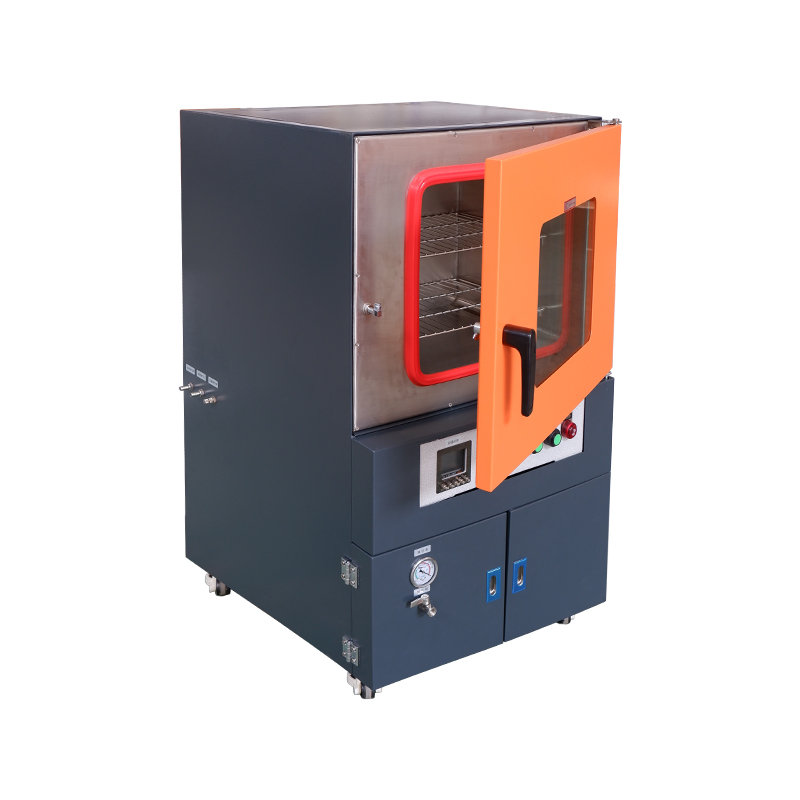
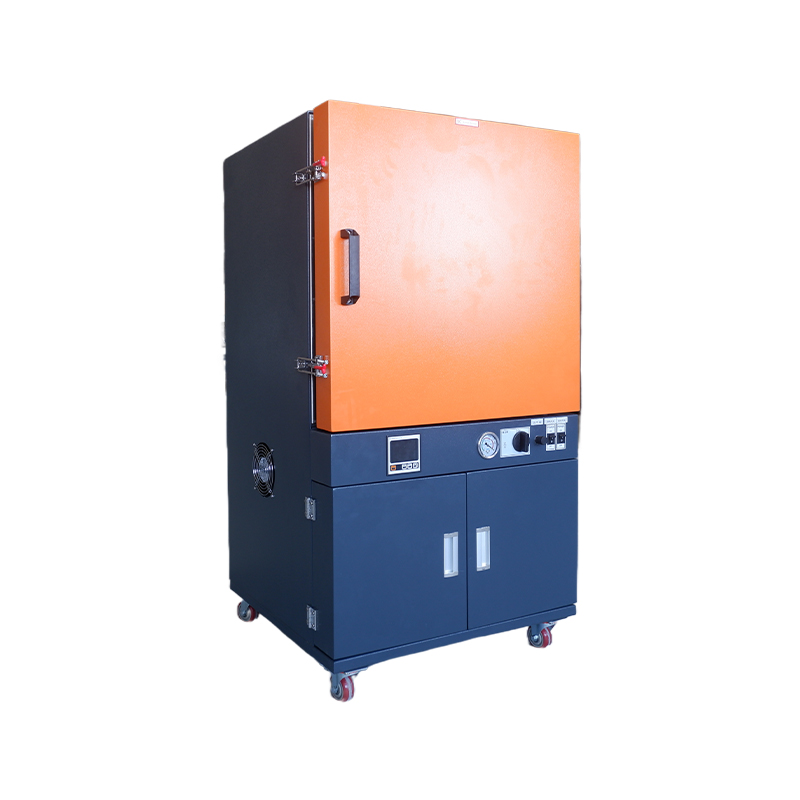
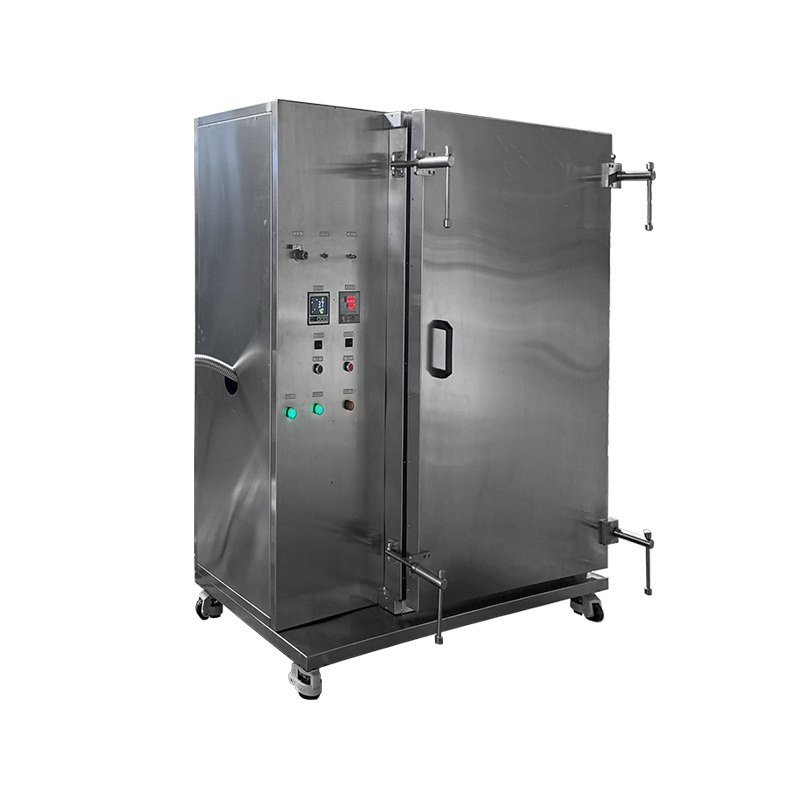
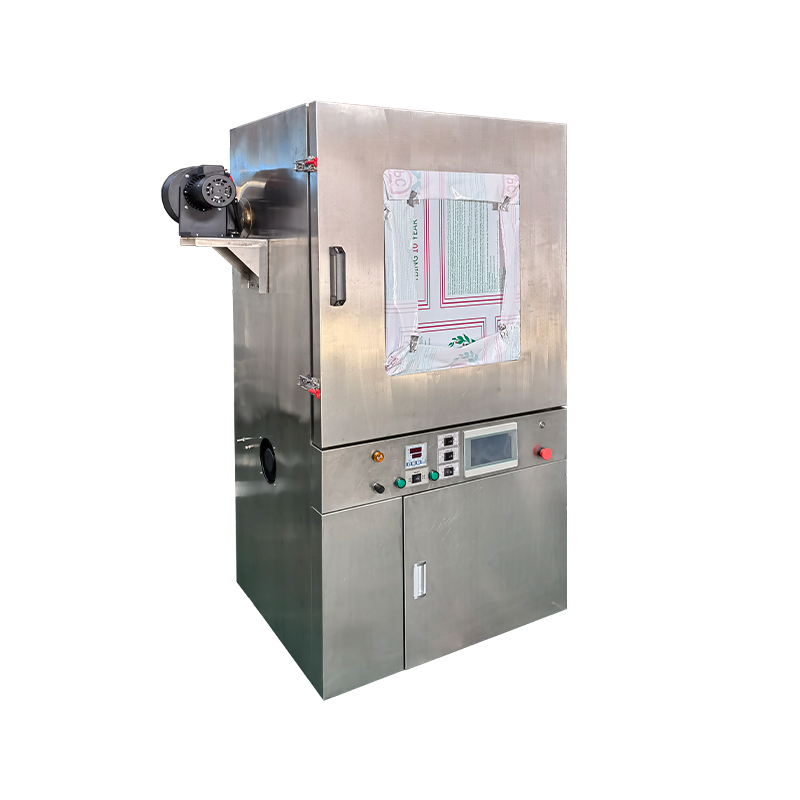
For the most demanding applications — where material value, safety requirements, or product quality standards leave no margin for process variation — a high-performance vacuum drying oven with precise multi-parameter control and industrial-grade chamber construction provides the reliability and repeatability that modern manufacturing demands.
Conclusion
Vacuum drying ovens have become indispensable in the processing of heat-sensitive materials across lithium battery manufacturing, semiconductor fabrication, pharmaceutical production, and advanced materials research. By combining low-pressure evaporation with precise temperature control and an oxygen-depleted processing environment, they solve drying challenges that conventional thermal equipment cannot address without compromising material integrity. As the industries that depend on these capabilities continue to scale — driven by electric vehicle adoption, semiconductor demand, and pharmaceutical innovation — the role of the vacuum drying oven as a precision manufacturing tool will only continue to grow.
Send Message
Recommended Products
Products provided by famous enterprises are deeply trusted by users.


- CONTACT
-
- No. 119, Qingliang Avenue, Yaozhuang Town, Zhejiang, China.
- [email protected] ( Email )
- +86-13671719019 ( Phone )
- +86-021-57440136 ( Tel )
- PRODUCT
-
- Drying Oven Series
- Vacuum Box Series
- Explosion-proof Series
- High-temperature Furnace Series
- Incubator Series
- Test Chamber Series
- Other Series
- Forced Air Drying Oven
- Resistance Furnace
- Vacuum Tube Furnace
- Mold Incubator
- Vacuum Atmosphere Furnace
- Biochemical Incubator
- Carbon Dioxide Incubator
- Explosion-Proof Vacuum Drying Oven
- High and Low Temperature Test Chamber
- MOBILE
Copyright ©
Shanghai Dengsheng Instrument Manufacturing Co., Ltd.
All Rights Reserved. Laboratory Equipment Manufacturers

 Back to Top
