
 Español
 عربى



Industry News
Home / News / Industry News / Continuous Furnace Heat Treatment: Process Control, Selection and Uptime
Continuous Furnace Heat Treatment: Process Control, Selection and Uptime
Date:Nov 09, 2026
Two bearing races leave the same mesh-belt furnace on the same shift, one from the centre of the belt and one from the edge. Both pass the hardness check on Monday. By Friday the edge parts measure 1.5 HRC low, the press fit drifts, and the scrap report blames the incoming steel.
Continuous furnace heat treatment is not a larger version of a batch process. It is a steady-state operation: each part is a moving point inside a fixed thermal and atmospheric field, and that field — not the recipe card pinned to the wall — decides the metallurgical result. The useful question is therefore not "how many kilograms per hour" but "how stable is this furnace at hour six of an eight-hour run".
The short version: specify a continuous furnace around three numbers — temperature uniformity across the actual load, atmosphere stability over a full shift, and transfer time from the hot zone to the quench. Throughput follows from those three. It never compensates for them.
- Uniformity of ±5 °C on an empty furnace means little; ask for the survey at your load and belt loading pattern.
- Atmosphere drift is slower and more expensive than a temperature fault, because it quietly decarburises a whole shift.
- Quench transfer time is a mechanical promise, and it is the first thing to degrade when a door cylinder wears.
Content
What a Continuous Furnace Is Really Being Asked to Do
In a roller-hearth, mesh-belt or pusher furnace, the process is defined by geometry and time rather than by a chamber reaching a set point. Four variables carry nearly all of the risk:
- Residence time — heated length divided by belt speed. A 4 m heated zone at 150 mm/min gives roughly 26 minutes at temperature, and that figure must include the ramp, not just the soak.
- Zone control — each zone is a control loop with its own thermocouple, and a single lagging zone bends the whole profile. Look at the recorded profile, not the set-point display.
- Atmosphere — endothermic gas, nitrogen-methanol or pure nitrogen, held at a target carbon potential or dew point. Small air ingress at the entry curtain changes surface chemistry long before it changes the temperature reading.
- Transfer to quench — the seconds between the last hot zone and the oil, water or gas quench. Eight to twelve seconds is a common target; each additional second costs hardness on thin sections.
Uniformity
Survey at three load positions, loaded, after stabilisation. A furnace that passes empty and fails loaded is a common and costly surprise.
Atmosphere
Ask for the gas consumption at idle and at load, and for the recovery time after the entry door opens.
Transfer
Measure it with a stopwatch on the trial run. It is the easiest specification to verify and the easiest to lose in service.
Most plants develop a new cycle in batch equipment before committing belt time to it, because an empty continuous line is an expensive place to discover that a soak is 6 minutes short. A bench-scale tube or atmosphere furnace lets you iterate on ramp, hold and cooling gas without touching production. For that work, a laboratory furnace and oven manufacturer with vacuum and controlled-atmosphere options is usually more useful than a second production furnace.
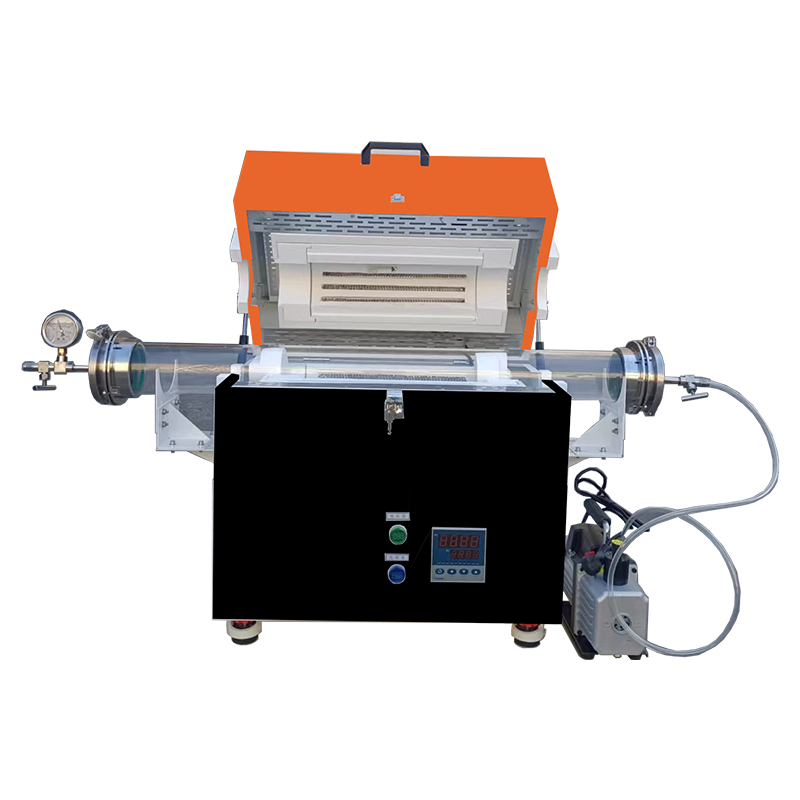 Laboratory Vacuum Tube Furnace for Process DevelopmentBench-scale tube furnace with vacuum and controlled-atmosphere options for iterating ramp, hold, and cooling profiles before committing production belt time.View Product →
Batch vs Continuous: The Comparison to Run Before Signing
The decision is rarely about metal temperature alone. It is about how the two equipment types fail, because that determines scrap volume and recovery time.
Indicative comparison for atmosphere-controlled hardening; the real balance depends on load mass, alloy grade, belt loading pattern and how many part families share the line.
Where the Losses Actually Hide
Furnace buyers tend to compare heating power and belt width. Operators know that downtime, not heating power, decides cost per part. The distribution below is an indicative weighting drawn from typical service and enquiry patterns — use it as a checklist, not a benchmark.
30
Belt stops
25
Atmosphere drift
18
Sensor drift
15
Changeover
12
Quench media
Three of the five contributors are invisible on the HMI. A thermocouple drifting by 6 °C reads as a healthy furnace; a dew point creeping upward reads as a healthy furnace; quench oil that has picked up water reads as a healthy furnace. Only the hardness and case-depth records catch them, and only if someone plots them over time instead of checking them against a limit.
Where Continuous Heat Treatment Dominates
Continuous lines win wherever the same geometry repeats in high volume and the metallurgy tolerates a fixed profile. A rough split of installed demand looks like this:
- 32% automotive drivetrain and transmission parts — carburising and hardening at fixed cycle.
- 22% bearings and fasteners — through-hardening, tempering, stress relief.
- 18% sintered and powder-metal components — sintering, brazing, copper infiltration.
- 12% aerospace and defence — controlled-atmosphere brazing and solution treatment.
- 16% tooling, hand tools and general job-shop work.
Indicative split of enquiry patterns across atmosphere and non-atmosphere continuous furnaces; not an audited market share.
Downstream, qualification often moves to environmental test chambers, where heat-treated parts face humidity, thermal cycling and corrosion long after the furnace has done its work. A part that passes hardness but fails a 500-hour salt-spray exposure usually traces back to surface chemistry, not to the quench.
Selection Gates: A Practical Sequence
Work through these in order. Each gate can eliminate a design before the quotation stage, which is far cheaper than discovering it during commissioning.
1
Fix the metallurgical cycle first. Soak time, austenitising temperature and cooling rate required by the alloy, expressed as a time-temperature-atmosphere curve. Everything else is sizing.
2
Convert to belt speed and heated length. Add a margin of at least 15% on the ramp, then confirm the furnace can still hold uniformity at that speed with a full load.
3
Choose the atmosphere and its cost. Nitrogen-methanol, endothermic gas or pure nitrogen, with the gas consumption at idle stated in writing. Idle consumption frequently exceeds the process figure the buyer estimated.
4
Lock the quench and the transfer. Oil, polymer, water or high-pressure gas, with agitation, cooling capacity and a stated transfer time. Confirm what happens on a power interruption.
5
Specify the acceptance test. Uniformity survey at load, atmosphere analysis, and a first-article metallurgical report with hardness traverse, case depth and microstructure. Payment milestones should follow those documents.
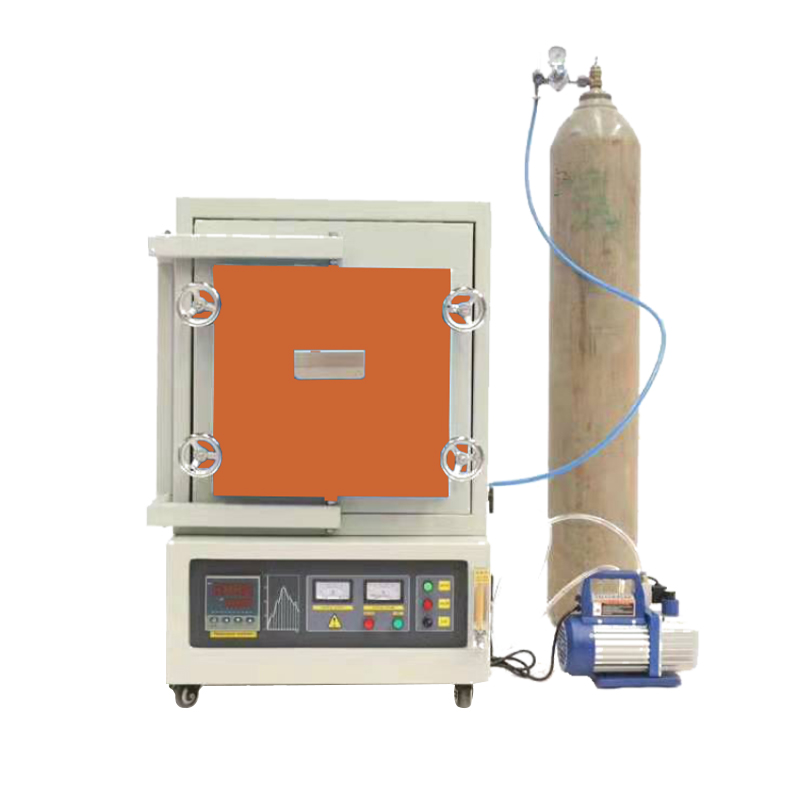 Vacuum Atmosphere Furnace for High-Temperature Heat TreatmentHigh-temperature vacuum and controlled-atmosphere furnace for sintering, diffusion, and heat treatment, with programmable PID control and safety interlocks.View Product →
Maintenance, Records and Compliance
A continuous furnace is judged by its records as much as by its hardware. If a customer audit asks for the uniformity survey from last quarter and nobody can produce it, the conversation stops being technical.
- Run temperature uniformity surveys and instrument checks on a fixed calendar, and keep the loaded-condition data rather than only the empty-furnace pass.
- Calibrate thermocouples and transmitters against traceable references, and record the drift value. A trend line is what tells you a sensor is ageing.
- Log dew point or oxygen level at least once per shift, with the gas flow at that moment. Without the flow figure the reading is not interpretable.
- Test quench media on schedule — cooling curves for oil, concentration and pH for polymer — because contaminated quench mimics a furnace fault almost perfectly.
- Inspect belts, rollers, fans, door seals and atmosphere curtains, and check drive tension. Most unplanned belt stops begin as a mechanical detail nobody scheduled.
Where the finished work feeds regulated industries, align the documentation with the framework your customers audit against — heat-treat system assessments, furnace class definitions and traceability requirements — and treat the furnace log as a quality record rather than a maintenance note. Sample verification is often done on a smaller box or muffle furnace; a stable
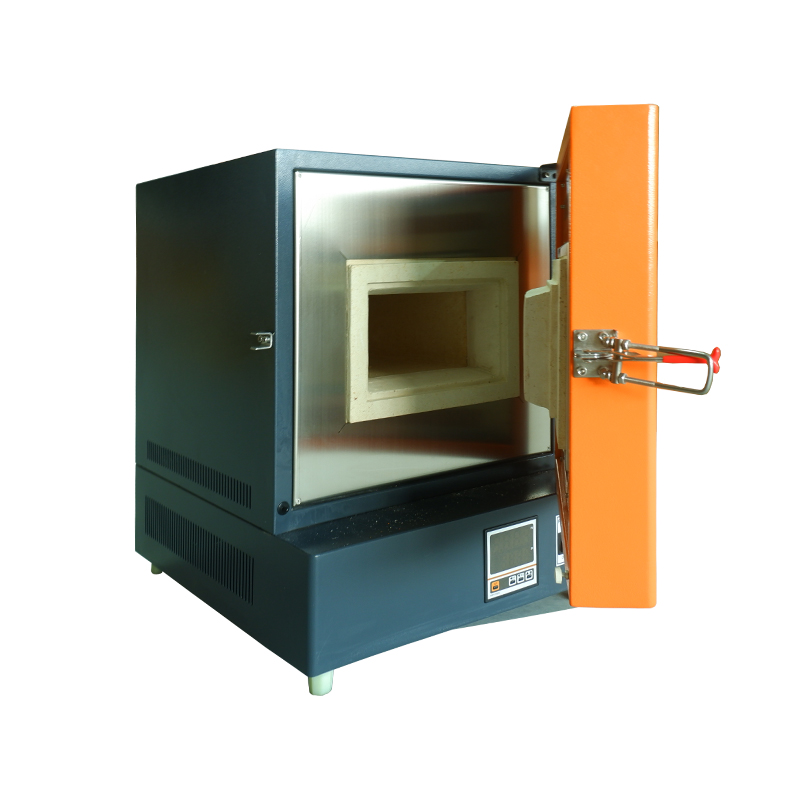 Box-Type Resistance Furnace for Laboratory and R&D Heat TreatmentLaboratory and R&D box furnace for sample pretreatment, annealing, and materials synthesis, offering 1000–1300°C operation and ±1°C control accuracy.View Product →
bench unit with a documented uniformity figure keeps that first-article work defensible.
Continuous furnace heat treatment rewards buyers who specify behaviour over time: uniformity with a load on the belt, atmosphere that holds through a full shift, and a transfer to quench that is measured rather than assumed. Everything else — belt width, zone count, heating power — is sizing around those three commitments.
When a new cycle has to be proven before it earns production time, do the metallurgy on a bench-scale furnace first, then transfer a validated profile to the line. That sequence costs a fraction of a wasted shift, and it gives the auditors a document trail that starts before the first production part was ever loaded.
Send Message
Recommended Products
Products provided by famous enterprises are deeply trusted by users.

- CONTACT
-
- No. 119, Qingliang Avenue, Yaozhuang Town, Zhejiang, China.
- [email protected] ( Email )
- +86-13671719019 ( Phone )
- +86-021-57440136 ( Tel )
- PRODUCT
-
- Drying Oven Series
- Vacuum Box Series
- Explosion-proof Series
- High-temperature Furnace Series
- Incubator Series
- Test Chamber Series
- Other Series
- Forced Air Drying Oven
- Resistance Furnace
- Vacuum Tube Furnace
- Mold Incubator
- Vacuum Atmosphere Furnace
- Biochemical Incubator
- Carbon Dioxide Incubator
- Explosion-Proof Vacuum Drying Oven
- High and Low Temperature Test Chamber
- MOBILE
Copyright ©
Shanghai Dengsheng Instrument Manufacturing Co., Ltd.
All Rights Reserved. Laboratory Equipment Manufacturers

 Back to Top
