
 Español
 عربى



Industry News
Home / News / Industry News / Furnace Tube Guide: Materials, Temperature Limits, and Selection Risks for Lab Teams
Furnace Tube Guide: Materials, Temperature Limits, and Selection Risks for Lab Teams
Date:Nov 23, 2026
A 1200°C tube furnace can fail a 900°C process when the furnace tube is selected for headline temperature alone. In vacuum, inert gas, or oxidizing service, the tube is the reaction chamber, the contamination barrier, and often the weakest mechanical link. The practical rule is to choose the furnace tube by atmosphere, wall thickness, end seal, thermal expansion, and expected tube life, not by the furnace’s maximum temperature label.
Short answer: For clean oxidation up to roughly 1100–1200°C, high-purity fused quartz is common; for 1500°C and above with good wear resistance, alumina or mullite; for thermal shock and 1300–1600°C, silicon carbide; for vacuum or inert service with fast cycles, metal alloy tubes can be practical, but creep and metal contamination need checking.
Content
What a Furnace Tube Really Controls
A furnace tube is not a passive sleeve. It defines the usable hot zone, the gas residence time, the cooling profile at the ends, and the path by which contamination enters or leaves the process. Two furnaces with the same chamber size can behave differently because one uses a thin quartz tube with a short heated length and the other uses a thick alumina tube with a long uniform zone.
Atmosphere boundary
The tube material and seal quality decide whether “vacuum” means 10⁻² mbar or a slow air leak that oxidizes the sample.
Thermal path
Wall thickness and tube diameter affect heat-up rate, axial gradient, and the risk of thermal shock at the end fittings.
Contamination source
Quartz, alumina, silicon carbide, and metal alloys release different species at temperature. That matters for semiconductors, battery materials, and medical devices.
Mechanical interface
End flanges, O-rings, compression fittings, and support blocks often set the real pressure limit and tube replacement cost.
For teams specifying a complete vacuum tube furnace, Shanghai Dengsheng’s antioxidant vacuum tube furnace is one reference point for comparing tube material, temperature zones, and sealing design before the purchase order is fixed.
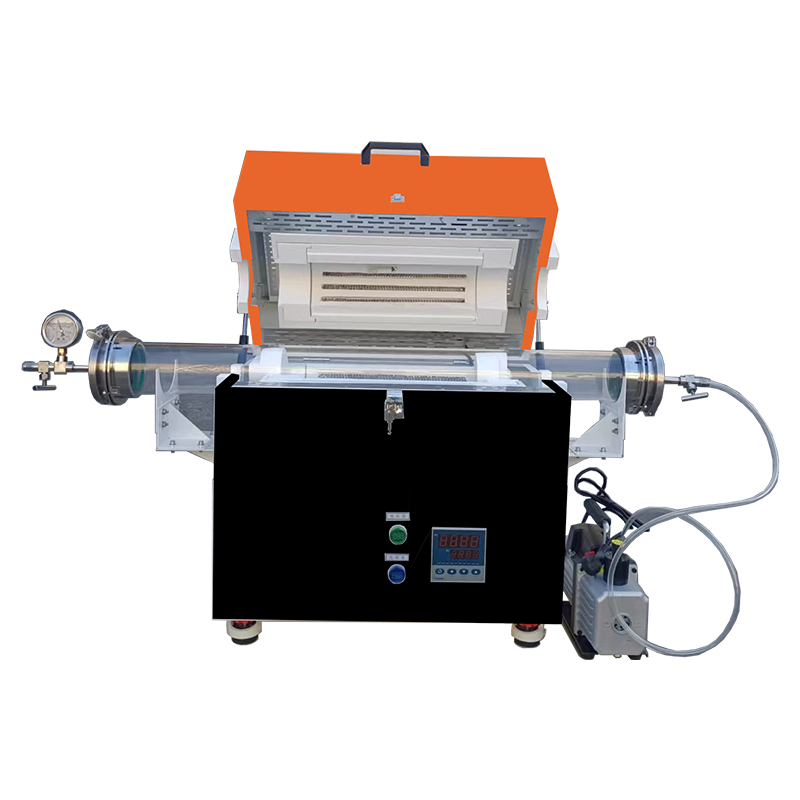 Antioxidant Vacuum Tube Furnace with Multiple Temperature OptionsOffers 1200°C, 1400°C, and 1700°C versions with vacuum or inert-gas protection for sintering, annealing, and materials research; useful for comparing tube materials and sealing design.View Product →
Furnace Tube Materials and Temperature Limits
Material selection is a compromise between maximum temperature, atmosphere, thermal shock, contamination tolerance, and replacement cost. The values below are practical starting ranges, not a substitute for the tube supplier’s grade-specific data.
Tube material
Typical service range
Best fit
Watch-out
Fused quartz
1100–1200°C continuous
Clean oxidation, visible processes, fast thermal cycles
Softens above grade limit; avoid HF, strong alkalis, and heavy devitrification
Alumina / mullite
1500–1700°C depending on grade
High-temperature sintering, calcination, wear resistance
Moderate thermal shock; porosity can trap contaminants
Silicon carbide
1300–1600°C
Thermal shock resistance, robust industrial duty
Oxidation at high temperature; protective glaze and atmosphere matter
Metal alloy
1100–1200°C in selected alloys
Vacuum/inert service, fast heating, rugged handling
Creep, oxidation, and nickel or iron contamination
Graphite
2000°C+ in inert or vacuum
Ultra-high-temperature materials research
Carbon contamination; not for oxygen-rich atmospheres
Table note: confirm grade-specific limits, wall thickness, and end-seal compatibility with the tube and furnace supplier before setting a process recipe.
Hidden Metrics That Decide Tube Life
Datasheets often list maximum temperature and tube diameter, but a qualification test usually exposes other variables: axial temperature uniformity, heat-up rate at the flange, leak rate after thermal cycling, and tube wall thickness tolerance. These are the values that separate a reliable process from a furnace that needs constant attention.
Uniformity
Leak rate
Tube life
Seal stability
Relative qualification weight, not a datasheet specification: a tube that holds temperature but leaks at the flange will still fail a vacuum process.
Where Furnace Tubes Are Used
Tube furnaces appear across materials research, semiconductor processing, battery development, and environmental testing. The application mix changes the tube choice: clean quartz is common in oxidation and diffusion work, alumina is common in sintering, and metal or silicon carbide tubes appear where thermal shock and mechanical robustness matter.
Illustrative project mix: 32% materials synthesis and sintering, 26% semiconductor or thin-film process development, 20% battery and energy materials, 22% other laboratory and pilot work.
- Materials teams care about atmosphere purity and cooling rate.
- Semiconductor teams care about metal contamination and leak-tight seals.
- Battery teams care about repeatability, gas flow, and tube replacement cost.
Selection and ROI: A Practical Workflow
The lowest purchase price is rarely the lowest cost per usable run. A cheaper tube that devitrifies early, contaminates samples, or needs frequent flange adjustment can consume more labor than the price difference suggests. Evaluate the furnace tube as a process consumable with a defined life and replacement procedure.
1. Define the atmosphere
Vacuum, inert, reducing, oxidizing, or mixed gas. This single decision eliminates many tube materials before temperature is considered.
2. Set the real hot zone
Ask for the length where uniformity is guaranteed, not just the chamber length. Sample placement outside that zone changes results.
3. Check the seal and flanges
O-ring material, flange torque, cooling at the ends, and tube support affect leak rate and tube stress more than the furnace controller does.
4. Calculate cost per run
Include tube replacement, purge gas, downtime, and requalification. A robust tube with a longer life can win even at a higher initial price.
For processes that need timed atmosphere control and repeatable ramp-and-hold cycles, a vacuum atmosphere furnace with a dedicated timer function can reduce operator-dependent variation and make tube-life tracking easier.
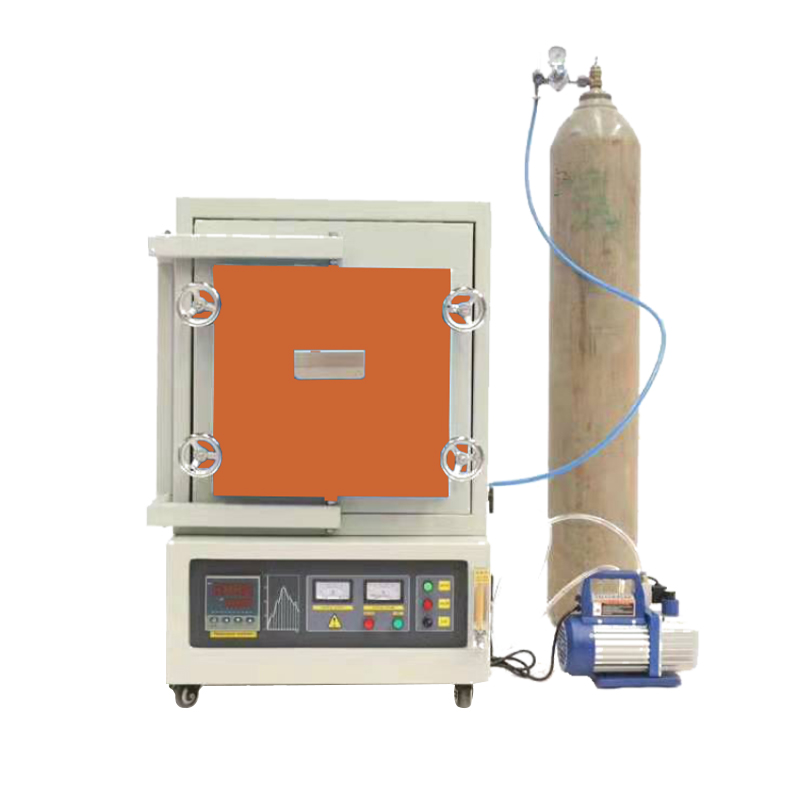 Timer-Controlled Vacuum Atmosphere Furnace for Repeatable Heat TreatmentProvides 1200–1800°C operation, 1–36 L chambers, and programmable timing for controlled inert or reducing atmospheres in repeatable ramp-and-hold heat treatment.View Product →
Maintenance and Compliance Notes
The furnace tube should be inspected before each campaign, not only after a failure. Look for devitrification, discoloration, hairline cracks, flange wear, and changes in pump-down time. On vacuum systems, a slower pump-down often signals a seal issue before a leak is visible.
- Record tube install date, material grade, and maximum temperature seen.
- Replace O-rings on a schedule, not only when they fail.
- Use a purge and leak-check procedure after any tube change.
- Keep spare tubes and flange hardware for critical processes.
- Review local electrical, pressure, and gas-safety requirements before installation.
Compliance evidence should match the actual use: material certificate, pressure-test record, calibration check, and a clean maintenance log are more useful than a generic brochure claim. For laboratory and pilot equipment, document who changed the tube, why, and what requalification was performed.
The furnace tube is a process decision, not an accessory. Match material to atmosphere, confirm the real hot zone, check the end-seal design, and calculate cost per successful run. That approach keeps a tube furnace predictable at 900°C, 1200°C, or wherever the process actually operates.
Send Message
Recommended Products
Products provided by famous enterprises are deeply trusted by users.

- CONTACT
-
- No. 119, Qingliang Avenue, Yaozhuang Town, Zhejiang, China.
- [email protected] ( Email )
- +86-13671719019 ( Phone )
- +86-021-57440136 ( Tel )
- PRODUCT
-
- Drying Oven Series
- Vacuum Box Series
- Explosion-proof Series
- High-temperature Furnace Series
- Incubator Series
- Test Chamber Series
- Other Series
- Forced Air Drying Oven
- Resistance Furnace
- Vacuum Tube Furnace
- Mold Incubator
- Vacuum Atmosphere Furnace
- Biochemical Incubator
- Carbon Dioxide Incubator
- Explosion-Proof Vacuum Drying Oven
- High and Low Temperature Test Chamber
- MOBILE
Copyright ©
Shanghai Dengsheng Instrument Manufacturing Co., Ltd.
All Rights Reserved. Laboratory Equipment Manufacturers

 Back to Top
