
 Español
  عربى
عربى 



Industry News
Home / News / Industry News / Environmental Test Chambers: Precision Control for Product Reliability
Environmental Test Chambers: Precision Control for Product Reliability
Date:Jul 22, 2026
Content
The Critical Role of Environmental Simulation in Modern Manufacturing
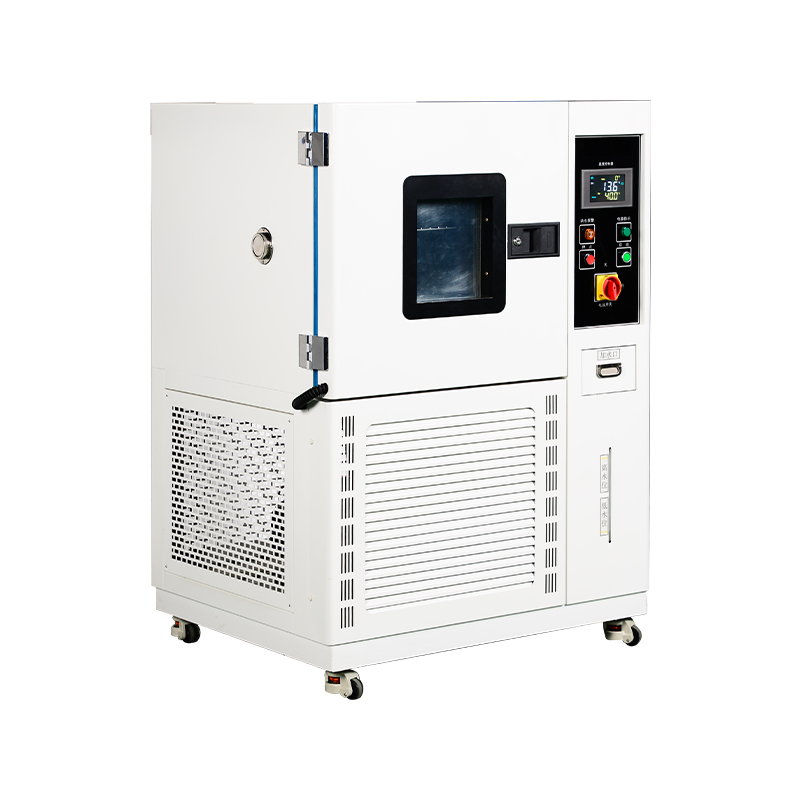
Environmental test chambers are indispensable tools that bridge the gap between theoretical design and real-world reliability. By creating highly uniform and repeatable environmental fields, these systems allow engineers to accelerate natural aging processes by factors of 10 to 100 times, efficiently exposing potential defects before products reach the market. This capability not only significantly shortens the R&D cycle but also provides solid data support for product optimization, ensuring that electronics, automotive components, and new materials can withstand harsh climates from polar cold to desert heat.
Core Parameters and Precision Control Mechanisms
Modern test chambers independently control multiple physical and chemical parameters to simulate complex environmental stresses. The precision of these controls determines the validity of the test results and the reliability of the final product.
Temperature and Humidity Dynamics
Temperature and humidity are the most fundamental variables in environmental testing. High-performance chambers can achieve temperature ranges from -70°C to +180°C with stability within ±0.5°C. Humidity control typically spans from 10% to 98% RH, allowing for precise simulation of tropical humid heat or arid desert conditions. This dual-control capability is essential for testing circuit boards and chips, where condensation and thermal expansion can cause catastrophic failures.
Advanced Stress Factors: Light, Vibration, and Corrosion
Beyond basic climate control, specialized chambers integrate additional stressors:
- Light Stability: UV and xenon arc lamps simulate sunlight exposure to test material degradation and color fading in polymers and coatings.
- Vibration: Combined with thermal cycling, vibration tables replicate the mechanical stresses experienced by aerospace components during launch and flight.
- Corrosive Gases: Salt spray and sulfur dioxide environments assess the corrosion resistance of metal parts and protective coatings, critical for automotive and marine applications.
Industry-Specific Applications and Testing Standards
Different industries rely on environmental test chambers to meet rigorous regulatory standards and ensure product longevity. The following table outlines key applications across major sectors.
| Industry Sector | Primary Test Objects | Key Environmental Stresses |
|---|---|---|
| Electronics & Semiconductor | Circuit boards, chips, end products | High/low temperature, humid heat, salt spray |
| Automotive & Aerospace | Components, complete machines | Environmental Stress Screening (ESS), thermal shock |
| New Energy & Materials | Batteries, new materials | Aging, corrosion, light stability |
| Biomedicine | Pharmaceuticals, packaging | Shelf-life testing, stability under controlled humidity |
Accelerating R&D Cycles Through Reliable Data
The primary value proposition of environmental test chambers lies in their ability to compress time. By subjecting products to intensified stress conditions, manufacturers can identify failure modes that might take years to appear in normal use. For instance, in the new energy sector, battery manufacturers use these chambers to simulate thousands of charge-discharge cycles under varying temperatures to predict lifespan and safety risks.
Optimizing Product Design with Iterative Testing
Data generated from these tests feeds directly back into the design process. Engineers can compare different material formulations or structural designs under identical environmental conditions, making informed decisions that enhance durability without over-engineering. This iterative approach reduces prototyping costs and ensures that the final product meets both performance targets and regulatory compliance requirements.
Send Message
Recommended Products
Products provided by famous enterprises are deeply trusted by users.

- CONTACT
-
- No. 119, Qingliang Avenue, Yaozhuang Town, Zhejiang, China.
- [email protected] ( Email )
- +86-13671719019 ( Phone )
- +86-021-57440136 ( Tel )
- PRODUCT
-
- Drying Oven Series
- Vacuum Box Series
- Explosion-proof Series
- High-temperature Furnace Series
- Incubator Series
- Test Chamber Series
- Other Series
- Forced Air Drying Oven
- Resistance Furnace
- Vacuum Tube Furnace
- Mold Incubator
- Vacuum Atmosphere Furnace
- Biochemical Incubator
- Carbon Dioxide Incubator
- Explosion-Proof Vacuum Drying Oven
- High and Low Temperature Test Chamber
- MOBILE
Copyright ©
Shanghai Dengsheng Instrument Manufacturing Co., Ltd.
All Rights Reserved. Laboratory Equipment Manufacturers

 Back to Top
